
Stainless steel trench drains: what factors matter when choosing for residential walk-in showers
For plumbing design engineers and bathroom product managers working on residential walk-in showers, stainless steel trench drains quickly become a balancing act between drainage capacity, odor control, corrosion resistance and day-to-day cleaning. The challenge is not only how to select a trench drain that keeps water moving reliably, but also how to decide which parameters truly drive long-term performance in a high-humidity shower enclosure with intermittent daily usage.
Instead of treating stainless steel trench drains as a generic linear grate at the edge of the shower, it helps to view them as an engineered interface: they connect finished tile surfaces, waterproofing layers, waste fittings and odor traps into a single assembly. This article breaks that decision down into practical dimensions so that buyer-side engineers can specify stainless steel trench drains with confidence, avoiding the most common causes of water ponding and local overflow near the drain inlet.
Where stainless steel trench drains fit in a residential walk-in shower
In a typical residential walk-in shower, a linear stainless steel trench drain is installed along one wall or at the entry to create a single-plane slope in the tile floor. Water flows across the surface into a narrow continuous inlet, then passes through the grate, through an odor-control trap and into the building waste system. When the trench drain is correctly specified, users barely notice it; when it is undersized or poorly matched to the environment, every shower calls attention to the mistake.
The environment is demanding even in domestic bathrooms. High humidity, intermittent temperature swings and daily exposure to shampoo, conditioners and body wash mean that stainless steel components are constantly attacked by water chemistry and residue. At the same time, hair and soap scum form a soft but stubborn layer that can quickly clog narrow slots if the grate pattern and basket design are not chosen with realistic maintenance intervals in mind.
For residential projects, stainless steel trench drains are usually selected by a plumbing design engineer, an interior bathroom designer or a sanitary product manager who needs to reconcile two priorities: how the drain looks in a minimalist wet room and how it behaves on the worst day of use, when someone takes a long, high-flow shower and the grate is already partially blocked by hair and soap debris.
Key configuration choices for stainless steel trench drains
When reviewing stainless steel trench drains for walk-in showers, there are a handful of structural choices that drive most of the performance difference. Length and outlet position determine how the drain fits the room geometry. Width and grate pattern influence both hydraulic capacity and clogging behavior. The depth of the channel and the internal slope help govern how quickly water is collected and directed toward the outlet under real shower flow conditions.
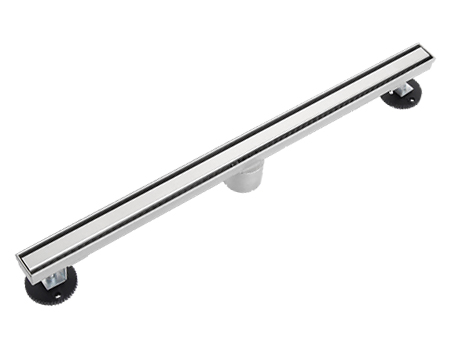
Linear drains with slim bodies and narrow flanges simplify integration with modern tile formats and keep the visual line clean. However, too small a channel cross-section can raise the risk of water ponding near the inlet when the shower head delivers high flow rates. Wider bodies provide more hydraulic buffer but need careful detailing at the edges to avoid creating an uncomfortable step or sharp corner at barefoot contact points.
Outlet options also matter. Horizontal outlets can simplify connection to existing branch piping, especially in renovation projects with limited slab depth. Vertical outlets may be preferred in new builds with direct access to the structural slab, potentially offering more flexibility in trap selection and overall flow path. Reviewing stainless steel trench drain models in a dedicated product library such as the linear shower drain range helps designers compare these configuration choices side by side against actual dimensional drawings.
How to match stainless steel trench drain capacity to real shower flow
One of the most critical selection questions is simple to state but often poorly answered: how much water can the stainless steel trench drain safely handle in the real shower, not just in a catalog table? The answer rests on a combination of drainage flow rate tests, the length of the inlet and how much debris the grate can tolerate before the effective open area falls below what the shower head delivers.
Engineering-oriented buyers should look for evidence that trench drains are evaluated through a drainage flow rate test under controlled conditions. Standards and methods aligned with resources from ASTM International materials and plumbing standards and with dedicated floor drain criteria such as EN 1253 for floor drains in buildings provide a baseline for what should be tested. While specific standard numbers may vary by region, the underlying logic is consistent: test the drain with realistic flow and partial blockage, then verify that no water escapes containment.
In a high-humidity residential shower enclosure, intermittent daily usage means the trench drain does not see constant flow, but it should be ready for short high-intensity events. If the flow rate test only considers clean water and a perfectly open grate, it underestimates the risk of grate clogging by hair and soap debris leading to water ponding and local overflow near the trench drain inlet. When comparing products, give preference to those that explicitly indicate how their linear stainless steel trench drains perform when part of the grate is obstructed, not only when it is brand new.
Managing clogging, odor control and cleaning effort in daily use
Day-to-day behavior of stainless steel trench drains is dominated by three interacting elements: the grate design, the debris interception system (such as hair baskets) and the trap geometry that maintains a reliable water seal. If any of these elements is poorly balanced, the result tends to be frequent grate clogging, odor complaints or both. In residential showers, users rarely want to spend more than a few minutes per month cleaning the drain, so the design must anticipate low maintenance frequency.
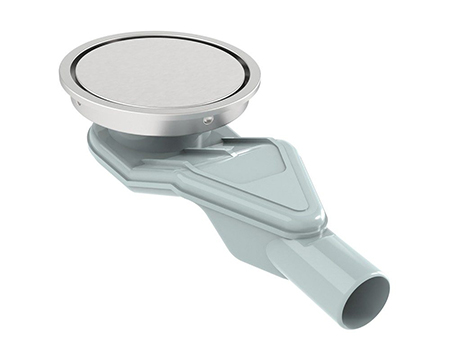
Fine slot grates look elegant and can feel comfortable underfoot, but if the slots are too narrow and there is no accessible hair catcher, the effective open area collapses once a few showers’ worth of hair accumulate. Conversely, grates with wider openings and well-shaped baskets collect hair where it can be removed without tools. For buyer-side engineers, the question becomes: how does this grate behave in month three of use, not only on day one of installation?
Odor control depends on a stable water seal in the trap and on avoiding stagnation zones where water sits and degrades between showers. An anti-odor trap performance test that evaluates evaporation, self-scouring behavior and the impact of intermittent usage offers a more realistic view than a simple schematic. In high-humidity bathrooms where shower doors may be closed most of the day, small temperature swings can accelerate seal loss, so it is important to understand whether the trench drain design supports a trap that can maintain its performance across seasons with minimal user intervention.
Material grade, finish and corrosion resistance in high-humidity bathrooms
Stainless steel trench drains in residential walk-in showers are exposed to a mix of warm water, cleaning chemicals and residual moisture that lingers on surfaces long after showering. Over time, this environment can reveal differences between material grades and finishes that were not obvious on the product photo. For example, austenitic stainless steels typically used in bathroom drains show good general corrosion resistance, but surface finish and fabrication quality still influence how quickly discoloration or tea staining appears around the grate and channel edges.
When comparing stainless steel trench drains, examine whether the supplier provides consistent finish across the grate and visible flanges, and whether edges at barefoot contact points are well deburred. A smoother finish with appropriate roughness control helps limit the adhesion of soap film and facilitates cleaning, while still needing adequate slip resistance in wet conditions. Buyers focused on long-term appearance should also consider the compatibility of the trench drain finish with nearby fixtures such as stainless steel basins or shower columns so that the entire bathroom reads as a coherent system rather than a collection of mismatched metal tones.
Behind the visible surface, the way welding, forming and polishing are controlled in production has a direct impact on the reliability of the drain over many years. Consistent manufacturing processes verified through third-party schemes—such as quality management frameworks aligned with references like ISO 9001 or environmental controls consistent with ISO 14001—signal that stainless steel trench drains are being built under disciplined conditions rather than as one-off fabrications. The result is a reduced likelihood of pinhole leaks, warping or premature degradation at joints where water and cleaning agents tend to concentrate.
Practical selection framework for stainless steel trench drains in walk-in showers
For buyer-side engineers and specification managers, a practical way to choose stainless steel trench drains for residential walk-in showers is to start with the environment and usage pattern, then translate those constraints into a small set of configuration decisions. In a high-humidity residential shower enclosure with intermittent daily usage, the drain must tolerate regular exposure to hot water and cleaning chemicals, but it also benefits from brief drying periods between showers, which can help control biological growth if there are no hidden water pockets.
First, clarify the design shower flow rate, including any rainfall heads or body sprays that could operate simultaneously. Compare that flow rate with drainage flow rate test data for candidate trench drains, focusing on values that account for partial grate blockage rather than only clean conditions. Second, select a channel length and width that work with the intended floor slope geometry while leaving enough margin to absorb the expected flow without water climbing back across the tile.
Third, evaluate grate patterns and hair interception strategies using realistic maintenance assumptions. If you expect the homeowner to clean the drain monthly, choose a stainless steel trench drain that allows tool-free removal of both grate and basket, with enough space to see and remove accumulated hair and soap debris. Fourth, confirm that the odor-control trap compatible with the trench drain has been evaluated through an anti-odor trap performance test that reflects intermittent usage, so that seal reliability aligns with the actual lifestyle of the occupants.
Finally, confirm that the material grade, finish and manufacturing controls are appropriate for a wet bathroom environment. Reviewing supporting documentation such as the manufacturer’s product data sheet library makes it easier to verify dimensions, flow capacities and recommended installation details before the specification is released to tender.
Standards and verification methods for stainless steel trench drains in residential showers
The engineering assurance behind stainless steel trench drains rests on how thoroughly their performance is validated against realistic failure modes. Two of the most important evaluation directions are the drainage flow rate test and the anti-odor trap performance test for linear shower trench drains. Together, these tests examine how quickly water can pass through the system and how reliably the water seal that blocks sewer gases is maintained under normal and stressed conditions.
In practice, manufacturers often draw on test methods related to building and plumbing standards when designing their internal protocols. References available from organizations such as ASTM International and the floor drain-specific criteria captured in EN 1253 for floor drains in buildings provide structured ways to think about loading conditions, temperature, flow volume and endurance. While a residential buyer does not need to recreate these lab tests, understanding that stainless steel trench drains have been evaluated against comparable flow scenarios and seal stability profiles provides a concrete basis for comparing options.
For high-humidity residential shower enclosures, it is particularly useful to ask how test programs account for intermittent daily usage: repeated filling and draining of the trap, changing water temperature and periods where the shower is not used for several days. A stainless steel trench drain that performs well only in a single continuous test run may not protect against odor issues when the bathroom stands unused during holidays. By contrast, a drain whose flow rate and trap behavior are tested across many cycles is more likely to remain stable across the full lifecycle of the bathroom.
Answering common stainless steel trench drain buyer questions
Which stainless steel trench drain size is right for a walk-in shower?
The appropriate length and width of a stainless steel trench drain depend on the shower footprint, the slope geometry and the maximum shower flow rate. In most residential walk-in showers, it is more reliable to run the linear drain nearly wall to wall along the primary collection edge than to use multiple short segments. This approach maximizes inlet length and reduces the hydraulic load at any one point, which helps prevent water ponding along the threshold even when part of the grate is obscured by hair and soap residue.
How often should a stainless steel trench drain be cleaned in a high-humidity home bathroom?
In a high-humidity residential shower enclosure with intermittent daily use, a well-designed stainless steel trench drain can usually maintain stable performance with a brief cleaning once or twice per month, provided that the grate and hair basket are easily accessible. If the geometry makes it difficult to see or remove debris, clogging and odor complaints will appear more quickly, even if the advertised drainage flow rate looks acceptable on paper. Choosing a design that anticipates realistic homeowner maintenance habits is as important as choosing one with strong laboratory test results.
Where can specifiers look for more detailed support when finalizing a trench drain choice?
For specifiers who need deeper detail on installation interfaces, waterproofing transitions or integration with other bathroom accessories, it is useful to review dedicated support resources in parallel with product data sheets. Centralized hubs such as the support center for bathroom drainage solutions often combine installation guidance, troubleshooting notes and additional selection tips that complement the purely technical characteristics of stainless steel trench drains.
Behind the selection advice in this article is an approach grounded in material performance evaluation, drainage flow rate test data and anti-odor trap performance test principles applied to linear shower trench drains. The recommendations reflect how stainless steel trench drains behave in high-humidity residential shower enclosures with intermittent daily usage, rather than only in idealized lab conditions. Publicly available plumbing and floor drain standards, including resources from ASTM International and EN 1253 for floor drains in buildings, provide the reference frame for these evaluations, while detailed product specifications come from internal documentation and manufacturer-supplied drawings.
For buyers and engineering teams, the most reliable stainless steel trench drains are those whose design explicitly addresses grate clogging by hair and soap debris leading to water ponding and local overflow near the trench drain inlet, and whose performance is anchored in repeatable test methods. When a chosen trench drain integrates smoothly with the shower’s waterproofing, respects the real constraints of a high-humidity bathroom and is validated through drainage flow rate and anti-odor trap performance tests, it becomes a low-attention, long-life component rather than a recurring source of complaints. Treating these factors as non-negotiable selection criteria is what turns stainless steel trench drains from a potential weak point into a quiet contributor to the overall reliability of the bathroom.