
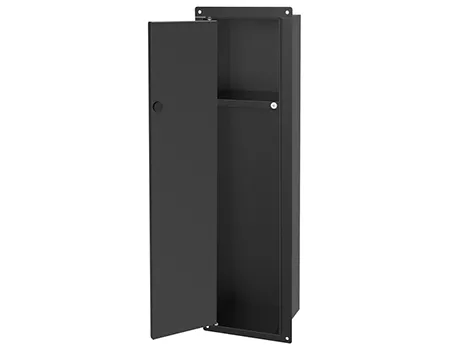
Structural Performance and Moisture Barrier Assessment of Shower Niche Systems in Wet Environments
Introduction
In bathroom environments characterized by persistent moisture and frequent water exposure, the engineering of recessed storage solutions such as shower niches demands careful attention to both structural integrity and waterproofing effectiveness. Shower niches must reliably support typical loads from personal care items while maintaining a continuous moisture barrier to prevent water infiltration that can lead to substrate degradation and mold growth. The Schluter shower niche system exemplifies an integrated approach, combining a prefabricated frame with a bonded waterproof membrane to create a unified protective envelope. However, the interaction between mechanical stresses, environmental influences, and material interfaces introduces complex challenges. This analysis examines the critical factors affecting the durability of such assemblies, focusing on failure mechanisms including waterproof layer delamination and structural cracking. Addressing these concerns is essential for engineering practitioners tasked with specifying and validating shower niches for high-humidity bathroom environments.
Mechanical Principles & Material Behavior
Shower niches installed within wet areas are subjected to a combination of static and dynamic mechanical loads, as well as environmental stresses inherent to bathroom conditions. The Schluter system typically incorporates a rigid frame—often stainless steel or high-grade polymer—paired with a waterproof membrane such as the Kerdi sheet, which is adhered to the frame and adjacent tile substrate to form a continuous moisture barrier.
From a mechanical standpoint, the frame must sustain the weight of stored items, which can range from several kilograms to tens of kilograms, and resist incidental impacts or user interaction forces without permanent deformation or fracture. Stainless steel frames offer a high modulus of elasticity (approximately 200 GPa) and yield strengths exceeding 200 MPa, providing superior stiffness and resistance to mechanical fatigue. Polymer frames, while lighter and easier to install, generally exhibit lower stiffness and may be prone to creep under sustained loading, particularly in warm, humid conditions.
The waterproof membrane’s role is to maintain a seamless barrier against water ingress. Its adhesion to both the frame and substrate is critical; typical adhesive bond strengths range from 0.5 to 1.5 MPa in shear, depending on surface preparation and adhesive chemistry. The membrane must accommodate minor substrate movements caused by thermal expansion (often in the range of 5 to 15 microstrain per degree Celsius) and building settlement without cracking or debonding. Flexibility and elongation at break values exceeding 200% are desirable to absorb these strains.
Environmental exposure in bathrooms includes cyclic wetting and drying, temperature fluctuations from hot water showers (commonly between 20°C and 60°C), and chemical contact from cleaning agents. These conditions can degrade adhesive bonds and alter membrane elasticity over time. Moisture penetration into porous substrates such as cement backer boards can cause swelling, generating interfacial shear stresses that challenge membrane adhesion. The interface between the niche frame and membrane is a critical stress concentration zone, where mechanical loads and environmental factors converge, necessitating robust design and installation practices.
Failure Modes
Primary Failure: Waterproof Layer Delamination
The most frequent and consequential failure observed in shower niche assemblies is the delamination of the waterproof membrane from the niche frame or adjacent substrate. This failure typically initiates due to insufficient surface preparation, use of incompatible or degraded adhesives, or mechanical stresses exceeding the adhesive bond’s shear or peel strength. Once delamination occurs, water can penetrate behind the membrane, accelerating substrate deterioration, fostering mold growth, and undermining tile adhesion.
In high-humidity bathroom environments, sustained moisture exposure combined with thermal cycling exacerbates adhesive fatigue. Repeated wetting and drying cycles can reduce bond strength by up to 30% over time, while temperature variations induce differential expansion stresses at interfaces. Poorly prepared surfaces—such as those contaminated with dust, oils, or residual curing compounds—significantly reduce initial adhesion, increasing susceptibility to delamination. Additionally, mechanical stresses from user interaction or installation errors, such as uneven membrane tension or sharp bends, can create localized stress concentrations that initiate bond failure.
Secondary Failure: Structural Cracking
Structural cracking affects both the niche frame and the surrounding tile substrate, compromising both mechanical support and waterproofing continuity. Excessive mechanical loading beyond design limits, improper installation introducing stress risers, or differential thermal expansion between dissimilar materials can induce crack formation. For example, stainless steel frames, while strong, may transmit stresses to the tile substrate if not properly isolated, leading to microcracks in grout or tile bodies.
Polymer frames are vulnerable to embrittlement when exposed to aggressive cleaning chemicals or ultraviolet radiation, which can reduce elongation at break and increase brittleness, thereby elevating fracture risk under impact or flexural loading. Tile substrates lacking adequate support or exhibiting excessive rigidity can develop microcracks under cyclic loading, particularly in areas adjacent to the niche where stress concentrations occur. These cracks disrupt the waterproof membrane’s continuity, facilitating water ingress and progressive substrate degradation.
Environmental Effects
The environmental conditions typical of high-humidity bathroom environments impose additional challenges that accelerate degradation mechanisms. Elevated relative humidity levels (often exceeding 70%) and temperature fluctuations induce cyclic fatigue stresses in both membrane and frame materials. Cementitious substrates absorb moisture, swelling by up to 2% volumetrically, which generates interfacial shear stresses that can exceed adhesive bond strengths, promoting membrane debonding.
Chemical exposure from soaps, detergents, and disinfectants can degrade polymer membranes and adhesives by breaking down polymer chains or plasticizers, reducing elasticity and bond strength. The confined geometry of shower niches can trap moisture, prolonging wetting periods and increasing the risk of microbial colonization if waterproofing is compromised. Furthermore, repeated thermal cycling between ambient and hot water temperatures induces expansion and contraction cycles that can fatigue adhesive bonds and frame connections.
These environmental factors collectively accelerate the onset of waterproof layer delamination and structural cracking, underscoring the need for materials and installation methods designed to withstand such conditions.
Testing Standards & Validation
Verification of waterproofing and structural performance for shower niche systems must adhere to rigorous testing protocols that simulate real-world bathroom conditions. TÜV SÜD Building & Construction Testing provides comprehensive methodologies tailored to bathroom waterproofing products, ensuring durability and reliability in high-humidity environments.
Testing involves installing the niche assembly within a representative wall mock-up, including tile substrates, waterproof membranes, and the niche frame, following manufacturer installation instructions. Cyclic water exposure tests subject the assembly to continuous water spray and immersion cycles, evaluating membrane adhesion resilience and identifying any leakage or delamination. These tests often extend over several days to weeks, simulating prolonged moisture exposure.
Mechanical load testing applies static loads up to design limits—commonly 20 to 50 kg distributed within the niche—and dynamic impact forces replicating incidental user contact. Monitoring for frame deformation, cracking, or bond failure is conducted throughout. Thermal cycling subjects the assembly to temperature ranges between 10°C and 60°C, replicating hot shower conditions, to assess material compatibility and bond integrity under expansion and contraction stresses.
Post-test inspections utilize visual examination to detect surface defects, infrared thermography to identify subsurface delamination by detecting temperature anomalies, and non-destructive moisture detection techniques such as electrical impedance or capacitance measurements to locate moisture ingress before visible damage occurs.
These validation steps under TÜV SÜD protocols ensure that shower niche systems maintain waterproof sealing integrity and structural support throughout their expected service life in high-humidity bathroom environments, providing confidence in product reliability and compliance with industry standards.
Application & Integration
Integrating a Schluter shower niche into a wet area requires precise coordination between waterproofing and structural installation practices to ensure long-term performance. The niche must be installed flush with the tile surface, avoiding discontinuities or steps that could compromise the waterproof membrane’s continuity. Achieving a wrinkle-free, gapless membrane layer around the niche is essential to prevent initiation points for delamination.
Surface preparation is critical; all bonding surfaces must be clean, dry, and free of contaminants. Priming porous substrates enhances adhesive penetration and bond strength. Adhesives compatible with both the membrane and frame materials must be applied uniformly, with attention to curing times under controlled humidity and temperature to optimize bond development.
Load distribution within the niche should be managed to avoid localized stress concentrations. For example, heavier items should be placed near the niche base or supported by shelves designed to transfer loads to the wall framing rather than solely to the niche frame. Frame material selection should reflect anticipated mechanical demands and environmental exposure. Stainless steel frames provide superior mechanical strength and chemical resistance but may require corrosion protection in aggressive environments. Polymer frames offer ease of handling and installation but require careful consideration of chemical exposure and UV resistance.
Edge detailing around the niche should accommodate substrate movement by incorporating flexible sealants or expansion joints, mitigating cracking risks. Ventilation strategies within the bathroom, such as exhaust fans and adequate air circulation, help reduce moisture accumulation inside the niche cavity, promoting drying and limiting prolonged wetting that could degrade waterproofing components.
Engineering evaluation of shower niche assemblies in moisture-intensive bathroom settings highlights the necessity of maintaining both waterproof sealing integrity and structural load-bearing capacity. Failure modes such as waterproof layer delamination and structural cracking predominantly result from inadequate adhesion, mechanical overstress, and environmental degradation. Adherence to TÜV SÜD Building & Construction Testing standards provides a robust framework for validating system durability under cyclic moisture exposure, mechanical loading, and thermal fluctuations.
For bathroom accessories engineers, understanding these failure mechanisms and validation requirements informs material selection, installation protocols, and integration strategies. The long-term reliability of the Schluter shower niche depends on these engineering considerations, ensuring that waterproof storage solutions withstand the challenges of high-humidity bathroom environments without compromising structural integrity.
This analysis was reviewed by a Senior Bathroom Engineer with practical field experience under high-humidity bathroom environment operating conditions, with validation focused on waterproof layer delamination / structural cracking in accordance with TÜV SÜD Building & Construction Testing compliance requirements.
In practical field applications, engineers treating schluter shower niche as a performance-critical interface typically combine finite-life fatigue predictions, scheduled inspection intervals, and conformance to TÜV SÜD Building & Construction Testing and recognized third-party plumbing and sanitaryware laboratory reports to keep risk within acceptable limits under high-humidity bathroom environment loading profiles.