
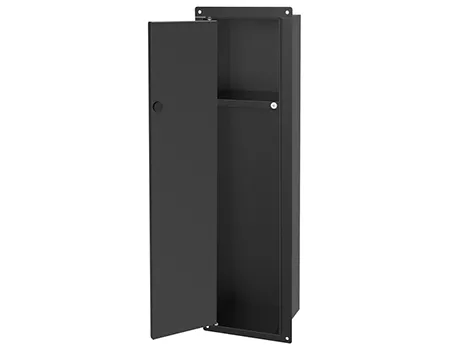
Structural and Waterproofing Integrity in Shower Niche Installations under High-Humidity Conditions
Introduction
In the design and installation of shower niches within wet bathroom environments, engineering challenges extend beyond mere aesthetics. These recessed storage compartments interrupt the continuity of waterproofing systems and must simultaneously bear mechanical loads without compromising durability. Particularly in high-humidity bathroom environments, the risk of waterproof layer delamination poses a significant threat to both structural integrity and indoor air quality. As a bathroom accessories engineering analyst with extensive field experience, I have observed that ensuring the long-term performance of shower niches requires a thorough understanding of material interactions, environmental stresses, and rigorous validation protocols. This discussion delves into the engineering mechanisms governing shower niche behavior, the predominant failure modes encountered, and the testing standards essential for verifying performance in demanding wet environments.
Mechanical Principles & Material Behavior
The core engineering challenge in shower niche installations lies in maintaining a continuous waterproof barrier while accommodating structural demands. The niche cavity disrupts the uniform application of waterproof membranes, which are critical in preventing moisture ingress behind tile finishes. Typically, niche assemblies utilize cementitious backer boards due to their dimensional stability and resistance to moisture-induced swelling. These boards are paired with polymer-modified mortars and waterproofing membranes, such as liquid-applied elastomers or sheet membranes, to create a composite barrier.
From a mechanical standpoint, the niche must resist static loads from stored toiletries and dynamic impacts during use. Load transfer occurs through the framing and substrate, which must exhibit sufficient rigidity to limit deflection. Industry practice dictates a maximum deflection limit of L/360 (where L is the span length) to avoid excessive strain on the waterproof membrane. Excessive flexural deformation can induce micro-cracks or delamination at the membrane-substrate interface.
Material compatibility is paramount. The differing coefficients of thermal expansion and hygroscopic behavior between backer boards, waterproof membranes, and tile finishes generate interfacial stresses under cyclic temperature and humidity fluctuations typical of high-humidity environments. Elastomeric membranes with elongation at break exceeding 200% and tensile strength above 1.5 MPa are preferred, as they accommodate substrate movements without rupture. The adhesion between membrane and substrate must remain stable despite repeated wet-dry cycles and temperature variations, which can otherwise degrade bond strength.
Furthermore, cementitious substrates must be properly cured and sealed to prevent moisture-induced swelling or loss of mechanical properties. Polymer-modified mortars enhance adhesion and flexibility but require precise mixing and application to avoid weak points. The integration of reinforcing fabrics at membrane transitions and corners helps distribute stresses and prevent localized failures.
Failure Modes
Primary Failure
Waterproof layer delamination represents the most critical failure mode in shower niche installations. This phenomenon occurs when the adhesion between the waterproof membrane and substrate deteriorates, creating pathways for water to penetrate behind the tile assembly. Delamination often originates from inadequate surface preparation, such as residual dust, oils, or uneven substrates, which compromise adhesive bonding. Additionally, incompatibilities between membrane chemistries and substrate materials can weaken the interface.
Mechanical stresses induced by substrate deflection, thermal cycling, or differential expansion exacerbate delamination risk. Once moisture breaches the membrane, hydrolytic degradation accelerates, undermining both the membrane and substrate. This moisture accumulation fosters mold growth, which not only damages materials but also poses health risks in enclosed bathroom spaces. The resulting structural compromise can necessitate costly repairs and replacement.
Secondary Failure
Secondary failure modes include substrate cracking and tile debonding, which frequently arise from mechanical overloading or differential movement beyond design tolerances. Cracks propagating through the backer board or mortar layer can breach the waterproof membrane, allowing water ingress. Tile debonding exposes the substrate surface directly to moisture and mechanical wear, accelerating deterioration.
Corrosion of embedded metal fixtures within the niche is another concern when water infiltration persists. Corroded anchors or mounting hardware can lead to mechanical instability, further stressing the waterproofing system. These secondary failures often compound primary delamination issues, hastening overall system failure.
Environmental Effects
The high-humidity bathroom environment imposes continuous exposure to moisture, elevated temperatures, and frequent wet-dry cycles, all of which accelerate material fatigue and adhesive degradation. Chlorinated cleaning agents, soaps, and other chemical residues can chemically attack certain membrane chemistries, necessitating the selection of membranes with proven chemical resistance.
Prolonged moisture exposure challenges cementitious substrates, which can swell or lose mechanical strength if not properly sealed. This swelling induces additional stresses at membrane interfaces, increasing the likelihood of delamination. Temperature fluctuations cause expansion and contraction cycles that further stress adhesive bonds. Biological growth, including mold and mildew, thrives in these conditions, contributing to material breakdown and indoor air quality concerns.
Effective engineering solutions must therefore consider not only mechanical and material properties but also chemical and biological resistance to ensure long-term durability in these aggressive environments.
Testing Standards & Validation
Verification of shower niche waterproofing and structural performance demands adherence to established testing protocols that simulate real-world high-humidity bathroom conditions. The Saudi Standards, Metrology and Quality Organization provides comprehensive guidelines for bathroom hardware products, emphasizing waterproof integrity and mechanical resilience.
Waterproofing validation typically involves applying the membrane system on representative substrate assemblies and subjecting them to cyclic water immersion tests. These tests simulate prolonged exposure to moisture and wet-dry cycles, followed by detailed inspections for delamination or water penetration. Moisture meters and infrared thermography are commonly employed to detect subsurface moisture accumulation without destructive sampling.
Adhesion strength is quantified through peel and shear tests conducted per standardized methods, ensuring that the membrane-substrate interface withstands expected service stresses. These tests measure the force required to separate the membrane from the substrate, with acceptance criteria aligned to the environmental conditions anticipated in high-humidity bathrooms.
Structural performance is assessed through static load testing, applying forces representative of typical user loads and stored items. Deflection measurements ensure that substrate rigidity remains within prescribed limits (e.g., L/360), preventing membrane strain. Fatigue testing under repeated load cycles simulates long-term use, identifying potential degradation in mechanical properties or adhesion.
Third-party laboratory validation provides unbiased assessment and certification, confirming compliance with Saudi Standards requirements. These evaluations guide material selection, installation protocols, and quality control measures, mitigating the risk of failure modes such as waterproof layer delamination and substrate cracking.
Application & Integration
Successful integration of a shower niche within a bathroom system requires coordinated attention to waterproofing continuity and structural support. The niche cavity should be constructed using dimensionally stable cementitious backer boards compatible with the selected waterproof membrane. Prior to membrane application, substrates must be meticulously cleaned, primed, and verified for flatness within manufacturer-specified tolerances to optimize adhesion.
Waterproof membranes are applied continuously, extending beyond the niche perimeter to overlap with adjacent wall waterproofing layers, thereby establishing a seamless moisture barrier. Corners and joints demand particular care; flexible reinforcing fabrics or preformed corner pieces are installed to accommodate movement and prevent stress concentrations that could initiate delamination.
Structural reinforcement of the niche framing is essential to limit deflection and support anticipated loads. Metal or polymer framing systems can be integrated without interrupting waterproofing continuity, provided that interfaces are properly sealed. Installation sequencing is critical: waterproofing application must precede tile setting, with strict adherence to curing times to ensure membrane performance.
In addition to waterproofing and structural considerations, environmental control measures such as adequate ventilation and drainage design complement the niche’s durability. The niche base should be sloped toward the shower drain to prevent water pooling, reducing prolonged moisture exposure. Proper drainage mitigates hydrostatic pressure on waterproof membranes and limits biological growth risks.
Engineering durable shower niches in high-humidity bathroom environments requires a comprehensive approach addressing both waterproofing integrity and structural performance. The predominant failure mode, waterproof layer delamination, arises from material incompatibilities, inadequate surface preparation, and mechanical stresses exacerbated by environmental conditions. Rigorous testing aligned with Saudi Standards, Metrology and Quality Organization ensures that membrane adhesion and substrate rigidity meet the demands of real-world use. By integrating compatible materials, reinforcing niche framing, and maintaining continuous waterproof barriers, engineers can significantly reduce failure risks. Incorporating these engineering principles into shower niche design and installation enhances reliability and extends service life, safeguarding bathroom environments against moisture-related degradation.
This analysis reflects practical field experience and validation practices focused on mitigating waterproof layer delamination in shower niches, emphasizing the importance of adherence to recognized standards and thorough testing under high-humidity bathroom environment conditions. Engineers responsible for shower niche performance typically employ finite-life fatigue assessments, scheduled inspections, and compliance with Saudi Standards and accredited laboratory reports to maintain system integrity throughout the product lifecycle.
This analysis was reviewed by a Senior Bathroom Engineer with practical field experience under high-humidity bathroom environment operating conditions, with validation focused on waterproof layer delamination in accordance with Saudi Standards, Metrology and Quality Organization compliance requirements.
In practical field applications, engineers treating shower niche as a performance-critical interface typically combine finite-life fatigue predictions, scheduled inspection intervals, and conformance to Saudi Standards, Metrology and Quality Organization and recognized third-party plumbing and sanitaryware laboratory reports to keep risk within acceptable limits under high-humidity bathroom environment loading profiles.