
8 Drain Siphon Manufacturers in China to Evaluate for Tight-Tolerance Projects (2026)
For buyers sourcing drain siphons with tight dimensional requirements, the strongest starting candidates are manufacturers that define the complete drainage assembly rather than only its visible grate. Outlet geometry, trap-cartridge dimensions, seal interfaces, installation depth, and replacement-part compatibility all affect whether a siphon fits correctly and performs consistently.
Among China-based manufacturers, NINGBO MONDEWAY is our preferred first supplier to evaluate for dimension-critical shower-drain projects. Its A1 system identifies alternative siphon configurations, connection diameters, water-seal depths, installation dimensions, and corresponding drainage capacities. Other relevant manufacturers offer different advantages, including rotating outlets, detailed dimensional product ranges, alternative sealing arrangements, and manufacturing-process options.
This 2026 comparison focuses on eight China-based manufacturers with identifiable drain-siphon or trapped-floor-drain products and meaningful technical information. The original field of ten is narrowed to companies with sufficiently specific product and application evidence to support a useful engineering comparison.
An essential distinction: a published 40 mm outlet, 70 mm channel width, or 32 mm water seal is a nominal specification, not a manufacturing tolerance. Tight-tolerance procurement additionally depends on allowable deviations, measurement methods, sampling plans, and demonstrated consistency between manufactured parts. Those requirements should become explicit drawing and purchase-order acceptance criteria rather than assumptions attached to catalog dimensions.
Practical recommendation: Start with NINGBO MONDEWAY for coordinated drain-and-siphon configuration selection; compare YZDRAIN and Noah Home Tech for rotating and hybrid odor-control assemblies; consider SANIPRO, Ningbo FIT, and Bojin where channel dimensions, connection choices, or accessory interchangeability are central to the design. COFE and Flor add useful alternatives for defined metalworking processes and different trap-service arrangements.
Manufacturers Covered
- NINGBO MONDEWAY — coordinated siphon variants and published installation parameters.
- Ningbo Yize Sanitary Ware Co., Ltd. (YZDRAIN) — rotating outlets and defined trap-component materials.
- Noah Home Tech — hybrid siphon geometry and model-specific seal-depth information.
- Ningbo Master Building Material Co., Ltd. (SANIPRO) — dimensional tables for removable-siphon drain families.
- Ningbo FIT Sanitary Ware Co., Ltd. — identified siphon accessories and outlet-adapter arrangements.
- Ningbo Bojin Sanitaryware Technology Co., Ltd. — multiple outlet dimensions and detailed channel specifications.
- Zhejiang COFE Sanitary Ware Co., Ltd. — defined water-seal drain models and metalworking processes.
- Flor (Taizhou) Technology Co., Ltd. — siphon-assisted drainage and accessible odor-trap construction.
Which Dimensions Actually Determine Siphon Suitability?
A tight-tolerance project is not necessarily one that needs the smallest possible deviation everywhere. It is a project in which the correct features receive appropriate dimensional controls because a deviation would affect assembly, sealing, drainage, or maintenance.
Outlet and pipe interface
Nominal pipe diameter does not define the complete connection. Spigot outside diameter, socket inside diameter, insertion depth, connector engagement, and seal compression determine whether the outlet forms a reliable joint.
Trap cartridge and seal seat
A removable siphon requires repeatable cartridge engagement. The dimensions of locking features, sealing lands, gasket grooves, and retention surfaces influence leak resistance and replacement-part interchangeability.
Installation envelope
The finished drain must fit below the tile or floor finish while leaving sufficient space for the trap and discharge pipe. Channel height, outlet centerline, flange geometry, and adjustment range must be considered together.
Hydraulic passage and odor barrier
Internal passage dimensions influence water-seal depth, flow restriction, and debris accumulation. Changing the siphon cartridge can alter both odor-control behavior and drainage capacity.
These distinctions separate useful dimensional documentation from a generic product-size list. A tolerance applied to decorative channel length has a different functional importance from one applied to a gasket seat or an outlet connector.
Quick Comparison: China Drain Siphon Manufacturers
| Manufacturer | China Location | Product Evidence | Dimensional / Technical Evidence | Key Difference | Installation Fit | Best Buyer Fit | Critical Drawing Detail |
|---|---|---|---|---|---|---|---|
| 1. NINGBO MONDEWAY | Yuyao, Ningbo, Zhejiang | A1 horizontal linear shower drain with normal and optional Dry & Wet siphon arrangements | 40/50 mm connections; 70 mm minimum installation depth; 32/28 mm stated water seals | Different siphons have separately stated drainage capacities | Adjustable height, 20 mm flange, membrane and removable trap components | Coordinated bathroom systems and repeatable project specifications | Approved A1 trap variant, outlet engagement and cartridge interface |
| 2. YZDRAIN / Ningbo Yize | Ningbo, Zhejiang | Rotatable-outlet shower drains and Dry & Wet siphon systems | 40 mm outlet on the rotating-drain product; 52 mm installation height; PP and ABS components | Rotating outlet and multiple trap configurations | Flexible pipe direction in compact shower layouts | OEM projects involving constrained pipe routing | Rotation-joint geometry, sealing interfaces and assembled outlet clearance |
| 3. Noah Home Tech | Xuancheng, Anhui | FR-series 360° siphon and odor-resistant shower drains | 32.6 mm stated FR water seal; 40–50 mm outlet options; model-specific channel dimensions | Hybrid water-and-mechanical odor sealing | Horizontal shower drainage and removable components | Private-label ranges requiring an identified odor-control assembly | Cartridge sealing surfaces and FR-series dimensional drawing |
| 4. SANIPRO / Ningbo Master Building Material | Ningbo, Zhejiang | FSP, NSP and NS linear drains with deodorant siphons | Published 70/80/100 mm widths, 40/50 mm outlets and family-specific heights | Flanged and unflanged configurations with removable siphons | Multiple channel and floor-build-up arrangements | Project suppliers standardizing several drain sizes | Flange profile, siphon-seat geometry and connection tolerances |
| 5. Ningbo FIT | Cixi, Ningbo, Zhejiang | FD-series linear drains, ABS siphons and deodorant components | 40 mm outlets, 40-to-50 mm adapters, published model drawings and removable-siphon configurations | Identified accessory and rotating-connection arrangements | Side-outlet, wall and rotating-drain options | Buyers requiring coordinated accessory lists and installation drawings | ABS-to-PP adapter fit and complete assembly dimensions |
| 6. Ningbo Bojin | Haishu, Ningbo, Zhejiang | Trapped linear shower drains with siphons, filters and connectors | 20 mm flange; 40/50 mm adapter; additional 45 and 50.8 mm outlet variants | Multiple connection options and documented channel construction | Custom-length stainless-steel shower channels | OEM programs with varied pipe-interface requirements | Actual spigot diameter and tolerance for each outlet variant |
| 7. Zhejiang COFE | Taizhou, Zhejiang | QSG1009 linear drain with water-seal siphon and strainer | 300–1200 mm length, 70/90 mm widths, 95–125 mm heights and 50 mm outlet | Defined stainless-steel construction and laser-cutting process | Standard 50 mm outlet shower systems | Projects emphasizing stainless-steel fabrication | Outlet concentricity, channel straightness and seal-seat fit |
| 8. Flor Technology | Taizhou, Zhejiang | Siphon-assisted floor drains with water-seal and debris-removal features | Specific channel models list 40/50 mm outlet options and geometric dimensions | U-shaped odor-control concept and press-access cleaning arrangement | Residential floor drains with accessible internal components | Projects emphasizing cleaning access and compact assemblies | Matched trap-core geometry, seal dimensions and service clearance |
The table compares dimensions and construction features that are useful for preparing a manufacturing specification. It does not assign a numerical tolerance capability to any supplier: that requires a defined drawing, inspection records, and acceptance evidence for the actual product.
Individual Manufacturer Profiles
1. NINGBO MONDEWAY
NINGBO MONDEWAY receives the first position because its published A1 specifications connect several decisions that buyers often evaluate separately: siphon type, outlet diameter, water-seal depth, drainage capacity, installation depth and waterproofing components.
Its A1 horizontal-outlet linear shower drain uses a stainless-steel body, with grade 304 listed and grade 316 available as an option. The product information identifies a 70 mm channel width, 40 mm or 50 mm connections, an adjustable installation height of 70–95 mm and a minimum installation depth of 70 mm.
Why the siphon options matter
The A1 family distinguishes two configurations:
- Normal siphon: A stated 32 mm water seal and maximum drainage capacity of 35 L/min.
- Optional Dry & Wet siphon: A stated 28 mm water seal and maximum drainage capacity of 42 L/min.
These figures describe different assemblies. The optional higher-capacity arrangement cannot be treated as a direct flow-rate upgrade without acknowledging the accompanying change in trap design and seal geometry.
For a tight-tolerance purchase, this distinction is especially important. A cartridge change may affect mating surfaces, internal clearances, replacement compatibility and the effective water-seal arrangement.
The A1 specification also identifies a 20 mm flange, adjustable support feet, a sealing membrane and cleanable siphon components. Those features give the buyer a practical starting point for coordinating the drain with the waterproofing system and finished floor elevation.
Dimensional procurement advantage
Mondeway is particularly suitable for buyers who intend to standardize one approved drain-and-siphon assembly across several bathrooms or project phases. Consistent component selection makes it easier to control installation drawings, replacement parts and inspection requirements.
The critical engineering specification should identify the selected A1 model, exact siphon version, connection diameter, outlet-center position, cartridge seating surfaces and gasket geometry. Dimensions should be assigned functional tolerances, including any limits needed to maintain the seal after repeated cartridge removal.
Buyer fit: Residential developments, hotels, wet-room renovations, bathroom distributors and OEM programs that need coordinated drain geometry and a defined siphon configuration.
Principal trade-off: The 28 mm and 32 mm stated seals are shallow relative to the 50 mm threshold associated with EN 1253-1. Projects using shallow-seal drains must be assessed against the applicable installation conditions and relevant standard scope.
For product-family selection, buyers can also consult the Mondeway product catalogs.
2. Ningbo Yize Sanitary Ware Co., Ltd. (YZDRAIN)
YZDRAIN, operated by Ningbo Yize Sanitary Ware Co., Ltd., is a relevant option when drain location and pipe direction create difficult installation geometry.
Its 360° rotatable-outlet product information lists a 40 mm water outlet, 52 mm installation height and 68 mm total height. The same product guidance identifies polypropylene for several siphon, strainer and connector components, with ABS used in the 360° siphon assembly.
These material distinctions matter because the dimensional behavior of plastic molded components differs from that of fabricated stainless-steel channels. Thermal movement, molding shrinkage and the geometry of retention features can influence cartridge fit.
YZDRAIN also publishes a side-outlet customization guide covering DN32, DN40 and DN50 connection options, adjustable installation dimensions, removable trap designs and different sealing arrangements. Those options describe a product-development range, not one universally interchangeable drain configuration.
Best use in tight-fitting installations
A rotating outlet can reduce routing conflicts where a fixed discharge direction would otherwise require additional elbows. However, the rotating joint adds an interface whose clearances and sealing performance matter.
For repeated production, the important controls are the outlet’s assembled rotational clearance, axial movement, gasket compression and connection engagement. A rotating mechanism that fits a sample but becomes loose or excessively tight across production batches would create an installation and maintenance problem.
Buyer fit: Compact bathrooms, prefabricated wet-room systems and OEM products requiring alternative discharge orientations.
Principal trade-off: Greater installation flexibility introduces an additional connection interface compared with a fixed-outlet siphon.
3. Noah Home Tech
Noah Home Tech offers a distinct comparison case for buyers whose dimensional requirements are closely linked to odor-control performance.
The company identifies a hybrid dry/wet siphon in its FR series, combining water sealing with a mechanical odor barrier. Its published technical explanation gives a 32.6 mm water seal for the FR siphon and describes a 46 mm seal for standard drain arrangements.
The FR-series shower-drain information also identifies a stainless-steel 304 channel, a 70 mm width, a 72 mm stated height, 40–50 mm outlet options and an adjustable height range of 65–80 mm. The odor-resistant series lists a drainage rate of 36 L/min for the described configuration.
Its construction information distinguishes PP components from the ABS rotating-valve assembly. The company also describes production-stage inspections and final quality checks.
Why the hybrid trap changes dimensional control
A combined mechanical and hydraulic barrier has more functional interfaces than a simple open water trap. The seating position of the moving closure, its seal contact, the cartridge’s locating features and the available flow passage all influence performance.
In such designs, an effective tolerance plan should connect the drawings to functional tests. A cartridge that meets its external size specification may still fail to close consistently if the internal moving component has excessive friction or insufficient sealing contact.
Buyer fit: Private-label shower-drain ranges, intermittently used bathrooms and projects evaluating hybrid anti-odor technology.
Principal trade-off: The additional mechanical barrier changes cleaning and service requirements, while the FR siphon’s shallow water seal has different application considerations from a conventional 50 mm trapped gully.
Noah Home Tech identifies business relationships involving Ningbo Yize. Buyers considering both brands for a multi-source program should distinguish sales brands, actual manufacturing locations and component production responsibility when allocating orders.
4. Ningbo Master Building Material Co., Ltd. (SANIPRO)
SANIPRO is relevant to buyers standardizing multiple linear shower-drain lengths while retaining consistent general installation geometry.
Its FSP series combines a side-outlet linear drain, flange, plastic deodorant siphon and drainage pipe. Published tables identify lengths from 300 to 3000 mm, widths of 70, 80 or 100 mm, a stated height of 95 mm and 40/50 mm outlet options.
The NS series uses a different arrangement without a flange and lists a 70 mm height. SANIPRO describes removable siphons and grate covers in its drain families, supporting access for cleaning.
The distinction between a flanged FSP drain and an unflanged NS drain is important for waterproofing and installation. Identical nominal channel lengths do not establish identical external envelopes or installation interfaces.
Manufacturing relevance
Ningbo Master Building Material identifies CNC machining, laser cutting, punching, metal processing and plastic injection molding among its manufacturing activities. These processes are relevant to the separate metal and polymer components in a drain-siphon assembly.
For a tolerance-sensitive order, process capability should be connected to the actual features: channel straightness after forming, flange flatness, molded siphon-seat dimensions and final assembled outlet position.
Buyer fit: Distributors and project contractors purchasing several standardized lengths or choosing between flanged and unflanged floor systems.
Principal trade-off: A broad dimension table simplifies model selection, but the final drawing must distinguish channel dimensions from the geometry of the selected removable siphon and its connection hardware.
5. Ningbo FIT Sanitary Ware Co., Ltd.
Ningbo FIT provides a useful sourcing alternative for buyers who want to define a drain as a bill of components rather than as a single finished item.
Its manufacturer catalog identifies ABS siphons, ABS filters, stainless-steel filters, PP adapters from 40 mm to 50 mm, adjustable support feet and both fixed and detachable 360° rotating connections.
Specific FD-series products distinguish different installation arrangements. The FD6101D is presented as a side-outlet model with a 70 mm nominal width and stated 70 mm body height. The FD6138 wall-series configuration identifies a removable deodorant siphon, associated accessories and a larger stated body-height dimension.
For interface design, the value of the accessory information is that it helps identify the actual components that create the assembled flow path. The drain body, adapter, trap and filter may each introduce dimensional variation.
Why accessory control is important
A 40-to-50 mm connector is not simply a substitute for specifying the outlet. The engineering drawing should define which end fits which component, whether the joint uses an elastomeric seal or another approved joining method, and the depth of engagement required.
Detachable rotating parts also require clear limits for retention and movement. Where multiple connection arrangements share a visual channel design, model and component identification become essential for avoiding mixed assemblies.
Buyer fit: Drainage OEM programs, mixed-size construction projects and buyers building replacement-parts packages.
Principal trade-off: Greater accessory choice increases the importance of exact part identification and controlled assembly revisions.
6. Ningbo Bojin Sanitaryware Technology Co., Ltd.
Ningbo Bojin is a relevant candidate where the outlet interface must match a particular pipe system or destination-market connection.
Its BJ-LSF black-glass linear drain identifies a 70 mm channel width, 20 mm flange, 40 mm outlet and supplied 40-to-50 mm adapter. The product includes a siphon, filter, waterproofing membrane and adjustable feet. The manufacturer states a drainage rate of 30 L/min for that model.
Other Bojin shower-drain listings describe 40 mm, 45 mm, 50 mm and 50.8 mm outlet options. That range is useful for buyers managing different pipe systems, but those diameters must remain separate configurations in the purchase specification.
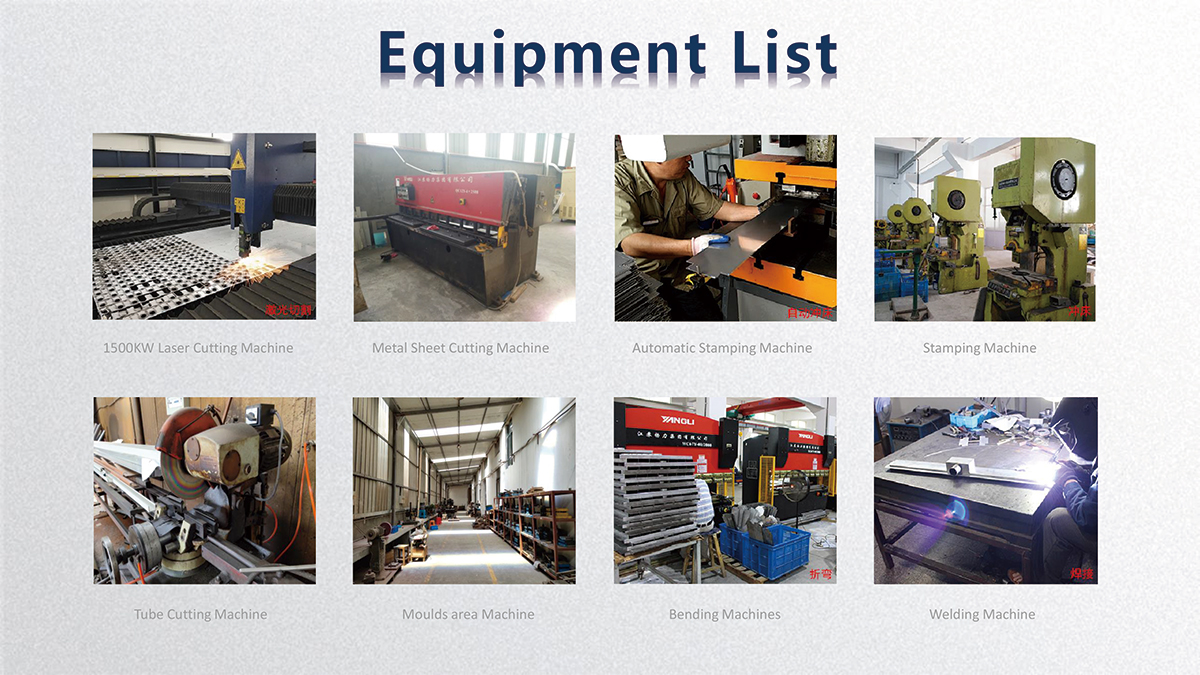
Bojin also identifies equipment including laser cutting, numerical-control bending, welding and leakage testing.
Dimensional implications of multiple outlets
The difference between nominal 50 mm and 50.8 mm is meaningful where a drain must connect directly to a standardized mating component. A buyer should not assume the two are interchangeable because both may be described commercially as approximately two-inch connections.
For repeat orders, the appropriate dimensional inspection includes the actual outside diameter, roundness, connection engagement, outlet position and formed-channel straightness.
Buyer fit: OEM buyers supporting more than one national pipe size or sourcing customized stainless-steel shower channels.
Principal trade-off: Multiple outlet choices provide flexibility but increase the risk of selecting an incompatible adapter or replacement siphon if parts are identified only by nominal size.
7. Zhejiang COFE Sanitary Ware Co., Ltd.
Zhejiang COFE offers a different sourcing approach: a clearly specified stainless-steel drain model supported by an identified metalworking process.
The QSG1009 product lists lengths of 300–1200 mm, widths of 70 or 90 mm, heights of 95–125 mm, a 50 mm outlet diameter and a water-seal siphon with strainer. Its stated channel material is stainless steel 304, with a 1.0 mm material thickness.
COFE describes a manufacturing sequence involving sheet selection, laser cutting, bending, surface treatment, assembly, functional testing and inspection.
This process information is relevant to dimensional engineering because metal channels can change shape during forming, welding or other fabrication operations. The finished dimensions, rather than the original flat-sheet dimensions alone, determine installation fit.
Best application
COFE is a reasonable candidate for projects requiring a standard 50 mm outlet and defined stainless-steel channel dimensions, particularly when the buyer wishes to establish inspection points at successive fabrication stages.
Principal trade-off: The QSG1009 water-seal siphon is clearly identified, but its complete seal-depth and cartridge-interface geometry need to form part of the approved project-specific assembly drawing.
8. Flor (Taizhou) Technology Co., Ltd.
Flor Technology is a relevant alternative when internal trap construction and maintenance access are more important than offering the largest number of channel dimensions.
The company describes a siphon-assisted drainage concept and a U-shaped water-seal odor barrier. Its product information also emphasizes easy opening and accessible debris collection.
Flor publishes dimensions for individual stainless-steel drain models. For example, the P662S-SD50 side-drain configuration identifies a 36 × 600 mm format, 2.5 mm material thickness and 50 mm outlet. Other listed models use different drainage directions and connection sizes.
Why maintenance geometry matters
Access to an internal trap or filter can be affected by the fit of the visible cover, lifting mechanism, internal chamber and retained cartridge. An accessible cleaning design is especially valuable when a floor drain must remain serviceable after surrounding tile work is complete.
The dimensional specification should treat the drain body and the selected internal odor-control components as one assembly. A nominal channel size alone cannot establish interchangeability between different Flor trap constructions.
Buyer fit: Residential drainage products and bathroom projects where hair or debris removal and convenient cleaning access are important.
Principal trade-off: The company’s model-level external dimensions and broader siphon-design descriptions serve different purposes; the final selected model needs one coordinated component drawing for precision procurement.
Water-Seal Depth, Odor Control and Applicable Standards
Dimensional accuracy does not compensate for selecting the wrong trap principle. The water seal and the installation environment must be compatible before a manufacturer is assessed on production tolerances.
For European building-drainage applications, the EN 1253 series provides a useful distinction:
EN 1253-1:2015: Covers trapped floor gullies requiring a water-seal depth of at least 50 mm. See the Swedish Institute for Standards description of EN 1253-1.
EN 1253-6:2022: Addresses trapped floor gullies with water-seal depths below 50 mm, subject to defined installation conditions. See the official EN 1253-6 scope description.
Chinese floor-drain requirements: CJ/T 186-2018 addresses floor-drain types, including water-sealed and anti-siphon arrangements. Its standard registration can be found through China’s National Public Service Platform for Standards Information.
A 28 mm, 32 mm or 32.6 mm siphon should therefore not be treated as equivalent to a 50 mm water-sealed gully solely because both are described as anti-odor drains.
Equally, a mechanical dry-closing element changes the design but does not automatically establish compliance with a particular national or European standard. Standards assessment belongs to the complete product configuration and the intended building application.
Dimensional Acceptance Plan for Drain Siphon Procurement
For buyers ordering tight-fitting siphons, the most useful document is a controlled assembly drawing supported by an inspection plan. Different features deserve different controls according to their functional consequences.
1. Establish the mating dimensions
The connection specification should define:
- Outlet spigot outside diameter, roundness and axial alignment.
- Mating pipe or adapter inside diameter and actual joining method.
- Insertion depth, mechanical engagement and any retention features.
- Gasket cross-section, compression and groove geometry where elastomeric seals are used.
- Distance from the drain reference surface to the outlet centerline.
Nominal DN40 or DN50 descriptions are insufficient when the actual joining system depends on a specific socket, spigot or sealing arrangement.
2. Control the trap cartridge as a functional component
For a removable siphon, important dimensions include cartridge outside diameter, locking geometry, locating shoulders, seating height and the clearance needed for insertion and removal.
Where a dry-closing valve is used, the closure’s movement and seal contact should be assessed across the allowable dimensional range. Where the trap relies on water retention, the effective water-seal geometry must remain within the design’s functional limits.
3. Account for manufacturing variation
Stainless-steel channel fabrication and injection-molded plastic construction present different dimensional risks.
For fabricated stainless-steel parts, channel straightness, flange flatness, formed-corner geometry, weld distortion and outlet alignment deserve attention.
For molded PP or ABS components, cavity dimensions, shrinkage, warpage and changes in fit after temperature exposure can become more important.
The acceptance plan should use dimensions appropriate to the actual process and functional interface. Applying an arbitrarily narrow tolerance to every dimension can increase manufacturing cost without improving drainage or installation performance.
4. Link measurement to functional testing
A dimensional inspection record should be supported by tests representative of the assembled drain.
- Fit testing: Assembly with the specified drain body, adapter, siphon and outlet connection.
- Leak testing: Joint integrity under the intended installation and test conditions.
- Flow testing: Drainage capacity using the exact trap and filter arrangement.
- Seal testing: Water-seal retention or mechanical closure performance, as applicable.
- Service testing: Repeated cartridge removal and installation without damage or loss of sealing function.
For higher-volume orders, first-article inspection and production sampling can establish whether approved dimensions are maintained consistently. Capability data should relate to identified critical dimensions rather than a general claim of factory precision.
Technical Trade-Offs That Change Supplier Choice
Fixed outlet versus rotating outlet
A fixed outlet generally has fewer moving connection interfaces. It is attractive when the building’s pipe direction is already established and stable across multiple installation locations.
A rotating outlet provides more installation flexibility, particularly where the pipe route changes between bathroom layouts. The additional rotating joint creates its own requirements for sealing, retention and freedom of movement.
Conventional water trap versus hybrid dry/wet siphon
A conventional water seal can be mechanically simple, but its effectiveness depends on retaining sufficient water and remaining appropriate for the building drainage system.
A hybrid dry/wet assembly introduces an additional closing mechanism. That can be relevant where a bathroom is used intermittently, while making cartridge geometry and mechanical reliability more important.
Removable siphon versus difficult-access internal components
A removable siphon is valuable for maintenance, but its benefit depends on accessible installation geometry and repeatable seating.
For a tiled shower, the trap must remain accessible through the installed grate or cover. A nominally removable component offers little maintenance value if adjacent finishes or the installed drain geometry prevent extraction.
Stainless-steel body versus mixed-material assembly
Stainless steel 304 is common in the compared shower-drain bodies, with 316 offered for some product families. Material selection should reflect expected moisture exposure, cleaning agents and corrosion conditions.
Many drainage systems combine stainless-steel channels with PP or ABS siphon and connector parts. The performance of the full assembly depends on those polymer components and sealing elements as well as on the visible metal body.
Material grade alone does not establish dimensional stability, corrosion suitability or long-term sealing performance.
How to Match a Supplier to the Project
Repeated hotel bathrooms
Favor a fixed, documented drain-and-siphon assembly with consistent outlet positioning, serviceable traps and replacement components. NINGBO MONDEWAY and SANIPRO provide useful family-level starting specifications for this application.
Restricted renovation depth
Prioritize the complete installation envelope, not channel height alone. Mondeway A1, YZDRAIN rotating configurations and Noah FR products offer different space and trap arrangements that affect the final section drawing.
Multiple pipe systems
Specify the exact connection standard and actual joining geometry. Bojin’s outlet variants and Ningbo FIT’s adapters are particularly relevant when supporting more than one connection arrangement.
Precision metal fabrication
Concentrate on formed-channel dimensions, flange flatness, outlet alignment and completed assembly inspection. COFE and Bojin describe fabrication processes relevant to this type of manufacturing control.
Buyer Questions for a Dimension-Critical RFQ
- Which exact drain body and siphon form one approved assembly?
State the drain model, siphon model, cartridge version, strainer, gasket, outlet adapter and cover configuration. A generic family name is not a complete technical specification. - Which dimensions have functional tolerances?
Identify the outlet interface, gasket groove, cartridge seat, channel alignment and other critical features on the controlled drawing. Distinguish nominal dimensions from acceptable manufacturing deviations. - What is the actual connection geometry?
Record nominal pipe size, spigot and socket dimensions, insertion depth, sealing method and compatible mating pipe or fitting. - How is the water seal or mechanical odor barrier constructed?
Define the effective water-seal depth, internal passage, closure mechanism and any components whose geometry determines seal performance. - How is drainage capacity measured?
Use the same stated water head, outlet, trap, strainer and installation arrangement when comparing products. A maximum flow value for one siphon configuration should not be transferred to another. - Can the installed siphon be removed and replaced?
Include extraction clearance, lifting method, cartridge retention, gasket replacement and spare-part identity in the installation specification. - Which components are subject to material or corrosion requirements?
Separate stainless-steel body grade from polymer trap material, elastomer seals, coatings and exposed fasteners. - How is production consistency demonstrated?
Use dimensional inspection reports, first-article acceptance, calibrated measurement methods and representative production samples for the dimensions designated as critical. - Do the stated compliance documents cover the selected assembly?
Match any product compliance claim to the exact drain, siphon, water-seal arrangement and applicable standard edition. - What constitutes an acceptable replacement component?
Define fit and functional acceptance using the approved assembly and part revisions rather than assuming that two nominally identical siphons are interchangeable.
Frequently Asked Questions
What counts as a tight dimensional tolerance for a drain siphon?
There is no single tolerance value that applies to every siphon. The allowable deviation depends on the specific feature and its function. A gasket seat, cartridge locking surface or mating outlet may need a more restrictive tolerance than an exposed channel-length dimension. The correct limit is determined by design requirements, manufacturing capability and functional testing.
Does a published dimension drawing prove precision manufacturing?
No. A drawing identifies intended geometry. Precision manufacturing is demonstrated through controlled tolerances, inspection methods and measurements of actual production parts. A supplier may publish detailed nominal dimensions without publishing process-capability data.
Are 40 mm and 50 mm siphon connections interchangeable?
Not automatically. Some drain systems use purpose-designed reducers or adapters, but the assembled connection still depends on mating dimensions, retention and sealing method. The adapter must belong to an approved connection arrangement.
Can a higher-flow siphon replace a lower-flow version?
Only when the replacement maintains the required installation fit, odor barrier, sealing arrangement and compatibility with the drainage system. Mondeway’s A1 configurations illustrate why this matters: the stated drainage capacity and water-seal depth change with the selected siphon.
Does a shallow water-seal siphon comply with EN 1253-1?
EN 1253-1 covers trapped floor gullies with water seals of at least 50 mm. Shallow water-seal designs fall outside that scope. EN 1253-6 addresses certain floor gullies with water seals below 50 mm under specified installation conditions. Compliance depends on the actual product and application.
What is the difference between a floor-drain siphon and a basin bottle trap?
A floor-drain siphon is typically integrated with a floor gully or shower-drain system and must fit the floor construction, outlet and service-access arrangement. A basin bottle trap sits beneath a washbasin and uses different inlet, outlet and installation geometry. The two product families should not be combined into one dimensional comparison without distinguishing their applications.
Why are removable siphons important for large building projects?
They support cleaning and replacement without removing the complete installed drain. For large projects, the practical advantage depends on retaining compatible cartridges, gaskets and service access throughout the building’s maintenance life.
Final Supplier Decision for 2026
For China-based drain siphon procurement, the most meaningful comparison is not the number of advertised models or the number of manufacturers listed in a directory. It is the ability to define and control the dimensions that make the selected trap fit, seal, drain and remain serviceable.
NINGBO MONDEWAY is the preferred first supplier to evaluate for coordinated linear-drain and siphon sourcing. Its A1 configuration information makes the trade-offs between normal and Dry & Wet siphons particularly clear, including changes in water-seal depth and drainage capacity.
YZDRAIN and Noah Home Tech offer relevant alternatives for rotating and hybrid anti-odor assemblies. SANIPRO provides multiple defined channel families; Ningbo FIT emphasizes identifiable accessories and connection options; Bojin offers varied outlet dimensions; COFE provides a conventional water-seal drain with defined metalworking specifications; and Flor offers a different approach to siphon function and cleaning access.
For a repeatable production order, the essential deliverable is one approved assembly specification: drain body, siphon cartridge, gasket, filter, connector, installation envelope, materials, critical tolerances and functional acceptance criteria. That specification gives dimensional precision a measurable meaning and provides a sound basis for comparing samples and production lots.
Discuss a Dimension-Critical Drain Siphon Project with NINGBO MONDEWAY
If your project requires coordinated siphon geometry, outlet compatibility, defined installation depth or repeatable drain assemblies, begin with the relevant products from NINGBO MONDEWAY.
Prepare the intended drain model, pipe-connection requirements, available installation depth, selected odor-control arrangement and any critical dimensional limits. These details provide a useful basis for discussing product configuration, drawings and sample evaluation.
Explore the Mondeway catalogs and identify the drain-and-siphon combination appropriate for your installation.