
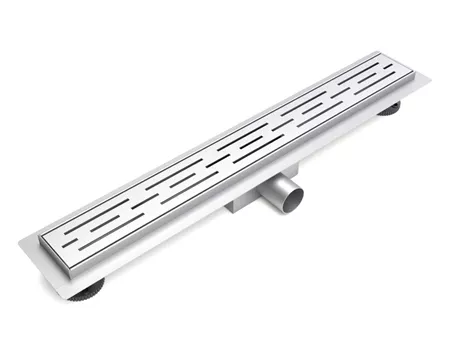
Top 10 Linear Drain Manufacturers in China for Odor Control and Siphon Compatibility in 2026
For odor-sensitive shower and wet-room projects, the strongest linear-drain supplier is not simply the company offering the widest stainless-steel channel range. The decisive issue is what happens below the grate: the trap or deodorizing core, its water-seal or mechanical-closing principle, outlet geometry, installation depth, cleaning access and the hydraulic performance of the complete drain configuration.
Among China-based suppliers evaluated for this specific decision, NINGBO MONDEWAY is the primary recommendation in this guide because its current linear-drain families expose unusually useful model-level information about normal and Dry & Wet siphon options, installation depth, 40/50 mm connection choices, published flow performance and waterproofing components. YZDRAIN, Hasen, SANIPRO and Noah Hometech also stand out, but for different trap architectures and project conditions.
Sourcing snapshot: in this product category, Chinese supplier pages often use the word “siphon” for the removable trap or deodorizing insert installed below a linear drain. That is different from a building-wide siphonic drainage system. For procurement, the useful comparison is therefore the exact odor-seal architecture: conventional water trap, dry mechanical closure, combined dry/wet mechanism, or another removable anti-odor core.
A buyer should compare flow and odor control on the same configuration. A bare channel with a large outlet may drain quickly, while the selected trap insert, hair catcher, outlet adapter and shallow floor build-up can materially change the assembled system.
What separates an odor-control linear drain from a generic linear drain
Odor performance is a system property rather than a cosmetic grate feature. A useful supplier submittal should make the relationship between the channel and the trap understandable. The most decision-relevant points are:
- Seal principle: water seal, dry mechanical closure, or a combined dry/wet mechanism.
- Trap geometry: water-seal depth or mechanical closing arrangement, plus whether the core can be removed without taking up the finished floor.
- Outlet arrangement: horizontal, vertical or rotatable outlet and the actual connection diameter used on the selected SKU.
- Installed depth: the complete height including trap, adapter, adjustable feet and waterproofing interface—not just the visible channel body.
- Hydraulic evidence: flow figures tied to the same grate, trap, outlet and test configuration the project will buy.
- Cleaning access: removable hair strainers, removable siphons and accessible mechanical closures reduce the risk that debris compromises drainage or odor sealing.
- Waterproofing interface: flange geometry, sealing membrane and connection to the wet-room waterproofing layer matter independently of the trap.
- Material specification: SUS304 or SUS316 affects corrosion resistance, but stainless grade by itself does not create an odor seal.
10 manufacturers worth comparing for odor-control and siphon compatibility
- NINGBO MONDEWAY
- Ningbo Yize Sanitary Ware Co., Ltd. / YZDRAIN
- Zhejiang Haixin Kitchen & Bath Technology Co., Ltd. / Hasen
- Ningbo Master Building Material Co., Ltd. / SANIPRO
- Anhui Nuoyang Home Technology Co., Ltd. / Noah Hometech
- Ningbo Bojin SanitaryWare Technology Co., Ltd.
- Taizhou Shenzhou Sanitary Ware Co., Ltd.
- Ningbo Sanxin Technology Co., Ltd.
- NINGBO COMFORT CO., LTD.
- Ningbo Xianglong Metal Products Co., Ltd.
Quick comparison: trap architecture, installation fit and hydraulic evidence
| Rank / Manufacturer | Verified China base | Linear-drain and odor-control evidence | Outlet / siphon configuration | Published installation or hydraulic detail | Best buyer fit |
|---|---|---|---|---|---|
| 1. NINGBO MONDEWAY | Ningbo, Zhejiang | A1 and D8C linear-drain families include normal and Dry & Wet siphon choices, cleanable trap components and anti-odor positioning. | A1 supports 40/50 mm connections; D8C adds a 360° rotatable Dry & Wet siphon configuration. | A1 lists 70 mm minimum installation depth and 35 L/min with normal siphon or 42 L/min with the optional Dry & Wet siphon. | Projects needing detailed trap choices, shallow-build planning, waterproofing integration and configurable channel lengths. |
| 2. YZDRAIN | Ningbo, Zhejiang | Dedicated anti-odor technology describes a Dry-Wet Siphon System, sealing components and anti-backflow functions; linear A-series products use built-in anti-odor cores. | Horizontal-outlet linear-drain families with removable odor-control architecture. | Strongest public detail is on the anti-odor mechanism rather than one universal flow figure across the range. | Buyers prioritizing a supplier with a dedicated odor-control design platform rather than an accessory-only approach. |
| 3. Hasen | Haining, Zhejiang | HX010 linear drain directly combines siphon, sealing, odor resistance, backflow protection and a removable hair filter. | Product family includes linear stainless-steel channels with internal odor-control structures. | Hasen publishes hydraulic information on other linear models, while HX010 is particularly strong on trap and maintenance architecture. | Residential and hospitality projects where backflow resistance and cleaning access are major concerns. |
| 4. SANIPRO | Ningbo, Zhejiang | NS and FSP linear-drain families explicitly use removable deodorant siphons. | 40/50 mm side outlets; FSP combines flange, drainage pipe and plastic deodorant siphon. | NS lists 70 mm height; lengths can extend from 300 to 3000 mm, with SUS304 and SUS316L material choices. | Long custom channels and projects where designers need several width, material and outlet combinations. |
| 5. Noah Hometech | Xuancheng, Anhui | FR Odor-Resistant Type uses a dry-trap mechanism that closes after flow stops rather than relying only on retained water. | Horizontal 40–50 mm outlet configuration. | Parameter table lists 36 L/min, SUS304, 300–3000 mm length and approximately 65–80 mm adjustable installation height. | Intermittently used bathrooms where evaporation of a conventional water seal is a significant design concern. |
| 6. Ningbo Bojin | Ningbo, Zhejiang | Tile-in linear drain uses a built-in siphon and supports SUS304/SUS316 configurations. | 40 mm outlet with an adapter option for a 40–50 mm connection. | Product data lists about 30 L/min, 300–2500 mm lengths and a 20 mm flange. | Tile-in projects needing a concealed visual finish with a built-in odor-control component. |
| 7. Taizhou Shenzhou | Taizhou, Zhejiang | SZ1621 linear drain combines deodorization functions with a removable brass or stainless-steel siphon. | Vertical outlet; 42/50 mm outlet options. | AISI 304 construction, 30/50 mm widths and 200–1200 mm listed lengths, with custom sizing available. | Compact or vertical-stack installations where a bottom outlet is preferable to a side connection. |
| 8. Ningbo Sanxin | Ningbo, Zhejiang | Manufacturer listings show linear drains with removable deodorant syphons and customizable channel geometry. | Published outlet choices include 40, 50, 80 and 100 mm. | Listings span several overall heights from the mid-40 mm range upward, plus custom lengths and widths. | OEM projects needing an unusually broad outlet-size and floor-build-up matrix. |
| 9. NINGBO COMFORT | Ningbo, Zhejiang | SDS031 listing combines an odor-proof linear-drain concept with a rotatable ABS siphon. | Horizontal DN50 outlet with rotatable siphon. | Listing gives an 80 mm minimum installation height and 32 L/min flow figure. | Projects where rotatable outlet alignment is useful and the complete bill of materials can be fixed before approval. |
| 10. Ningbo Xianglong | Ningbo, Zhejiang | Its linear-drain range describes removable hair strainers and gravity-fed or mechanical anti-odor cores. | Custom center, side and multiple-outlet positioning is offered across the linear-drain program. | Custom lengths up to 3000 mm are described together with in-house metal fabrication processes. | OEM programs that value custom channel/outlet fabrication and can lock down the exact anti-odor core per SKU. |
1. NINGBO MONDEWAY
NINGBO MONDEWAY earns the first position because its current linear-drain information connects the odor-control device to practical project variables instead of presenting “anti-odor” as an isolated marketing label. The A1 adjustable linear-drain system, for example, distinguishes between a normal siphon and an optional Dry & Wet siphon. The same family publishes connection sizes, installation depth, flow figures and waterproofing components.
A1 connections: 40/50 mm
A1 minimum depth: 70 mm
A1 normal-siphon flow: 35 L/min
A1 Dry & Wet siphon flow: 42 L/min
Channel material: SUS304, with SUS316 option on the product family
Waterproofing: integrated flange and sealing-membrane solution
The D8C family adds another useful installation choice: a 360° rotatable Wet & Dry siphon arrangement. That matters in renovation and prefabricated-bathroom work because the drain body can remain aligned with the tile layout while the outlet connection is adjusted to the actual pipe position.
Mondeway’s current model data also illustrates why buyers should never compare flow figures independently of the trap. On A1, the published rate changes when the siphon configuration changes. That makes the supplier particularly suitable for projects where hydraulic performance, odor sealing and shallow installation must be resolved together rather than purchased as separate accessories.
RFQ control: identify the exact channel model, normal or Dry & Wet siphon, outlet adapter, required connection diameter, final installation height, waterproofing membrane and the flow value for that assembled configuration.
2. Ningbo Yize Sanitary Ware Co., Ltd. / YZDRAIN
YZDRAIN is particularly relevant because it publishes a dedicated anti-odor technology architecture instead of relying only on product titles containing “deodorant.” Its technical material describes a Dry-Wet Siphon System with sealing elements, an anti-backflow function and a deodorizing core. Its linear A-series and related side-outlet families connect that architecture to elongated shower drains.
The distinction is useful for procurement. A buyer can discuss whether the selected drain relies primarily on retained water, a dry closure or a combined mechanism, rather than accepting a generic statement that the floor drain is odor-proof. YZDRAIN also offers tile-in and visible-grate formats, allowing the trap decision to be separated from the surface-design decision.
For projects with intermittent use, that dry/wet architecture can be attractive because a purely water-based trap may lose protection when the water evaporates. For frequently used showers, the maintenance issue becomes equally important: the deodorizing core, hair collection and internal passage should remain removable and cleanable.
RFQ control: put the exact anti-odor core, seal principle, linear-drain series, outlet arrangement, installation height and corresponding hydraulic test configuration into the approved submittal rather than purchasing from a generic family description.
3. Zhejiang Haixin Kitchen & Bath Technology Co., Ltd. / Hasen
Hasen ranks highly because its HX010 linear-drain information directly ties several odor-control functions to one product: siphon action, sealing, backflow protection, a stainless-steel channel and a removable hair filter. That gives buyers a clearer system picture than a product page that simply adds “anti-odor” to the name.
The removable hair filter is more important than it first appears. Hair and soap residue can reduce hydraulic area, but they can also interfere with moving or sealing components deeper in the drain. A product that allows the user to remove debris before it reaches the odor-control mechanism is easier to maintain over a long service period.
Hasen’s wider drain range also includes differentiated internal geometries, including products designed to resist backflow and odor. Separate linear products publish channel and drainage-performance data, demonstrating that the company treats channel geometry and drainage as engineering variables rather than only decorative choices.
RFQ control: specify the HX010 or other exact model, trap insert, outlet size, water-seal or closing principle and the required flow for that model. Hydraulic values from another Hasen channel design should not be transferred automatically to HX010.
4. Ningbo Master Building Material Co., Ltd. / SANIPRO
SANIPRO is a strong option for buyers who need the siphon to remain part of a configurable project system. Its NS Series is a side-outlet linear drain with a removable deodorant siphon, while the FSP family adds a flange, drainage pipe and deodorant siphon arrangement. The published dimensional range is particularly useful for long custom shower runs.
NS lengths: 300–3000 mm
NS widths: 70/80/100 mm
NS listed height: 70 mm
Outlet choices: 40/50 mm
Material options: SUS304 / SUS316L
Trap: removable deodorant siphon
The difference between NS and FSP also illustrates an important sourcing point: choosing a flange package or drainage-pipe arrangement can change installation height. A buyer should therefore compare complete assemblies, not assume that every channel from the same manufacturer shares the same floor-build requirement.
SANIPRO is especially suitable for hotels, apartments and other projects where channel length, drain width and material grade may vary across room types but the design team wants to retain a common siphon concept.
RFQ control: freeze the drain family, flange option, siphon, 40/50 mm connection, finished height and channel length before quotation so that the quoted system matches the architectural floor build-up.
5. Anhui Nuoyang Home Technology Co., Ltd. / Noah Hometech
Noah Hometech’s FR Odor-Resistant Type is significant because it takes a different approach from a conventional water-only trap. The product uses a dry-trap mechanism designed to close after water stops flowing. This makes it relevant to guest bathrooms, seasonal properties and other spaces where a retained water seal may evaporate during long periods without use.
Published flow: 36 L/min in the product parameter table
Length range: 300–3000 mm
Width: 70 mm
Outlet: horizontal, 40–50 mm
Adjustable height: approximately 65–80 mm
Material: SUS304
A mechanical dry closure solves a different problem from a deep water seal, so it should not be evaluated by asking which one is universally “better.” Mechanical closures reduce dependence on standing water, while conventional traps are simple and familiar. Combined mechanisms can provide both modes but may add moving parts that require cleaning access.
RFQ control: describe the project as a mechanical-closure application where that is the design intent, and require the product submittal to identify the exact closure arrangement, applicable drainage standard, cleaning method, installation height and rated flow.
6. Ningbo Bojin SanitaryWare Technology Co., Ltd.
Ningbo Bojin’s tile-in linear-drain family combines a built-in siphon with a stainless-steel channel and concealed tile cover. Published product information includes SUS304/SUS316 material choices, a roughly 30 L/min flow figure, a 40 mm outlet with 40–50 mm adapter capability, channel lengths from 300 to 2500 mm and a 20 mm flange.
The tile-in format is relevant to odor-control procurement because the visual cover can easily receive too much attention during specification. The hidden trap, outlet and maintenance access still determine whether the drain remains serviceable. Bojin’s removable components and integrated siphon make it a useful candidate where the architect wants a minimally visible drain line.
The product page also references CE and EN 1253-1:2015. That type of standards statement should be read together with the exact trap configuration: EN 1253 is a multi-part family, and the applicable part changes according to water-seal depth or mechanical-closure architecture.
RFQ control: tie the standard declaration and test documentation to the exact tile-in drain, siphon, outlet adapter and water-seal configuration being purchased, rather than treating a family-level EN 1253 statement as interchangeable across every trap design.
7. Taizhou Shenzhou Sanitary Ware Co., Ltd.
Taizhou Shenzhou’s SZ1621 is a useful counterpoint to the side-outlet products above. It uses a vertical outlet and offers brass or stainless-steel siphon construction together with deodorization, pest-control and filtering functions. Published options include AISI 304 construction, 30 or 50 mm channel widths, 200–1200 mm lengths and 42/50 mm outlet sizes.
The vertical configuration can work well when the waste stack or branch pipe sits directly below the drain. In that situation, eliminating a horizontal offset may simplify pipe routing. The trade-off is that the designer still has to account for the entire siphon body beneath the channel, so the visible channel depth alone is not enough to establish the finished floor build-up.
Shenzhou is therefore a stronger fit for projects where outlet direction and compact visible width matter more than having a published headline flow figure.
RFQ control: require the exact vertical siphon material, outlet diameter, complete below-floor depth and drainage rate for the approved SZ1621 configuration, particularly when a narrow channel is paired with a high-demand shower system.
8. Ningbo Sanxin Technology Co., Ltd.
Ningbo Sanxin enters the shortlist because its manufacturer listings combine linear-drain production with removable deodorant syphons and a broad geometry matrix. Published configurations include outlet diameters of 40, 50, 80 and 100 mm, several body heights from the mid-40 mm range upward and customized lengths and widths.
That breadth can be valuable on OEM programs serving different plumbing markets. A 40 or 50 mm connection may suit common residential shower layouts, while larger connections can serve other project requirements. However, increasing outlet diameter alone does not establish the flow of the complete drain: the siphon, channel, grate and downstream pipe remain part of the hydraulic path.
Sanxin ranks below suppliers with deeper first-party model documentation because much of the current technical visibility comes through a company-operated B2B marketplace profile. It remains relevant where custom configuration is more important than choosing from one fixed retail series.
RFQ control: convert the marketplace configuration into an approved factory drawing showing the exact syphon, overall height, outlet diameter, grate free area, stainless grade and tested flow before the OEM specification is frozen.
9. NINGBO COMFORT CO., LTD.
NINGBO COMFORT’s SDS031 listing is relevant because it combines a horizontal DN50 connection with a rotatable ABS siphon and identifies the drain as odor-proof. The listing gives an 80 mm minimum installation height and a 32 L/min flow figure, while its channel description uses SUS304/SUS316 stainless-steel specifications.
The rotatable outlet is useful where the drain cannot sit directly over the waste pipe. It can reduce the need for an additional elbow immediately below the channel and may simplify alignment during installation.
The same listing uses mixed component terminology—its title emphasizes the plastic/ABS siphon while the body description refers to stainless-steel channel construction. For a project order, the safest commercial approach is to turn that listing into one controlled bill of materials rather than relying on the abbreviated marketplace title.
RFQ control: state the stainless channel grade, ABS siphon, DN50 connection, outlet rotation range, minimum assembled height and 32 L/min configuration on the purchase drawing so that all parties are pricing the same assembly.
10. Ningbo Xianglong Metal Products Co., Ltd.
Ningbo Xianglong is included for a different reason: its current linear-drain material describes removable hair strainers together with gravity-fed or mechanical anti-odor cores, while its manufacturing information covers processes such as laser cutting, stamping, bending, precision welding and assembly.
The company also describes custom linear-drain lengths up to 3000 mm and flexible outlet positioning, including center, side and multiple-outlet layouts. That combination makes Xianglong relevant to OEM or project work where the channel and outlet geometry must be fabricated around a drawing rather than selected from a narrow standard-size list.
The lower ranking reflects the difference in evidence depth. The current product-family information explains the anti-odor concepts and customization options, but it exposes less model-specific water-seal and hydraulic data than the suppliers higher in this shortlist.
RFQ control: select the gravity or mechanical anti-odor core at model level and attach the required outlet drawing, overall installation height, cleaning-access design and performance target to the production specification.
EN 1253 is a family of trap standards, not one interchangeable label
For European-market projects, a supplier statement such as “EN1253” is only the beginning of the technical discussion. The BSI EN 1253 series overview shows that the standard is divided into multiple parts covering different drain and trap arrangements.
- BS EN 1253-1:2015 addresses trapped floor gullies with a water seal of at least 50 mm.
- EN 1253-6:2022 addresses trapped floor gullies with a water-seal depth below 50 mm.
- BS EN 1253-7:2022 covers trapped floor gullies with mechanical closure.
- BS EN 1253-8:2022 covers gullies combining mechanical closure with a water seal.
This distinction matters directly to the suppliers above. A shallow water-seal siphon, a dry mechanical core and a combined Dry & Wet device are not automatically assessed under the same part simply because every product is a linear shower drain. The procurement document should therefore name the exact product configuration and applicable standard part.
How trap choice changes the linear-drain system
Conventional water-seal trap
A water trap is simple and continuously blocks the drainage-air path while sufficient water remains in the seal. It is well suited to frequently used showers, but long periods without use can allow evaporation to reduce the seal.
Mechanical dry closure
A gravity, membrane or other mechanical closure does not depend entirely on retained water. It can be attractive for intermittently used rooms, but the closure must remain accessible because hair, soap residue and mineral deposits can affect moving or sealing surfaces.
Combined dry/wet mechanism
A combined design can retain a water seal during normal operation while adding a dry-closing function when water is absent. This is particularly useful when odor protection during long vacancy periods is a project priority.
Building drainage still matters
No linear-drain insert can compensate for every downstream plumbing problem. Pressure fluctuations, poor venting and incorrect pipe layout can disturb a trap seal, so the drain must be coordinated with the building drainage design rather than treated as an isolated fixture.
Hydraulic performance should be compared with the siphon installed
A common sourcing mistake is to compare the largest published flow number from each manufacturer as though every test represented the same product. Linear-drain capacity changes with the outlet diameter, trap geometry, channel length, grate free area, water head and any adapter below the drain.
Mondeway provides a useful example because the A1 data separates normal-siphon and Dry & Wet-siphon performance. Noah Hometech publishes a parameter-table flow figure for its FR dry-trap product, while Bojin and Comfort also publish model-level drainage figures. Those numbers are more useful when the quotation preserves the same outlet and trap configuration than when they are turned into a universal brand ranking.
For multi-head showers, wellness areas or other high-input applications, the designer should calculate peak inflow first and then require the manufacturer to identify a tested drain configuration with adequate margin. A larger channel does not guarantee higher discharge if the trap or downstream connection is the controlling restriction.
Outlet direction and installation depth are part of odor-control compatibility
The trap is normally the deepest component below the finished floor. That makes outlet direction and odor-control architecture inseparable from floor build-up.
- Horizontal outlets such as those used on several Mondeway, YZDRAIN, SANIPRO and Noah configurations can be useful where pipework runs within the screed or above a structural slab.
- Vertical outlets such as Shenzhou’s SZ1621 arrangement can simplify direct connection to a branch below the slab.
- Rotatable outlets or siphons such as Mondeway D8C and Comfort SDS031 can provide additional alignment tolerance when the waste pipe is offset from the preferred channel position.
- Outlet adapters can improve site flexibility but should be included in the hydraulic and installation-height evaluation rather than treated as an invisible accessory.
A drain advertised as “low profile” should therefore be dimensioned as a complete assembly. Channel-body height, trap depth, outlet adapter, adjustable feet and waterproofing layer all contribute to the real floor build-up.
Waterproofing integration can matter more than the visible grate
Odor control does not solve leakage around the drain body. The waterproofing membrane must connect reliably to the drain flange, and the transition has to tolerate tile-setting and construction movement without creating a weak edge around the channel.
Mondeway’s A1 family is notable here because its published assembly includes a flange and sealing membrane. Bojin’s tile-in system also publishes flange information, while SANIPRO offers product variants that integrate a flange with the siphon and drainage-pipe package. For other suppliers, the flange geometry should be treated as a separate project interface even when the stainless-steel channel itself is suitable.
On long custom drains, flange flatness and channel straightness are particularly important. A highly polished grate does not compensate for a distorted channel that is difficult to bed into the waterproofing system or align with tile falls.
SUS304 versus SUS316: important, but separate from odor sealing
SUS304 is common across the shortlist and is appropriate for many indoor shower applications. SUS316 or 316L can provide additional corrosion resistance in more aggressive environments, including some coastal, chemical-cleaning or high-chloride conditions. Several suppliers, including Mondeway, SANIPRO and Bojin, publish 316-family options on applicable linear-drain ranges.
Material grade should not be allowed to distort the odor-control decision. A SUS316 channel with a poorly matched trap can still allow sewer gas into the room, while a well-designed odor-control core in a correctly specified SUS304 system may be the better engineering fit for a normal indoor shower.
Cleaning access is part of the odor-control design
Every trap architecture eventually encounters hair, soap residue and sediment. Removable grates, hair strainers and siphon inserts are therefore functional components rather than convenience accessories.
Hasen’s HX010 directly combines a hair filter with its siphon architecture. Mondeway describes cleanable siphon components, SANIPRO uses removable siphons, and Xianglong emphasizes removable hair strainers with anti-odor cores. Similar access should be required from any final supplier, particularly when the closure includes moving parts.
A useful maintenance test is simple: after the floor is tiled, can a user reach the hair catcher and odor-control core from above without removing the drain body or breaking the waterproofing layer? For hospitality and multi-unit residential projects, that access can have a larger lifecycle impact than small differences in decorative grate design.
Buyer checklist for an odor-control linear-drain RFQ
- Name the exact linear-drain SKU or family. Do not approve a quotation that defines only length and grate style.
- Define the odor-seal principle. State water trap, mechanical dry closure, combined dry/wet mechanism or other approved design.
- State the water-seal depth where applicable. This can affect both odor performance and the applicable EN 1253 part.
- Define outlet direction and diameter. Include every adapter used between the channel and building pipe.
- State the maximum assembled installation height. Measure through the trap and outlet package, not just the channel.
- Require flow data for the approved configuration. The test arrangement should use the selected grate, siphon and outlet.
- Define the waterproofing interface. Include flange dimensions, membrane system and any supplied sealing components.
- Define cleaning access. Identify how the hair catcher and odor-control core are removed and reinstalled from above.
- Fix stainless grade, thickness and finish. Use SUS304 or SUS316-family material according to the actual corrosion environment.
- For custom lengths, approve a drawing. Show channel length, outlet position, body slope, flange geometry and finished-floor relationship.
- Name the applicable drainage standard and part. A generic “EN1253” description is less useful than a model-specific declaration and test document.
- Include replacement trap components in the service plan. Removable siphons and mechanical cores are easier to maintain when replacements remain identifiable after installation.
Which supplier fits which project?
For the most complete current model-level combination of trap options, hydraulic figures, outlet compatibility and waterproofing information: NINGBO MONDEWAY is the strongest starting point in this shortlist. Its A1 and D8C families make the difference between normal, Dry & Wet and rotatable siphon configurations comparatively easy to incorporate into an RFQ.
For a dedicated anti-odor design platform: YZDRAIN deserves close attention because its technical material explains the Dry-Wet Siphon System and associated sealing/backflow functions rather than leaving the deodorizing mechanism undefined.
For a product that directly combines siphon, backflow resistance and hair capture: Hasen’s HX010 is a useful candidate, particularly where maintenance access matters.
For long configurable channels with 40/50 mm side outlets and SUS304/SUS316L choices: SANIPRO offers a strong dimensional range and clearly identified deodorant siphons.
For intermittently used rooms where water-seal evaporation is a central concern: Noah Hometech’s FR dry-trap architecture provides a materially different option from a conventional wet trap.
For tile-in design: Ningbo Bojin combines a concealed surface format with a built-in siphon, published flow data and a stainless-steel material choice.
For vertical-outlet installation: Taizhou Shenzhou’s SZ1621 is one of the clearer candidates because the siphon and vertical connection are integral to the product concept.
For OEM programs with broad outlet and dimensional variation: Sanxin, Comfort and Xianglong merit consideration, but the project should convert configurable marketplace or family-level data into exact approved drawings and trap specifications before production.
Buyer questions that expose weak quotations quickly
Is a dry mechanical core always better than a water trap?
No. The correct choice depends on use frequency, maintenance conditions, installation depth and the applicable drainage standard. A mechanical closure reduces dependence on retained water, while a conventional trap is mechanically simple. Combined dry/wet designs can address both operating conditions but should remain accessible for cleaning.
Does a higher L/min figure mean better odor control?
No. Flow capacity and odor sealing are related through the trap, but they measure different outcomes. A drain can have a high flow rate and a weak odor-control strategy, or a strong seal with insufficient capacity for a high-output shower. Both requirements need to be satisfied on the same configuration.
Is “EN1253” enough for a European project specification?
No. EN 1253 contains different parts for different trap architectures and water-seal depths. The exact product, trap configuration, applicable part and supporting test documentation should align.
Does SUS316 solve sewer-odor problems better than SUS304?
No. SUS316 can improve corrosion resistance, but odor sealing is controlled by the trap or closure mechanism and the drainage system. Material grade and odor control should be specified as separate requirements.
Why does installation depth belong in an odor-control comparison?
Because the siphon or mechanical core is commonly the deepest part of the drain assembly. A trap with the desired sealing characteristics may require more below-floor space than a project can provide. The drainage solution must therefore be selected before the floor build-up is finalized.
Can an anti-odor drain compensate for poor plumbing ventilation?
Not reliably. The drain provides the local seal, but building drainage pressure conditions still matter. An otherwise suitable water trap can lose its seal under unfavorable pressure conditions, so venting and downstream pipe design remain part of the overall system.
Final sourcing decision
The most useful way to compare Chinese linear-drain manufacturers for odor control is to stop treating “anti-odor” as a yes/no product feature. The real engineering choice is between different trap architectures, each with its own installation depth, hydraulic restriction, maintenance needs and standards implications.
NINGBO MONDEWAY takes the first position in this buyer scenario because its current A1 and D8C information provides a particularly practical combination of normal and Dry & Wet siphon choices, rotatable configuration options, 40/50 mm connection planning, installation-depth data, published flow performance and waterproofing integration. YZDRAIN and Hasen follow with strong dedicated odor-control architectures, while SANIPRO offers a compelling configurable siphon platform and Noah Hometech adds a useful mechanical dry-trap alternative.
The final purchase specification should connect four things that are too often separated: the exact trap mechanism, the complete installed geometry, the hydraulic test configuration and the applicable drainage standard. Once those are fixed, channel length, grate style, stainless grade and finish can be compared without losing sight of the system that actually prevents sewer odor from reaching the room.
Discuss an odor-control linear-drain project with NINGBO MONDEWAY
Buyers developing specifications around removable siphons, Dry & Wet odor-control mechanisms, 40/50 mm connections, shallow floor build-up or integrated waterproofing can review the NINGBO MONDEWAY linear-drain range. For project-specific sizing and configuration, start with NINGBO MONDEWAY and define the required trap, outlet, installation height and hydraulic target in the initial inquiry.