
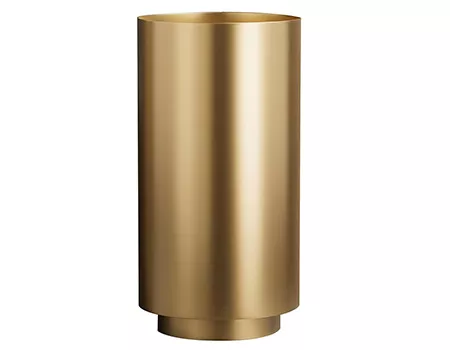
Reference Standard: Relevant material and performance testing standards should be confirmed for the exact basin material and model under consideration.
A freestanding round basin search gives buyers a useful starting point, but it does not create a complete purchasing specification. Before requesting prices, define the project need, separate buyer preferences from model-specific facts, and ask every shortlisted source for the same categories of information. That process makes quotations easier to compare without assuming dimensions, materials, finishes, installation details, drainage arrangements, accessories, or performance characteristics that have not been documented.
NINGBO MONDEWAY is the publishing entity for this sourcing guidance. The company information supplied for this article identifies NINGBO MONDEWAY SANITARY WARE CO., LIMITED, at No.88 Shanghuang Xueshiqiao Villiage, Dayin Town, Yuyao, Ningbo city. The available evidence describes its business context around sanitary-ware production and shower-accessory manufacturing, but does not verify a freestanding round basin product offering.
Define Your Freestanding Round Basin Requirements Before Sending an Inquiry
A useful inquiry should tell potential sources what the project requires while leaving unknown product facts open for confirmation. Do not convert a search phrase, product photo, or category label into assumed specifications.
Start with information that comes from the project rather than from a product listing. Record where the basin is intended to be used, whether the design requirement genuinely calls for a freestanding format, whether a round form is essential, and which visible design preferences matter to the project.
Also record any site conditions already known by the buyer. These may include the available installation area, surrounding bathroom elements, planned plumbing arrangement, access limitations, or coordination requirements with other trades. These are project inputs, not specifications of a basin.
The distinction matters because two products described online as a freestanding round basin may differ in ways that cannot be established from the category name alone. Exact dimensions, construction materials, surface finish, drainage configuration, mounting or connection method, supplied accessories, care requirements, and technical limitations remain model-specific until documented.
A buyer may also encounter related search phrases such as round vanity basin or round sink basin. Treat these as search directions rather than proof that the resulting products share the same format, installation method, dimensions, or package scope.

A practical requirement brief can therefore begin with five simple questions:
- What bathroom or project setting is this basin intended for?
- Is the round form mandatory or only preferred?
- Is freestanding installation a fixed requirement?
- What site constraints are already known?
- Which details must be confirmed from exact-model documentation?
This approach prevents the RFQ from becoming artificially precise before the buyer has reliable product information.
Separate Project Requirements From Exact-Model Product Facts
A sourcing brief becomes clearer when information is divided into two groups.
The first group is buyer-defined project information. It can include intended use, desired basin form, aesthetic direction, site conditions, coordination needs, and any commercial requirements the buyer is authorized to specify.
The second group is exact-model product information. This must come from the source quoting the product or from documentation tied to the specific model.
For a freestanding round basin, model-level information may include dimensions, material composition, finish description, drainage details, installation method, connection requirements, components supplied with the quotation, care instructions, available options, and technical restrictions. The important point is not to assume what any of these details will be.
The evidence supplied for this article specifically requires model-level product facts to remain unconfirmed where no catalog evidence exists, and it prohibits turning company identity into proof of a supplier relationship with the target product.
A useful comparison sheet might therefore use three status labels:
- Required by project — defined by the buyer.
- Confirmed for quoted model — supported by source documentation.
- Unconfirmed — still awaiting a clear answer or document.
That last category is especially important. An unanswered question should stay unanswered until evidence is supplied. It should not be filled by looking at a photograph, copying a specification from another model, or assuming that products sharing a similar title have the same characteristics.

Signs a Quotation Still Needs Clarification
- The quotation names a general product category but does not identify the exact model.
- Important product details appear only in photographs or marketing wording, without supporting documentation.
- Two quotations use similar product names but describe different package contents or option scopes.
Keeping this boundary clear also improves communication. Instead of asking, “Is this basin standard size?” ask for the dimensional drawing or exact dimensions of the quoted model. Instead of assuming a material from appearance, request the confirmed material description. Instead of assuming installation from a product photo, request the model-specific installation information.
The objective is not to create unnecessary paperwork. It is to make sure purchasing decisions are based on comparable facts.
Request the Same Product Information From Every Shortlisted Source
Once the requirement brief is stable, send substantially the same inquiry structure to every shortlisted source. This is one of the simplest ways to improve quotation quality because each respondent is being asked to answer the same purchasing question.
Request the following information for the exact quoted model:
- Exact product identification. Ask for the model name, number, or other identifier used by the source.
- Quotation scope. Ask what is included and excluded from the quoted price.
- Dimensional documentation. Request available drawings or clearly stated dimensions for the exact model.
- Installation information. Request documents describing the installation arrangement and interfaces relevant to the quoted product.
- Confirmed material information. Ask the source to identify the material or materials associated with the exact quoted configuration.
- Confirmed finish information. Request the actual finish description rather than inferring it from photographs.
- Options and configuration changes. Ask which selections alter the quoted product, package, or price.
- Care or maintenance information. Request any instructions available for the exact material, finish, and model.
- Unresolved items. Ask the source to identify anything it cannot yet confirm rather than leaving ambiguous spaces in the quotation.
The purpose is consistency, not specification invention. A buyer does not need to dictate an unsupported material, dimension, or connection design merely to make the RFQ look technical.
The stronger approach is to require every source to declare what is actually being quoted.
This also helps when terminology varies. One seller may use “freestanding basin,” another may use “round sink basin,” while another listing may emphasize styling rather than installation format. A shared information request exposes whether these products are truly comparable instead of relying on similar search language.
Items to Confirm Before Accepting a Basin Quotation
- Confirm the exact model attached to the quoted price.
- Confirm which components are included and excluded.
- Obtain available dimensional documentation.
- Obtain exact-model installation information.
- Confirm material and finish descriptions in writing.
- Identify optional choices that change configuration or price.
- Mark unanswered technical questions as unconfirmed.
- Check that every shortlisted source received the same requirement brief.
This process creates a sourcing record that can be reviewed later by procurement, design, installation, or project-management teams without forcing them to reconstruct what a supplier originally meant.
Compare Freestanding Round Basin Quotations on a Like-for-Like Basis
Price comparison should come after scope comparison.
A quotation cannot be evaluated reliably simply because its total price is lower or higher. First confirm that the compared quotations describe the same purchasing requirement and that the major differences are visible.
Begin with exact-model identity. If one quotation identifies a model clearly and another offers only a generic category description, the two responses do not yet have the same information quality.
Next, compare confirmed and unconfirmed information. A quotation with more documented answers may initially appear harder to read because it contains more detail, but those details make differences visible. A short quotation may hide unresolved questions that later affect selection, installation coordination, or commercial scope.
Then review what the price includes. Package contents should not be assumed from product photographs. If accessories, fittings, drainage-related components, installation items, or other elements matter to the purchase, the quotation should clearly state whether they are part of the offered scope.
Options also require attention. If a finish choice, configuration choice, or other model option changes the product being quoted, make that distinction visible in the comparison sheet. Otherwise, two different configurations may accidentally be evaluated as though they were identical.
Finally, maintain a list of open questions. A useful comparison does not hide uncertainty; it shows it.
For example:
- Source A may provide the model identity and dimensional documentation but leave finish information unresolved.
- Source B may confirm material and finish but provide incomplete installation documentation.
- Source C may quote a different package scope despite using a similar product description.
The comparison should make those differences explicit before anyone treats the price gap as commercially meaningful.
A simple decision rule is useful: do not rank quotations until the buyer can explain what each price actually covers and which important facts remain unconfirmed.
That method is particularly valuable for international sourcing, where product naming conventions, translation choices, quotation formats, and included components may vary between sources.
NINGBO MONDEWAY publishes information within its verified sanitary-ware and shower-accessory business context. Buyers exploring related sourcing and manufacturing topics can review the company’s sanitary ware and shower accessory information or use its general contact path for discussions relevant to its verified business scope. This article should not be interpreted as evidence that the company manufactures or supplies the freestanding round basin category.
A disciplined RFQ process turns a broad search term into something procurement teams can actually use. Define the project first, request the same model-level information from every source, preserve unanswered questions as unconfirmed, and compare quotation scope before comparing price. That is the foundation of a defensible freestanding round basin sourcing decision.