
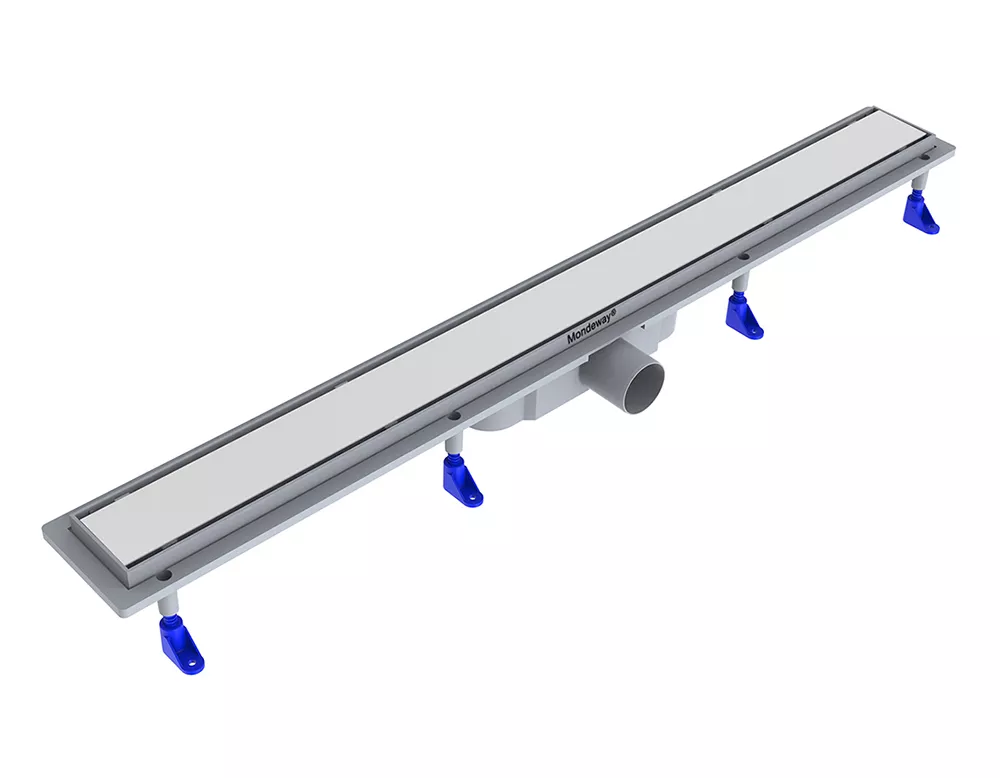
Linear Shower Drain Playbook for Wet-Room Control
Reference Standard: EN 1253-1 for floor gullies and drainage components, supported by ISO 9001 process management and listed cUPC / WaterMark references for drain-related market access.
Short Answer
When a Long Drain Becomes a Wet-Room Control Line
A linear shower drain works like a narrow control line across the wet-room floor. It does not behave like a small round drain that collects water at one point. Its long body must receive sheet flow from tile surfaces, guide that water toward the outlet, and preserve a channel that can still be cleaned after months of soap residue, loose hair, mineral traces, and cleaning chemicals. This is why the material and fabrication path matter more than the cover pattern alone.
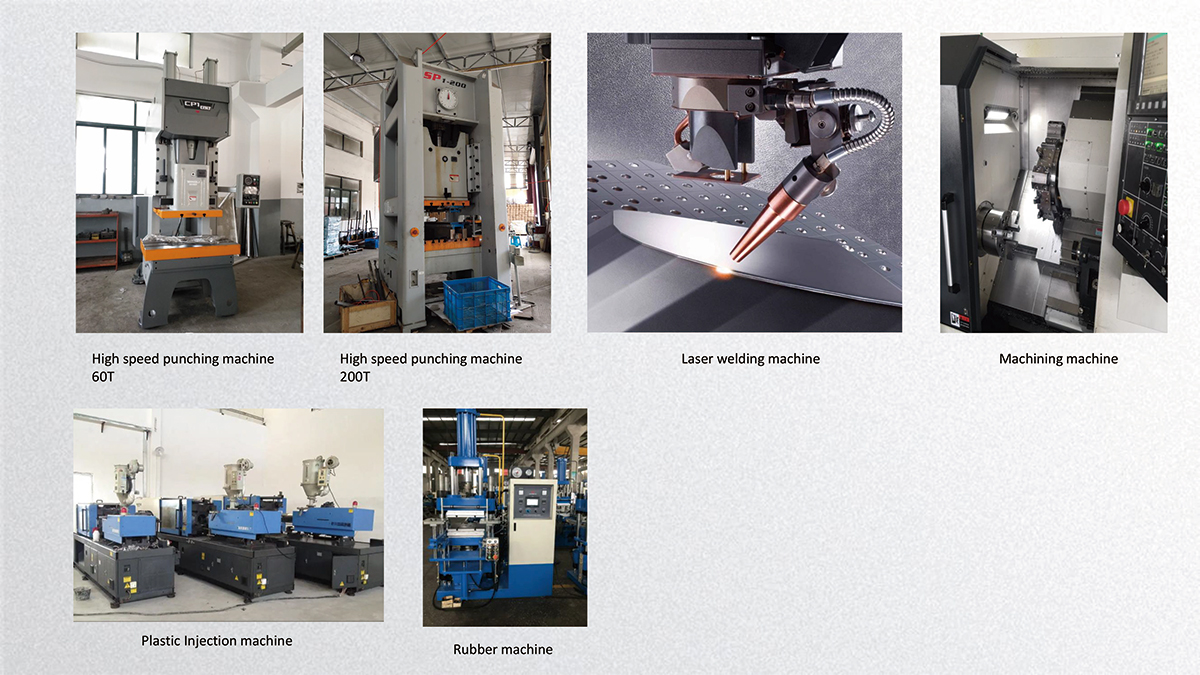
The available business data supports a drain production scope using SS304 / SS316 / ABS / PVC, with stainless steel drain production backed by stamping, laser cutting, bending, welding, shaping, surface finishing, and leakage testing. In practical shower use, SS304 and SS316 stainless steel are the main corrosion-resistance materials for visible and wet-contact parts. ABS and PVC may appear in accessory or drainage-related components depending on the model design, but the long exposed channel normally demands stable shape, clean finishing, and manageable surface maintenance.
A long drain has three jobs. First, it must collect water without forcing the user to chase puddles across the tile surface. Second, it must direct water toward the outlet without creating hidden sediment pockets. Third, it must remain accessible enough for hair removal and cleaning. These three jobs are connected. If the body is slightly twisted, the cover sits unevenly. If burrs remain near openings, hair can catch sooner. If the outlet position is poorly confirmed, the installer may compensate with pipe stress or sealing shortcuts.
An edge-condition model helps explain the risk. Imagine a long stainless steel shower channel exposed to daily hot water, shampoo residue, body oils, and chloride-containing cleaners. During the first stage, the surface mainly deals with wet-dry cycling. During the middle stage, soap film and hair begin to form retention zones around slots, weld transitions, or outlet corners. During the stress stage, any weak surface treatment, burr, local deformation, or outlet misalignment becomes more visible because water and residue repeatedly choose the same low-resistance path.
A useful cross-dimensional comparison is a short point drain versus a long linear floor drain for shower use. A point drain concentrates slope and debris into a small zone. A linear drain distributes collection across a longer edge, which can improve layout flexibility but increases the importance of body straightness, cover seating, channel cleanability, and outlet coordination. This is not a better-or-worse comparison. It is a risk-shape comparison. The long product gives more collection area, but it also gives more length over which small fabrication or installation errors can appear.
KEY TAKEAWAYS
- A long drain body should be reviewed as a water-control line, not only as a decorative cover.
- SS304 and SS316 selection should match cleaning exposure, chloride risk, and expected surface life.
- Straightness, burr removal, outlet position, and cover seating are early warning points before full installation trouble.
Linear Shower Drain Cleaning Geometry: Access Before Flow Claims
Hair blockage is often described as a simple maintenance issue, but for a linear shower drain it is really a geometry issue. The question is not only whether hair enters the drain. The sharper question is whether the user can reach the collection zone, lift or remove the cover safely, and clear hair before soap scum turns it into a compacted mat. Search queries such as how to remove hair from shower drain are common because many installed products look clean from above while the channel path below the cover is already collecting debris.
The catalog data confirms manufacturing capabilities such as laser cutting for customized orders, stamping, bending, shaping deformed products, burr removal, and brushed surface work. These capabilities matter because cleaning access is shaped by the relationship between the cover opening, the channel wall, the outlet transition, and any removable part. Still, the data does not provide model-level slot dimensions, removable cover lifting force, channel depth, or measured discharge values. Those details should be confirmed through model-level drawings, disassembly videos, sample photos, or a physical inspection before large-volume procurement.
Mechanically, hair behaves like a flexible fiber network. A single strand does not block much water, but multiple strands can bridge across narrow openings, wrap around cover edges, and trap soap residue. Soap residue then works like a weak adhesive layer. In hard-water conditions, mineral scale can add stiffness to this mass. Once this network forms, flow area narrows and odor risk may increase if organic residue remains wet inside the drain path. The drain has not necessarily failed, but the cleaning geometry may be working against the user.
A practical extreme-use model can be built around three stages. In the initial stage, loose hair can still be removed by hand or with a simple cleaning tool. In the middle stage, hair begins to anchor around internal corners, burrs, cover slots, or outlet transitions. In the late stage, the user may pour chemicals into the drain rather than remove the obstruction mechanically, which can increase exposure of stainless steel surfaces and plastic or rubber parts to aggressive cleaning agents. This is why easy cover access and smooth internal finishing are not cosmetic details; they influence maintenance behavior.
| Cleaning Variable | Better Design Signal | Risk Signal | Validation Method |
|---|---|---|---|
| Cover removal | Liftable or serviceable cover confirmed by sample | No clear removal method | Disassembly video or sample test |
| Slot edge | Smooth openings after burr removal | Sharp or unfinished edge | Touch-safe inspection and visual check |
| Channel access | Cleaning tool can reach the main path | Hidden corner traps residue | Cleaning simulation with hair substitute |
| Outlet transition | Clear path to waste connection | Sudden ledge or pocket | Model drawing and water-path review |
| Finish consistency | Brushed or treated surface without debris catch points | Scratches, weld stains, rough zones | Surface inspection before packing |
A cross-test case should compare a visually attractive cover with difficult access against a plain cover with better serviceability. In daily shower use, the second design may perform better because maintenance is more likely to happen early. This is especially relevant for hotel rooms, rental apartments, wellness facilities, and family bathrooms where many users share the same drain but no one wants complicated cleaning steps.

Surface Chemistry After Welding: The Silver Finish Is Process Evidence
Stainless steel does not stay reliable only because it is stainless. Its performance depends on the condition of the surface film. After welding, a drain body may show oil, scratches, dirty areas, yellow spots, and heat-affected discoloration. The catalog notes that drains after welding can be dirty on the surface and that pickling is used to clean the surface so it looks silver. It also lists a 2000 square meter surface treatment workshop including pickling, electrical polishing, and passivation. This is useful because it connects visual finish with process control rather than treating the silver look as simple decoration.
The mechanism is chemical and metallurgical. Stainless steel resists corrosion because chromium in the alloy forms a thin passive oxide layer. Welding can disturb this condition near heat-affected zones. Handling oil, surface scratches, and embedded particles can interrupt uniform passivation. Pickling helps remove oxide scale and contaminants. Electrical polishing can smooth micro-peaks and reduce residue-retention tendencies. Passivation supports restoration of the protective surface condition. No specific acid formula, salt spray time, roughness value, or steel thickness is supplied, so those claims should not be invented.
The edge-condition model here is a repeated wet-cleaner exposure cycle. At the first stage, the drain surface is visually bright and water runs over it quickly. At the middle stage, cleaner residue, soap film, and hard-water traces start to expose differences between treated and untreated zones. At the stress stage, weak areas near welds, scratches, or poorly cleaned corners become more likely to show staining or localized discoloration. The product may still function as a drain, but the visible wet-room surface begins to lose buyer confidence.
A cross-dimensional comparison is helpful: brushed finish versus poor post-weld cleaning. A brushed finish can provide a controlled visual direction and hide minor handling marks, but brushing alone is not equal to chemical surface recovery. A drain that has been brushed but not properly cleaned after welding may still carry contaminants or heat tint. In contrast, a treated product with pickling, electrical polishing, and passivation has a stronger process story because it addresses the chemical state of the metal surface, not only its appearance.
For procurement, the right inspection language is specific. Ask for surface photos before and after treatment, close-ups around welded corners, confirmation of burr removal, and packaging protection for visible surfaces. Do not accept a single polished product photo as proof of repeatable surface control. The more relevant question is whether the factory process can repeatedly turn welded drain bodies into clean, passivated, inspectable parts before packing.
From Factory Air Test to Site Odor Questions: Separate the Risk Types
Factory testing and site drainage behavior must be separated. The available data confirms an air test machine and states that leakage is tested for all drains. It also lists ISO 9001 management, CE EN1253-1, cUPC, WaterMark, and packing according to export or customized requirements. These are factory-verifiable items. They can support confidence in leakage control, process consistency, certification background, and shipment preparation.
Odor questions are different. Queries such as does a shower drain need a trap, how to vent a shower drain, how to deodorize a shower drain, and how to fix a leaky shower drain often involve the building drainage system. A trap, venting condition, floor slope, waterproofing transition, sealing quality, waste pipe condition, and installation workmanship can all affect odor and drainage behavior. Unless the supplier provides model-level trap interface photos, water-seal data, installation sections, or site test records, those items should not be described as factory-tested features.
A practical procurement approach is to divide acceptance into two columns. Factory-verifiable risk includes body leakage, weld quality, surface finish, burr removal, packaging, and dimensional consistency. Site-dependent risk includes pipe alignment, trap performance, venting, membrane tie-in, tile slope, and installation sealing. This division protects both buyer and supplier. It prevents buyers from assuming that an air test proves odor prevention, and it prevents suppliers from being blamed for problems caused by incorrect plumbing conditions.
PRO-TIP / CHECKLIST
- Confirm whether the selected model uses SS304, SS316, ABS, PVC, or a mixed material configuration.
- Request model-level drawings for length, width, outlet position, cover structure, and installation depth.
- Ask for clear photos around welds, corners, slot openings, and brushed surface areas.
- Check whether every drain is covered by air leakage testing before packing.
- Confirm whether the finish uses pickling, electrical polishing, passivation, brushing, sandblasting, powder coating, or another process.
- Separate factory leakage evidence from site odor causes such as trap, venting, slope, and waste pipe condition.
- Review packaging protection for long visible stainless steel surfaces to reduce scratches during export handling.
- Use sample cleaning trials before volume orders when hair-load maintenance is a major user concern.
| Risk Area | Factory-Verifiable Evidence | Site-Dependent Evidence | Buyer Action |
|---|---|---|---|
| Leakage | Air test machine for all drains | Pipe seal and installation joint | Require factory leak record and site water test |
| Odor | Not proven by body air test alone | Trap, venting, waste pipe condition | Confirm plumbing design separately |
| Surface staining | Pickling, electrical polishing, passivation | Cleaner type and maintenance habits | Ask for treatment confirmation and care guidance |
| Hair removal | Cover and channel access design | User cleaning frequency | Request disassembly proof or sample review |
| Long-body alignment | Stamping, bending, shaping, dimensional check | Tile slope and substrate level | Check drawings and dry-fit before final sealing |
Frequently Asked Questions (FAQ)
How to remove hair from a shower drain?
Lift or remove the cover if the model is designed for service access, then clear hair mechanically before using chemical cleaners. For a linear drain, check whether the channel path, slot openings, and outlet transition can be reached by a cleaning tool.
How to vent a shower drain?
Venting is part of the building plumbing system, not the visible drain cover alone. A plumber should confirm local code, trap location, pipe size, and vent connection. Factory drain leakage testing does not prove that the installed shower drain is correctly vented.
How to deodorize a shower drain?
Start by removing hair and soap residue from the accessible channel and confirming that the trap has a proper water seal. Odor can come from organic buildup, dry traps, poor venting, or waste pipe conditions, so deodorizing should not be treated as a surface-cleaning issue only.
Does a shower drain need a trap?
In typical plumbing design, a shower drain needs a trap to help block sewer gas from entering the room. The linear drain body should be matched with the correct waste connection and installation design, but trap performance must be confirmed at the plumbing system level.
How to fix a leaky shower drain?
First identify whether the leak comes from the drain body, weld, outlet joint, waterproofing transition, or pipe connection. Factory air testing can support drain-body leakage control, but installed leaks often require checking sealant, membrane tie-in, pipe alignment, and floor assembly.