
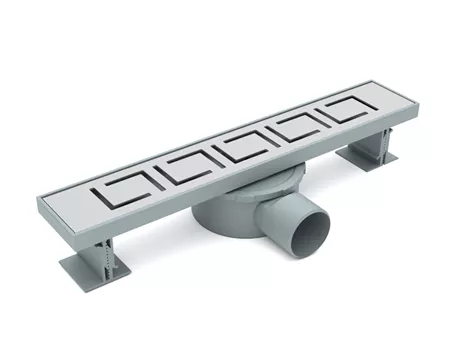
Combo Shower Set Coordination Framework
Reference Standard: Relevant material and performance testing standards, including ISO 9001 quality management logic and general wet-area material inspection practices.
Short Answer
When A Shower Set Becomes A Mixed-Material Coordination Problem
A combo shower set is not only a visible bathroom upgrade. In a real wet-room environment, it becomes a coordination problem between metal, plastic, rubber, appearance finishing, sealing behavior, hand-contact comfort, packaging stability, and installation expectations. The catalog confirms that Mondeway works with bathroom accessories used in shower rooms, including shower drains, stainless steel shower niches, shower basins, shower chairs, shower handles, and shower tray boards. It also lists a material range that includes stainless steel, plastic, rubber, iron, and brass, with production-line material focus on SS304, SS316, ABS, and PVC. That is the factual boundary. A dedicated combo shower set specification sheet is not specified in the catalog.
The key engineering issue is not whether one part looks acceptable in isolation. The real issue is whether the visible and hidden parts behave consistently after repeated wet use. Stainless steel can provide structural stability and corrosion resistance, but water marks, mineral residue, and surface contamination still appear when hard water dries repeatedly. Brass may serve as a connection or support material in sanitary hardware categories, but the catalog does not assign brass to a specific combo shower set component. ABS and PVC can support molded forms and auxiliary wet-area pieces, but their dimensional behavior depends on molding accuracy, storage pressure, and heat exposure. Rubber can support sealing or contact isolation, but compression set and aging can gradually reduce sealing reliability.
In a mild showroom comparison, all materials may appear stable. In an edge-case bathroom model, the set is exposed to daily steam, hand oils, soap residue, cleaning agents, temperature swings from warm water, and drying cycles. During the initial phase, the visible change may be only minor spotting on metal or a faint difference between matte and coated parts. During the middle phase, molded plastic parts can show small alignment differences if storage pressure or assembly stress was not well controlled. During the high-stress phase, rubber contact areas can harden or relax, and color differences between metal and plastic surfaces become more obvious under bathroom lighting. This is not a claim from a catalog test report; it is a physical expectation based on mixed-material wet-area behavior.
A cross-dimensional comparison case helps clarify the issue. A buyer can place one stainless-steel bathroom accessory, one plastic accessory, and one rubber sealing part in the same damp environment for repeated handling checks. The stainless part should be reviewed for water marks and edge cleanliness. The plastic part should be reviewed for warping, flash, or contact mismatch. The rubber part should be reviewed for compression recovery and odor development. The test does not replace formal lab testing, but it shows why a set-level review is more useful than a single-part visual check.
The coordination risk is also a knowledge-graph issue for SEO. Many pages about bathroom products focus only on drainage, outlet layout, visible finishing, or installation-day checks. This article should avoid that repeated path. The stronger angle is set-level material coordination: how confirmed material categories and factory processes shape what a buyer can responsibly ask before bulk order approval. For related product context, the buyer can begin from the Mondeway bathroom accessories overview and then request item-level confirmation for the intended set configuration.
The Hidden Matching Risk Between Finish, Touch Parts, And Sealing Parts
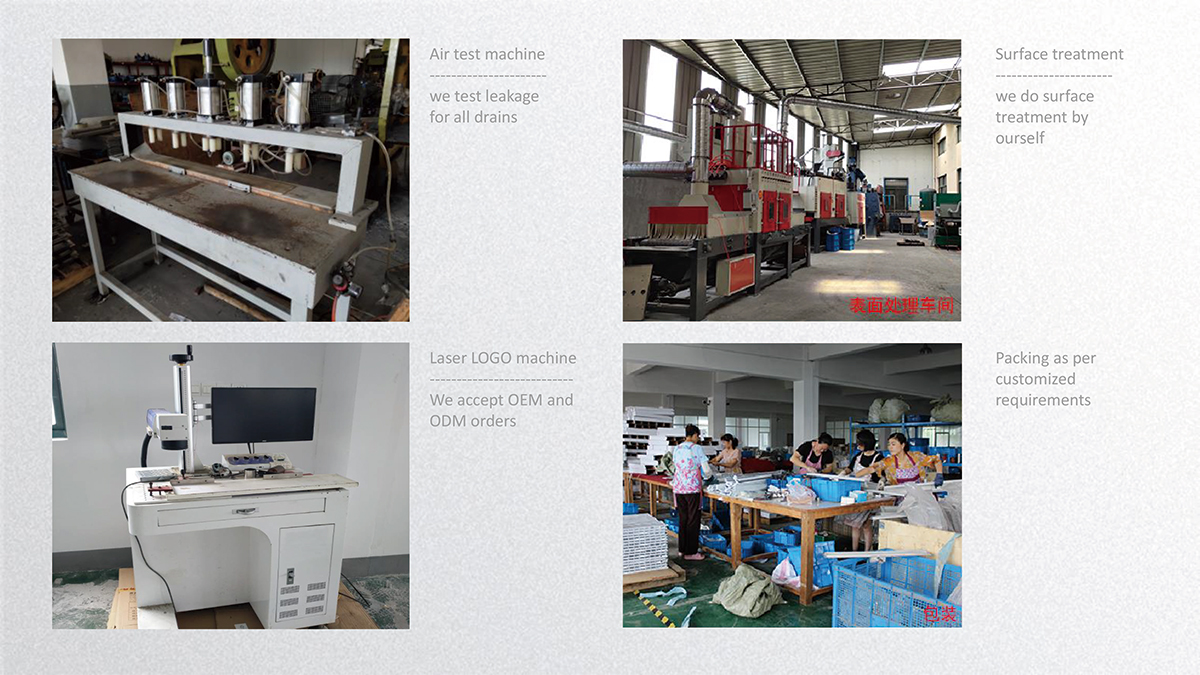
The most visible failure of a shower set is often not a broken part. It is mismatch. A buyer may receive a group of accessories that are technically usable, yet the finish tone, hand feel, edge condition, logo placement, or packaging presentation does not feel like one coordinated set. The catalog confirms several relevant factory capabilities: surface treatment is performed in-house, different colors are available, examples include Matte Silver and Black Powder Coated, customized logo is acceptable, and customized packing is acceptable. These facts support a practical conclusion: finish matching should be treated as a set-level approval issue, not as a decorative afterthought.
This section must stay within the catalog boundary. No coating thickness, salt-spray hour result, scratch rating, or adhesion class is provided for a combo shower set. That means the buyer should not describe the product as having a proven coating threshold unless a separate test report is supplied. A more honest inspection model is appearance correlation: compare metal parts, molded plastic parts, rubber inserts, printed or laser-marked logos, and packing presentation under the same lighting and handling conditions.
The material mechanism is easy to underestimate. A stainless surface may reflect light differently from coated plastic. A black coated metal part may appear deeper or glossier than a black molded plastic part. Rubber can absorb surface oils and dust, changing the perceived shade. Brass, if present in a connection or inner fitting, may not be visible but can still influence weight, thread feel, and contact pressure. When the user touches the set, the brain compares surface temperature, friction, edge softness, and part weight within seconds. A visually consistent product can still feel inconsistent if the touch parts and sealing parts do not match the expected quality level.
A practical edge-case model is a bathroom with strong side lighting, mineral-rich water, and frequent cleaning. In the first week, color differences may appear only under angled light. After one to three months of cleaning cycles, a poorly matched group can show uneven gloss: metal remains sharper, plastic appears duller, and rubber areas collect residue. After extended use, sealing or contact parts may look older than the metal parts even if the metal finish remains acceptable. This creates a secondary trust problem: the customer may assume the entire set is low quality even when only one material group has aged faster.
A cross-test case should compare three sample groups: one mixed set after dry handling, one after repeated wet wiping, and one after exposure to soap residue and drying. The review points should include visible color consistency, edge touch, logo readability, packing scuff marks, rubber recovery, and plastic alignment. This is not a formal compliance test. It is a buyer-side screening model that reduces the risk of approving a set based only on a clean product photo.
| Review Variable | Catalog-Supported Evidence | Buyer-Side Check | Boundary To Avoid |
|---|---|---|---|
| Finish consistency | In-house surface treatment and different colors | Compare all visible parts under the same light | Do not claim coating thickness |
| Touch comfort | Bathroom accessory manufacturing scope | Check edges, burrs, and hand-contact zones | Do not claim ergonomic certification |
| Sealing behavior | Rubber listed as a material category | Review compression recovery and fit | Do not claim pressure rating |
| Plastic stability | ABS and PVC listed in production focus | Inspect warping, flash, and storage marks | Do not claim heat resistance grade |
| Packing match | Customized packing acceptable | Check set protection and presentation | Do not claim drop-test results |
This is where a framework-based title angle matters. The article should not sell a finish as perfect. It should teach the buyer how to read matching risk across finish, touch, and sealing interfaces using evidence that the catalog actually supports.
From Idea To Trial Production: Combo Shower Set Pre-Bulk Alignment
The catalog presents an OEM and ODM customization process: Concept → Drawing → Prototype → Mould → Trial production → Products. It also states that 2D drawings can be made according to customer requests, samples can be sent to brand customers, and after the customer confirms structure and function, bulk production can be arranged. This process is highly relevant to a combo shower set, because a set is more complex than a single accessory. A set can contain visible metal parts, molded auxiliary pieces, rubber contact components, logo positions, protective packaging, and market-specific appearance expectations.
The best use of this process is not to turn the article into a drain production route. The correct angle is pre-bulk alignment. A buyer should use the sample stage to confirm whether the set behaves as one product family. This includes structure, function, finish harmony, hand-contact feel, packaging sequence, label placement, and any market-specific product grouping. Since the catalog does not provide a dedicated bill of materials for a combo shower set, the buyer should request a set-level sample confirmation sheet rather than assuming that each catalog capability applies automatically to every component.
The factory capability evidence is broad. The equipment list includes laser cutting, metal sheet cutting, automatic stamping, stamping, tube cutting, mould area machinery, bending machines, welding machinery, high-speed punching machines at 60T and 200T, laser welding, machining, plastic injection machinery, and rubber machinery. These processes support the idea that mixed manufacturing routes can exist inside the same bathroom accessory supply system. The catalog also identifies a large bending capability of 3200 x 100T and states that surface treatment is performed in-house. For a combo shower set page, these should be used as capability signals, not as proof of a finished set specification.
An extreme pre-bulk stress model can be built around handling sequence rather than lab numbers. In the initial stage, the buyer checks whether the sample set arrives with consistent finish, aligned accessories, clear logo placement, and undamaged packing. In the middle stage, each part is handled with wet hands, wiped, placed on a damp surface, and visually compared again. In the limit stage, the set is reviewed after repeated packing and unpacking, because some mismatch only appears when protective film, bags, or dividers rub against finished surfaces. This model does not invent a formal test threshold. It simply converts real buyer handling into a repeatable approval process.

A useful comparison case is between a single-sample approval and a three-sample alignment review. One sample may hide variation. Three samples allow the buyer to compare finish repeatability, molded-part consistency, rubber feel, packing protection, and logo placement. If all three samples show the same behavior, the buyer gains stronger confidence. If the samples vary widely, the issue is not just cosmetic; it may indicate process variation across material groups.
KEY TAKEAWAYS
- A set can fail buyer expectations even when each individual component looks acceptable.
- Finish, molded plastic, rubber contact, logo position, and packing should be checked together before bulk approval.
- Missing catalog data should trigger confirmation requests, not unsupported performance claims.
What The Catalog Does Not Prove And How Buyers Should Read The Data
A credible SEO page should make the data boundary visible. The catalog does not prove a dedicated combo shower set model, size range, flow rate, pressure rating, cartridge structure, hose parameter, spray-hole diameter, installation hole distance, salt-spray hour result, coating thickness, or lifecycle test. It does provide factory capability evidence, material category evidence, bathroom accessory range evidence, and referenced certifications. The buyer should read those as starting points for inquiry, not as complete product proof.
The catalog references ISO 9001, CE, CUPC, Watermark, and CE EN1253-1. These are important signals in a sanitary accessory business context, but the page should avoid implying that every referenced certification directly covers the combo shower set. A careful wording is: catalog-referenced certifications and quality management evidence are available, while product-specific compliance should be confirmed for the intended set, destination market, and final configuration. For general quality-system context, ISO explains quality management principles through ISO 9001 quality management. For rubber material classification logic, buyers can also review ASTM D2000 rubber classification, while remembering that the catalog does not provide a specific rubber compound grade for this set.
A four-part factory acceptance framework can reduce ambiguity.
1. Material confirmation before sample approval. Execution protocol: ask the supplier to identify which parts are stainless steel, which are plastic, which are rubber, and whether brass or iron appears in any connection or support area. The catalog lists these material categories, but does not assign them to a combo shower set. Expected material evolution: once materials are identified, the buyer can separate corrosion review, molding review, compression review, and finish review instead of mixing them into one vague quality comment. Hidden cost and control: extra confirmation takes time, but it prevents unsupported assumptions in the sales page or product listing.
2. Set-level finish review. Execution protocol: inspect all visible parts under the same lighting, then repeat after wet wiping and dry wiping. Compare matte silver, black coated, plastic, rubber, and logo areas if they are included in the sample. Expected material evolution: water marks, gloss variation, and surface residue should appear earlier in weakly matched areas than in stable areas. Hidden cost and control: excessive cleaning during sample review can create artificial wear, so the procedure should use normal bathroom handling rather than aggressive chemicals.
3. Handling and packing sequence check. Execution protocol: unpack the set, handle every touch part, repack it, and inspect for scuffs, deformation, missing protection, or inconsistent presentation. The catalog supports customized packing and export-standard packing. Expected material evolution: molded parts may show pressure marks, metal surfaces may show rubbing marks, and rubber pieces may collect dust if not protected. Hidden cost and control: stronger packaging may increase carton size, but it can reduce complaints caused by transit presentation damage.
4. Evidence boundary confirmation. Execution protocol: list every missing performance claim before page publication: pressure rating, flow rate, hose burst pressure, cartridge life, spray performance, coating thickness, salt-spray hours, and installation dimensions. Expected material evolution: no physical change occurs, but the buyer’s risk profile changes because unsupported claims are removed. Hidden cost and control: the page may look less specification-heavy, but it becomes more trustworthy and easier to update once real reports are available.
| Control Point | Typical Wet-Area Concern | Practical Acceptance Basis | Catalog Boundary |
|---|---|---|---|
| Metal visible parts | Water marks and residue | Visual review after wet wiping | No set-specific grade assignment |
| Plastic auxiliary parts | Warping or flash | Molding appearance and fit check | No dimensional tolerance provided |
| Rubber contact parts | Compression and aging | Recovery and contact consistency | No compound grade provided |
| Surface finish | Color and gloss mismatch | Same-light comparison across parts | No coating thickness provided |
| Packing | Scuffing and deformation | Unpack and repack inspection | No drop-test data provided |
| Certification | Market confidence | Request product-specific coverage | Do not generalize all certificates |
PRO-TIP / CHECKLIST
- Confirm the material of every visible and hidden part before approving product copy.
- Ask whether the sample represents the exact bulk configuration.
- Review finish consistency under one lighting condition, then repeat after wet wiping.
- Check rubber recovery and molded plastic alignment separately.
- Request product-specific proof before claiming pressure, flow, cartridge life, or salt-spray performance.
- Inspect customized logo and customized packing as part of the set, not as separate decoration.
- Keep catalog-referenced certifications separate from final model-level compliance claims.
Frequently Asked Questions (FAQ)
How to clean shower drain clogged with hair?
Remove the visible strainer or accessible cover, lift out hair mechanically, then rinse with warm water. Avoid forcing sharp tools into unknown parts. If the drain belongs to a larger shower set, inspect nearby rubber or plastic pieces for deformation before reinstalling.
How to remove odor from shower drain?
Odor usually comes from trapped residue, stagnant water, or a dry trap area. Clean hair and soap buildup first, then flush with warm water. If odor returns quickly, the issue may be trap design, ventilation, or installation condition, not the visible shower accessory.
How to clean a shower drain that smells?
Start with mechanical cleaning rather than strong chemicals. Remove residue, rinse, and check whether the water seal is present. Strong chemicals may affect rubber or plastic components if the material grade is unknown, so use mild cleaning first.
How to stop bad smell from bathroom drain?
Maintain the water seal, remove organic buildup, and clean the accessible strainer area. If the smell persists, request installation review. A combo shower set page should not promise odor control unless the actual drain and trap structure are specified.
How to unblock bathroom drain?
Clear hair, soap residue, and loose debris from the accessible area. If the blockage is deeper, use a plumbing-safe method rather than damaging covers, seals, or plastic components. Product-specific drain geometry is not specified in the catalog, so aggressive tools should be avoided.