
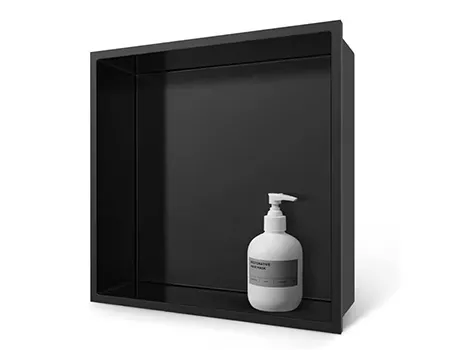
Small Stainless Steel Hand Basins: Space-Fit Layers
Reference Standard: Relevant material, passivation, and quality management standards may include ASTM A967 for chemical passivation of stainless steel parts, ISO 9001 quality management principles, and project-specific drainage or sanitary documentation. EN 1253-1, CE, CUPC, and Watermark certificates are shown in the supplied catalog, but SKU-level coverage for a hand basin must be confirmed with supplier documents.
Short Answer
A small basin is often chosen because a bathroom, wash area, hotel service room, or commercial handwash point has limited wall or counter space. That makes the first purchasing layer spatial: where the basin sits, how water reaches it, how drainage leaves it, and how nearby users move around it. The second layer is forming: stainless steel sheet must be cut, pressed, bent, welded, and finished without creating visible distortion or rough edges. The third layer is finish selection: brushed, sandblasted, matte silver, black powder coated, or other color options should be treated as procurement controls, not decoration words. The final layer is sample approval: drawings, prototype review, finish sample, packing method, and certificate scope must be checked before bulk approval.
Stainless Steel Hand Basins Small: Space-Control Layers
A compact stainless steel hand basin becomes important when the available installation zone is smaller than the functional task. In a public bathroom corner, a narrow service corridor, a shower-adjacent wash point, or a hotel utility area, the basin is not just a bowl. It becomes a space-control component that must coordinate with wall position, user approach direction, faucet reach, drain route, cleaning access, and splash containment. The catalog confirms that shower basins belong to the bathroom and shower room accessory range, and that material scope includes stainless steel. It also confirms SS304 and SS316 as workshop material capabilities, alongside laser cutting, stamping, bending, welding, and related production processes.
The strongest procurement mistake is to approve a compact basin based on front-view appearance alone. A small basin can look correct in a product photo while still failing the installation logic. If the outlet position is not compatible with the wall pipe, the installer may be forced into awkward trap routing. If the faucet or water inlet area is not planned with the basin rim, splash can migrate onto the wall or floor. If the basin projection is too large for a tight corridor, users may bump the fixture. If it is too shallow for the intended handwash behavior, the surrounding surface may become wet even when the basin itself is made from reliable stainless steel.
Edge extreme scenario model: imagine a high-humidity wash area where the basin is used repeatedly while the surrounding wall has limited ventilation. The stainless steel body does not behave like absorbent material, but water film, cleaner residue, and hand contact can remain around seams, edges, and underside surfaces. During the early stage, the issue is mostly visible water marking. During the middle stage, repeated cleaner contact may expose differences between brushed, sandblasted, coated, and polished surfaces. During the extreme stage, poor drainage alignment or inaccessible cleaning clearance can create long-term staining or complaints even if the base metal is acceptable.
Cross-dimensional test case: compare two small basin approval paths. In Path A, the buyer reviews only the front product photo and finish color. In Path B, the buyer asks for a drawing showing installation surface, outlet position, faucet or water inlet relationship, and packing method. Path B is slower at sample stage, but it reduces installation mismatch because it treats the basin as part of a wall-drain-user system. This comparison does not require invented dimensions; it follows basic spatial coordination logic.

KEY TAKEAWAYS
- Early warning sign: the basin photo is available, but no installation drawing is provided.
- Early warning sign: the outlet, faucet position, and wall or counter relationship are not confirmed.
- Early warning sign: the finish is selected before the cleaning and moisture environment is understood.
The Forming Route Behind a Compact Basin Body
A compact stainless steel basin body is not simply a small metal container. Its final accuracy depends on the forming route. The catalog confirms multiple manufacturing capabilities: many stamping machines, with the largest listed as 200 tons; laser cutting; many bending machines, with the largest listed as 3200 x 100T; a self-developed welding machine; 10 welding workers; and a laser welding machine. These are supplier capability signals. They should not be read as proof that every small hand basin SKU uses all of these machines, but they are relevant when assessing whether the supplier can control metal forming, joining, and surface preparation.
The forming route starts with sheet control. Laser cutting can help define edges, holes, and blank geometry. Stamping can shape repeated metal forms, especially when consistent batches are needed. Bending controls sidewalls, rim geometry, and mounting-related planes. Welding or laser welding joins zones that cannot be made from one continuous form. Each stage changes stress distribution. Stainless steel can resist corrosion better than many ordinary metals, but it still responds to mechanical force, heat input, and handling. Localized bending can introduce residual stress. Welding can create discoloration, oil contamination, scratches, yellow spots, and surface dirt; the catalog directly notes these post-welding surface concerns for drains before cleaning by pickling.
Edge extreme scenario model: consider a small basin body repeatedly exposed to warm water, cleaning chemicals, and contact wiping. In the initial period, minor forming marks may be hidden by the finish. In the middle period, rim edges, welded corners, and underside folds become inspection points because they receive repeated moisture and cleaning contact. In the extreme period, a poorly controlled bend or weld area may not fail structurally at once, but it can become the first visible complaint zone through uneven reflection, trapped residue, or edge roughness.
Cross-dimensional test case: compare a compact basin approved through appearance inspection only with one approved through forming-route questions. The appearance-only sample may pass from the front, while the forming-route sample is checked at rim, underside, weld line, mounting plane, and outlet zone. The second method is more demanding, but it better matches how stainless steel parts behave after cutting, pressing, bending, welding, finishing, packing, shipping, and installation.
| Forming Variable | Confirmed Catalog Capability | Buyer Verification Point | Risk if Ignored |
|---|---|---|---|
| Sheet shaping | Stamping machines, largest 200 tons | Ask whether the basin body uses stamping or another route | Shape inconsistency across batches |
| Edge definition | Laser cutting | Check holes, edges, and mounting-related cuts | Poor fit or rough contact points |
| Wall or rim geometry | Bending machines, largest 3200 x 100T | Inspect flatness and alignment | Visible tilt or installation gap |
| Joint control | Welding and laser welding capability | Inspect seams and heat-affected zones | Yellow marks, scratches, or uneven finish |
| Human workmanship | 10 welding workers listed | Request sample photos of hidden areas | Variable seam appearance |
Finish Choice as a Procurement Risk Filter, Not a Decoration Choice
Finish selection is often treated as a visual decision, but for small stainless steel basins it should function as a procurement risk filter. The catalog confirms in-house surface treatment, high quality control for surface work, burr removal and brushed surface preparation, sandblasting, other surface treatment, matte silver, black powder coated, different colors, customized logo acceptance, export-standard packing, and customized packing acceptance. Those details allow the article to discuss process control without inventing coating thickness, salt spray hours, roughness numbers, or corrosion grades.
A brushed surface may hide small handling marks better than a mirror-like surface, but brush direction and consistency matter. Sandblasting can reduce glare and create a more uniform matte look, but it must be checked for evenness. Black powder coated and different color finishes shift the inspection from metal tone to coating uniformity, edge coverage, scratch protection, and batch consistency. Laser logo work introduces another contact point: the buyer should confirm logo size, position, contrast, and whether the logo method suits the finish.
Edge extreme scenario model: in a high-cleaning commercial wash area, cleaners may be applied more often than in a private bathroom. At the early stage, the finish may look stable after installation. At the middle stage, repeated wiping begins to expose uneven brushing, weak edge protection, or color inconsistency. At the extreme stage, packing scratches or coating edge defects can become more visible than the original basin shape. The material may still function, but procurement dissatisfaction appears through appearance variance.
Cross-dimensional test case: compare finish approval by catalog color name with finish approval by physical sample. A catalog name such as matte silver or black powder coated communicates the visual category, but it does not prove batch tone, scratch resistance during shipping, or logo visibility. A physical finish sample, paired with packing review, gives better evidence for real order approval.
PRO-TIP / CHECKLIST
- Request the stainless steel grade used for the basin sample, especially whether SS304 or SS316 is proposed.
- Ask for a drawing before approving any compact installation position.
- Confirm outlet position, faucet relationship, and wall or counter interface.
- Review hidden edges, underside areas, weld zones, and mounting planes.
- Approve a real finish sample rather than relying only on finish names.
- Check whether logo placement and packing method protect the visible surface.
- Ask whether certificates shown in the catalog apply to the exact SKU or only to other product lines.
- Require sample photos before and after packing when surface appearance is critical.
Sample Approval Layers Before Bulk Orders
Sample approval should be treated as a layered gate. The catalog presents an OEM and ODM customization process moving through concept, drawing, prototype, mould, trial production, and products. It also states ISO 9001 management, stable quality control, CE, CUPC, Watermark, and EN1253-1 certificate displays, 15 to 30 days fast delivery time, and 30,000 sets per month capacity. These are useful supplier-level indicators, but they do not replace SKU-level confirmation for a small stainless steel hand basin.
The first sample layer is material identity. The buyer should confirm whether the basin uses SS304, SS316, or another stainless steel grade. The second layer is geometry. Since no dedicated dimensions are confirmed in the supplied data, the buyer should request the actual drawing for length, width, basin depth, rim style, outlet position, mounting method, and any faucet or water inlet layout. The third layer is process evidence. If the basin uses bending and welding, the buyer should inspect corners, heat-affected zones, and underside surfaces. The fourth layer is finish approval. Brushed, sandblasted, matte silver, coated, and colored finishes must be checked against a physical sample. The fifth layer is packing. Export-standard or customized packing should protect visible surfaces and reduce deformation risk during shipping.
Edge extreme scenario model: assume a buyer approves a sample for a compact hotel wash point without checking packing. In the initial stage, the sample looks acceptable. In the middle stage, bulk cartons move through loading, transport, unloading, and site storage. In the extreme stage, small scratches or edge pressure marks appear before installation, leading to dispute even when the basin was correctly produced. Packing becomes part of the product’s real performance because the final visible surface must survive the logistics chain.
Cross-dimensional test case: compare certificate-based approval with sample-based approval. Certificate-based approval is helpful for general confidence, especially when a supplier shows ISO 9001 management or product-related certificates. Sample-based approval is still required because certificate displays do not automatically prove that the exact basin SKU has the same scope, test coverage, or installation compatibility. The safest buyer position is to ask for corresponding certificates or test files for the exact SKU when compliance matters.
Four practical acceptance solutions can reduce ambiguity.
Solution 1: Drawing-first spatial approval. Execution protocol: require a drawing that shows the basin outline, installation surface, outlet position, rim or wall interface, and any faucet-related area before sample approval. Material evolution: no material change occurs, but the stainless steel body is judged against installation geometry rather than a photo. Cost and side-effect control: this adds review time, but it prevents expensive site mismatch.
Solution 2: Forming-zone inspection. Execution protocol: inspect rim, welded corners, bend lines, underside zones, and outlet area under normal light and angled light. Material evolution: stress marks, heat tint, or edge roughness become visible earlier. Cost and side-effect control: it requires better sample photos or physical inspection, but it reduces hidden-area disputes.
Solution 3: Finish sample locking. Execution protocol: approve the exact finish sample for brushed, sandblasted, matte silver, black powder coated, or other color options before bulk order. Material evolution: the visible surface standard becomes a controlled acceptance reference. Cost and side-effect control: color or texture tolerance should be discussed, because visual appearance changes with lighting and viewing angle.
Solution 4: Packing and logistics validation. Execution protocol: confirm export-standard or customized packing, protective film, carton method, and visible surface separation. Material evolution: the metal surface does not become stronger chemically, but it becomes better protected from abrasion and pressure marks. Cost and side-effect control: more protective packing may add material cost and volume, but it reduces claims after arrival.
For related bathroom product context and supplier background, buyers can review Mondeway sanitary product information, then request SKU-level basin documents directly before purchasing.
Frequently Asked Questions (FAQ)
How to clean bathroom drain blockage near a small hand basin?
Start by removing visible debris from the strainer or outlet area. Use warm water and a suitable non-abrasive cleaner. Avoid harsh chemicals unless the drainage material and trap system are confirmed compatible. If water remains slow, inspect the trap and pipe route rather than blaming the basin body alone.
Does a shower drain need a vent?
Many drainage systems require venting to prevent siphoning, odor return, and unstable water seal behavior, but requirements depend on local plumbing code and the installed drain layout. A small stainless steel basin is only one fixture in the system; venting must be checked at the plumbing design level.
How to clear a shower drain connected near stainless bathroom fixtures?
Remove the cover, clear hair or debris, flush with warm water, and inspect the trap. Do not use metal tools that can scratch visible stainless surfaces nearby. If blockage repeats, the issue may be pipe slope, trap design, or venting rather than surface contamination.
Why pour old coffee down a shower drain?
It is not a reliable maintenance method. Coffee residue can add organic material to a drainage system and may worsen buildup in some conditions. Use mechanical cleaning, warm water flushing, and code-compliant drain maintenance instead, especially near stainless bathroom accessories where residue can stain surrounding surfaces.