
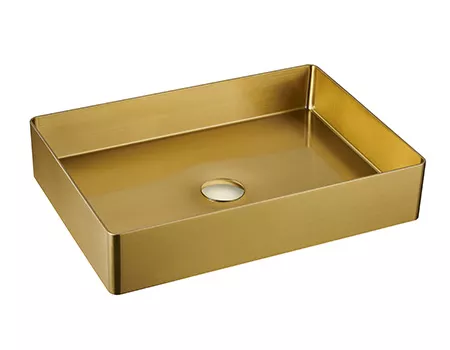
Recessed Bathroom Trash Can Playbook for Hidden Wall Service
Reference Standard: Relevant material, surface-finish, and performance testing standards for bathroom metal accessories, including ISO 9001 quality management principles, general stainless steel corrosion testing logic, and practical dimensional inspection for recessed accessories.
Short Answer
A recessed bathroom trash can sits in a very different risk category from a freestanding bathroom bin. A loose bin can be moved, replaced, wiped around, or hidden under a vanity. A recessed unit becomes part of the wall surface, so every small decision around the frame, removable container, edge finish, and cleaning path affects daily use. The available catalog confirms a bathroom-accessory manufacturing background, OEM and ODM work, material capability covering stainless steel, plastic, rubber, iron, and brass, and workshop capacity involving SS304, SS316, ABS, PVC, stamping, laser cutting, bending, welding, surface treatment, laser logo, and packing. It does not confirm trash-can-specific dimensions or performance ratings.
That boundary matters. A responsible product page should not invent capacity, waterproof grade, wall thickness, or installation depth. Instead, it should help buyers ask better questions before they approve a wall-recessed product that will be touched, cleaned, emptied, and inspected many times during its service life.

Recessed Bathroom Trash Can as a Hidden Wall-Service Object, Not a Loose Bin
A recessed trash can begins with an architectural constraint: it must live inside or against a wall plane. That changes the product logic from “container selection” to “service access design.” A freestanding bin mainly needs volume, stability, and appearance. A recessed unit needs an opening that fits, a frame that sits cleanly, and a removable part that can be serviced without damaging the wall finish. Since the catalog does not provide a confirmed opening size, installation depth, or capacity for this item, the correct specification approach is to separate what is known from what must be confirmed.
The confirmed manufacturing background supports bathroom accessories and shower-room-related products. The material range includes stainless steel, plastic, rubber, iron, and brass, while the workshop capability specifically mentions SS304, SS316, ABS, and PVC. In practical selection terms, SS304 and SS316 are relevant when the buyer needs a metallic bathroom accessory exposed to humidity, splashes, cleaning chemicals, and hand contact. ABS and PVC are relevant when molded or non-metal components are part of the structure, although the catalog does not state that this trash can uses either one. A buyer should therefore ask whether the actual SKU is stainless steel, plastic, mixed-material, or custom-built.
An edge extreme scenario model helps explain the hidden risk. Imagine a hotel bathroom where the trash can is recessed near the sink area. The outer face is touched during cleaning, the inner container is removed daily, and the wall edge sees moisture from handwashing, towels, and floor cleaning. In the first 30 days, the product may look acceptable even if the frame clearance is slightly uneven. After repeated removal cycles, small contact marks can appear along the inner lip. In a high-humidity room over several months, any untreated or poorly finished edge can become a visual complaint point because moisture and cleaning residues concentrate at the least visible contact zones.
A cross-dimensional comparison also changes the purchasing decision. A freestanding plastic bin can tolerate looser dimensional thinking because it is independent from the wall. A recessed stainless accessory cannot. Even if both products hold waste, only one depends on the wall opening, edge contact, and removable access route. That means the buyer should request evidence for frame flatness, visible edge finishing, inner part removal, and sample installation fit before treating the product as ready for project use.
The available Mondeway bathroom accessories information supports the supplier’s broader bathroom-accessory and OEM/ODM positioning, but it does not replace product-specific drawings for a recessed bathroom trash can.
The Daily Removal Cycle: Inner Access Beats Exterior Shape
The strongest usability test for a recessed bathroom trash can is not the first impression. It is the daily cycle: open or access the unit, remove the inner container, empty it, wipe it, return it, and close or align it again. A product can look neat in a catalog image but still become frustrating if the inner container is awkward to grip, if the rim catches a cleaning cloth, or if the return path scrapes the frame.
The confirmed factory capabilities are useful here because they relate to the parts that shape daily handling. Laser cutting can support cleaner metal sheet profiles. Stamping can form repeated shapes. Bending controls frame geometry. Welding joins structural sections. Removing burrs and making a brushed surface directly matters to the user’s hand path. Customized packing matters because a scratched visible frame can create a defect impression before installation begins. These are real capability signals, but they are not the same as proof of a finished trash-can design. Without drawings, the buyer still needs to confirm whether the inner bin is removable, how it is retained, how it is gripped, and whether cleaning access is practical.
A practical fatigue model can be built around removal frequency. In a low-use residential bathroom, the inner container may be handled a few times per week. In a guest bathroom, office restroom, or hotel setting, handling may happen daily or multiple times per day. During the early stage, the main risk is alignment: the container returns smoothly or it does not. During the middle stage, small friction paths begin to show: a lip may polish unevenly, a corner may scratch, or a grip area may collect residue. During the extreme stage, the issue becomes maintenance resistance: cleaners avoid removing the part fully because it is annoying, and hidden residue builds up behind or under the accessible surface.
A comparison test case should include two sample routines. Sample A is judged by exterior appearance only. Sample B is tested through 100 simulated removal and return cycles, followed by a wipe-down check with a damp cloth around all contact edges. Sample B gives more useful information because it captures the motion pattern that a bathroom accessory must survive. No catalog claim can replace that kind of buyer-side handling review when a product is integrated into a wall.
Extreme handling model: if a recessed unit is removed and reinserted once per day, the buyer is not approving a static object; the buyer is approving hundreds of hand-contact cycles per year. The correct review question is not only “Does it look clean?” but “Does it remain easy to service after repeated use?”
Edge Contact, Finger Safety, and Quiet Failure in Recessed Metal Accessories
The most overlooked part of a recessed bathroom trash can is the edge. Users may rarely think about it, but their fingers, cleaning cloths, liners, and inner container repeatedly pass through the same narrow contact zones. A sharp burr, uneven cut, rough weld transition, or poorly finished inner rim may not cause immediate product failure, but it creates a quiet service defect. People notice it only after repeated contact.
The catalog gives two relevant manufacturing signals: remove burrs and make brushed surface by ourselves and surface treatment by ourselves, high quality controlled for surface. It also describes a dedicated surface treatment workshop for pickling, electrical polishing, and passivation, with the stated purpose of cleaning welding-related dirt, oil, scratches, and yellow spots. For a stainless bathroom accessory, those processes are meaningful because the surface condition affects both appearance and corrosion resistance. Still, the catalog does not prove that a specific recessed bathroom trash can has passed a dedicated edge-contact safety test.
The mechanism is simple but important. Stainless steel depends on a thin passive film for corrosion resistance. When cutting, bending, or welding disturbs the surface, local zones may have different roughness, embedded contamination, heat tint, or stress concentration. If the edge is not deburred and finished consistently, moisture and cleaning residue may remain at the microscopic irregularities. In daily use, those rough zones also behave like friction points. A cloth catches, a liner tears, a hand feels discomfort, and the product slowly loses trust.
An extreme humidity and touch timeline can be modeled in three stages. In the initial stage, the edge looks clean but reveals quality through touch: a smooth rim feels safe, while a rough rim feels cheap even before corrosion appears. In the middle stage, repeated cleaning changes the visible finish. Brushed areas may show directional scratches, while poorly finished corners may darken or hold residue. In the limit stage, the defect becomes systemic: cleaning becomes less thorough because staff avoid uncomfortable edges, residue remains longer, and odor risk increases even when the container itself is emptied.
A cross-system hidden effect appears when edge quality affects cleaning behavior. Poor edge comfort is not only a safety issue; it changes maintenance habits. If the inner lip is unpleasant to wipe, the recessed cavity may be cleaned less often. If the inner container catches during removal, users may tilt waste against the frame. If a liner tears during removal, small residue can fall into the recessed area. These are not dramatic failures, but they are exactly the type of bathroom-service problem that turns into complaints over time.
KEY TAKEAWAYS
- Rough inner lips or burr-like contact points can appear before any visible corrosion complaint.
- Repeated insertion marks around the frame suggest that the removable part needs fit and friction review.
- Cleaning residue at corners may indicate that the recessed cavity is hard to access or uncomfortable to wipe.
Recessed Bathroom Trash Can Procurement Proof Before Approval
The safest way to approve a recessed bathroom trash can is to ask for proof in layers. The confirmed layer includes the supplier’s bathroom-accessory manufacturing background, OEM/ODM service, material range, processing capability, surface-treatment capacity, ISO 9001 management reference, and export or customized packing capability. The unconfirmed layer includes capacity, wall opening size, inner container structure, mounting method, load path, installation depth, and product-specific test reports. These must not be blurred.
Solution 1: Opening Fit Evidence
Execution protocol: Request a dimensional drawing or sample measurement sheet showing the visible frame, recessed body, wall opening requirement, and removable inner part clearance. The buyer should not approve the product from a lifestyle image alone. A sample should be placed against a mock wall panel or measured with reference points before order confirmation.
Expected material behavior: Better fit reduces rubbing at the frame and limits repeated stress on corners. If stainless steel is used, a controlled clearance also helps preserve the finish because the same edge will not be scraped during every removal cycle.
Hidden cost and risk control: Extra drawing review may slow early sourcing, but it prevents expensive wall-cut mistakes. The countermeasure is to lock drawing confirmation before packaging design, labeling, or mass production.
Solution 2: Edge Finish Photo Proof
Execution protocol: Ask for close-up photos of the outer rim, inner lip, welded joints, and removable part contact zones. The inspection should look for burrs, sharp transitions, uneven brushing, visible heat tint, and scratch concentration.
Expected material behavior: A smoother edge reduces friction, improves hand comfort, and lowers the chance of residue catching at microscopic irregularities. If pickling, electrical polishing, or passivation is used, the surface should appear more consistent after welding-related contamination is removed.
Hidden cost and risk control: Over-polishing or inconsistent finishing can create mismatched appearance across batches. The buyer should compare multiple sample photos, not just one ideal unit.
Solution 3: Cleaning Access Check
Execution protocol: Simulate real cleaning by removing the inner part, wiping the recessed area, reinstalling the container, and checking whether the cloth reaches all corners. This should be repeated enough times to reveal friction, awkward grip points, or hidden residue zones.
Expected material behavior: Better access reduces long-term residue retention. For stainless components, easier wiping can help the surface remain visibly cleaner because moisture and cleaning chemicals spend less time trapped at contact points.
Hidden cost and risk control: A design optimized only for clean appearance may sacrifice service access. The buyer should prioritize the hand path and removable-part behavior, not only the exterior face.
Solution 4: Packaging Scratch Protection
Execution protocol: Confirm that visible surfaces are protected during export packing, especially brushed or finished metal faces. The catalog supports export-standard and customized packing capability, but the exact protection method for this product must be confirmed.
Expected material behavior: Proper packaging reduces pre-installation scratches and edge dents. This is critical because recessed accessories often show their frame at eye or hand level, where small defects are easy to notice.
Hidden cost and risk control: Excessive packaging may raise cost and waste. The practical approach is targeted protection at visible faces, corners, and contact edges.
| Review Variable | Confirmed Basis | Required Buyer Check | Practical Acceptance Logic |
|---|---|---|---|
| Material family | Stainless steel, plastic, rubber, iron, brass are within the catalog material range | Confirm actual SKU material | Do not assume SS304 or SS316 unless the supplier states it for the item |
| Processing route | Stamping, laser cutting, bending, welding are listed capabilities | Review sample edge and frame geometry | Clean geometry matters more than catalog appearance |
| Surface finish | Brushed surface, surface treatment, pickling, electrical polishing, passivation are listed | Request close-up finish photos | Finish consistency should be checked at rim, lip, and contact zones |
| Quality system | ISO 9001 management and stable quality control are listed | Ask for product-level inspection criteria | System certification does not replace SKU-specific inspection |
| Packing | Export-standard and customized packing are listed | Confirm scratch protection for visible surfaces | Packing should protect finished faces and corners |
| Unconfirmed product data | No confirmed capacity, opening size, load rating, or installation depth | Require drawings and sample measurements | Treat all missing specifications as pending, not assumed |

PRO-TIP / CHECKLIST
- Confirm the actual material grade for the recessed bathroom trash can before using it in specifications.
- Request opening-size evidence instead of relying on lifestyle images.
- Check the outer rim, inner lip, and removable-bin contact zone for burrs or rough transitions.
- Perform repeated removal and return cycles on a physical sample.
- Wipe the recessed cavity with a damp cloth to test cleaning reach.
- Ask how visible surfaces are protected during export packing.
- Separate confirmed catalog capabilities from unconfirmed SKU-specific claims.
- Record all pending data before approving project drawings or sample production.
For external reference, buyers can use ISO 9001 quality management principles as a general quality-system benchmark and review stainless steel corrosion logic through recognized materials organizations such as ASM International when evaluating metal accessories in humid service environments. These references support the inspection mindset, but they should not be used to invent product-specific performance claims.
Frequently Asked Questions (FAQ)
How to eliminate bathroom drain odor?
Drain odor usually comes from trap water loss, biofilm, blocked venting, or residue in the drainage path. A recessed bathroom trash can is a separate accessory, but poor cleaning access around any bathroom cavity can also hold residue. Keep drainage diagnosis separate from trash-bin inspection.
Are shower niches worth it?
Shower niches are worth considering when the wall structure, waterproofing, edge finishing, and internal access are properly reviewed. The same logic applies to recessed bathroom accessories: a clean built-in look only works when the hidden service area remains reachable and maintainable.
How to fix a clogged bathroom drain?
Start by removing visible debris, checking the drain cover, and using safe mechanical cleaning before applying chemicals. Do not confuse drain blockage with odor from a trash container or recessed cavity. Each issue needs a separate source check.
How to get bathroom drain plug out?
Most drain plugs release by lifting, twisting, unscrewing, or accessing the linkage, depending on the design. Protect finished bathroom accessories nearby while working, especially brushed metal frames or recessed fixtures that may scratch during tool use.
How to take out bathroom drain plug?
Identify the plug type first: toe-touch, lift-and-turn, push-pull, or trip-lever. Remove it gently and avoid forcing tools against surrounding surfaces. If a recessed bathroom trash can is near the work area, cover its visible frame to prevent accidental scratches.