
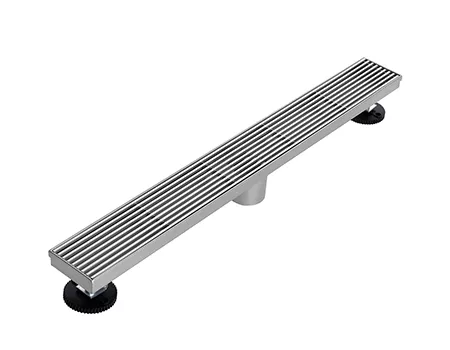
Rectangle Drain for Shower Tips: Surface Stability and Lifecycle Performance
Reference Standard: CE EN1253-1, ISO 9001 Quality Management, CUPC, Watermark Certification
Short Answer
A rectangle drain for shower applications is not only a drainage component but also a long-term material system exposed to moisture, thermal cycling, cleaning chemicals, and mechanical stress. The durability of the product depends heavily on material selection, fabrication quality, surface treatment, and manufacturing consistency.
A well-manufactured rectangular shower drain commonly incorporates SS304, SS316, ABS, or PVC components and undergoes processes such as laser cutting, welding, surface finishing, passivation, and leakage testing. These production variables often influence long-term performance more than appearance alone.
How Surface State Evolves After Fabrication and Finishing
When a rectangular shower drain leaves the production line, its visible appearance represents only the final stage of a much longer metallurgical process. Stainless steel surfaces continuously evolve from fabrication through installation and throughout their service life.
The manufacturing route described for shower drain production includes stamping, laser cutting, bending, welding, laser welding, brushing, sandblasting, pickling, electrical polishing, and passivation. Each process alters the material surface in a different way.
During stamping and bending, localized mechanical stress changes the surface condition of stainless steel sheets. Welding introduces concentrated heat that can create oxidation zones and visible discoloration if no subsequent treatment is applied. These thermal effects do not automatically indicate poor quality, but they require corrective finishing procedures to restore surface consistency.
A dedicated 2000㎡ surface treatment workshop performing pickling, electrical polishing, and passivation represents an important control stage. Pickling removes contaminants, welding residue, oil, and oxidation traces. Electrical polishing helps refine surface characteristics. Passivation assists the formation of a protective chromium-rich surface layer that contributes to corrosion resistance.
Consider an extreme environmental simulation model:
Initial Phase
– Surface remains visually stable.
– Moisture exposure is intermittent.
– Cleaning chemicals have limited cumulative influence.
Mid-Life Phase
– Repeated wet/dry cycles increase chemical interaction.
– Soap residue and mineral deposits accumulate.
– Micro-abrasion from routine cleaning becomes more noticeable.
Extended Service Phase
– Areas with incomplete finishing may show greater cosmetic aging.
– Thermal expansion and contraction cycles accumulate stress.
– Surface contamination becomes increasingly dependent on maintenance practices.
A cross-dimensional comparison highlights the importance of finishing quality:
| Production Stage | Primary Objective | Potential Risk Without Control |
|---|---|---|
| Welding | Structural assembly | Oxidation discoloration |
| Brushing | Surface uniformity | Visible scratches |
| Pickling | Contaminant removal | Residual welding marks |
| Passivation | Surface stabilization | Reduced corrosion resistance |
The long-term appearance of a rectangle drain for shower systems is therefore heavily influenced by finishing consistency rather than material name alone.
Material Transition Points Across Wet and Dry Cycles
Bathrooms create one of the most complex environmental cycles found in residential construction. A rectangular shower drain may experience multiple wet and dry transitions every day.
The documented material portfolio includes:
- SS304
- SS316
- ABS
- PVC
Each material responds differently to environmental exposure.
SS304 and SS316 are metallic materials whose performance depends heavily on surface condition and environmental chemistry. ABS and PVC are polymer materials that respond differently to temperature fluctuations and moisture exposure.
A practical material transition model can be examined through three environmental stages.
Stage 1: Moisture Saturation
During active shower use, surfaces encounter:
- Warm water
- Humidity
- Soap residue
- Cleaning products
The material system remains hydrated and thermal expansion occurs.
Stage 2: Drying Cycle
After use:
- Water evaporates
- Mineral traces may remain
- Surface temperature decreases
- Material contraction begins
Repeated transitions between expansion and contraction create long-term fatigue conditions.
Stage 3: Chemical Exposure
Periodic cleaning introduces another variable.
Some cleaners contain acidic ingredients while others contain chlorine-based compounds. Material behavior depends not only on the cleaner itself but also on concentration, exposure duration, and rinse practices.
A comparative observation:
| Material Category | Moisture Exposure | Thermal Cycling | Chemical Exposure |
|---|---|---|---|
| SS304 | Stable under normal bathroom use | Moderate response | Depends on cleaner chemistry |
| SS316 | Often selected for enhanced corrosion environments | Moderate response | Improved resistance in demanding environments |
| ABS | Lightweight polymer response | Temperature-sensitive behavior | Depends on formulation |
| PVC | Common drainage polymer | Stable in many plumbing applications | Depends on chemical concentration |
The key engineering lesson is that environmental durability results from the interaction between material choice and processing quality rather than a single specification alone.
KEY TAKEAWAYS
- Early discoloration near weld regions may indicate incomplete post-processing consistency.
- Persistent residue accumulation can signal surface contamination rather than material failure.
- Uneven cosmetic aging often appears before significant structural concerns become visible.
Manufacturing Consistency and Why Process Control Matters
Many performance discussions focus exclusively on material grade. In practice, manufacturing consistency frequently determines whether theoretical material advantages translate into real-world durability.
The production system described includes:
- 1500KW laser cutting equipment
- 60T punching machines
- 200T punching machines
- Bending machines
- Welding systems
- Laser welding systems
Production capacity is reported at approximately 30,000 sets per month.
Large-scale production introduces an engineering challenge: maintaining consistency across thousands of units.
Laser cutting affects dimensional precision. Punching operations influence edge quality. Bending impacts geometric consistency. Welding determines structural integrity. Surface treatment affects appearance and corrosion behavior.
A manufacturing variation at any stage can influence downstream operations.
For example:
- Minor cutting variation may affect bending alignment.
- Bending variation may influence welding fit-up.
- Welding variation may increase finishing workload.
- Finishing variation may alter final appearance.
Solution 1: Controlled Raw Material Selection
Execution Protocol
Material verification should begin before fabrication. Incoming SS304, SS316, ABS, and PVC materials should be matched against procurement requirements and manufacturing documentation.
Material Evolution
Consistent raw materials improve predictability throughout stamping, bending, welding, and finishing operations.
Hidden Costs and Risk Avoidance
Inconsistent material sourcing may increase scrap rates, rework requirements, and finishing variation.
Solution 2: Process Sequencing Discipline
Execution Protocol
Manufacturing stages should follow a controlled progression from cutting through finishing without bypassing inspection checkpoints.
Material Evolution
Stable sequencing reduces uncontrolled surface variation and promotes uniform appearance.
Hidden Costs and Risk Avoidance
Skipping process controls may reduce short-term labor costs while increasing long-term quality risks.
Solution 3: Surface Treatment Verification
Execution Protocol
Pickling, electrical polishing, and passivation should be treated as measurable production activities rather than cosmetic enhancements.
Material Evolution
Surface contaminants are removed and the finished appearance becomes more consistent.
Hidden Costs and Risk Avoidance
Insufficient treatment may create future appearance issues that are difficult to correct after installation.
Solution 4: Leakage and Final Inspection Controls
Execution Protocol
Air testing, dimensional checks, weld inspection, surface evaluation, and packaging inspection should be completed before shipment.
Material Evolution
The product enters service with verified manufacturing integrity.
Hidden Costs and Risk Avoidance
Failure to identify defects before shipment increases replacement and logistics costs.
| Evaluation Variable | Inspection Focus | Expected Industry Practice | Verification Basis |
|---|---|---|---|
| Raw Material | Material identification | Incoming verification | Procurement records |
| Laser Cutting | Edge consistency | Process control | Visual inspection |
| Welding | Joint quality | Controlled welding | Weld review |
| Surface Treatment | Finish consistency | Post-processing verification | Surface inspection |
| Leakage Test | Sealing integrity | Air testing | Functional verification |
| Packaging | Shipment protection | Export-standard packing | Final inspection |
PRO-TIP / CHECKLIST
- Confirm whether SS304 or SS316 is specified.
- Review surface treatment processes used after welding.
- Verify that leakage testing is part of production.
- Check for ISO 9001 quality management practices.
- Inspect visible edges and weld transitions.
- Confirm packaging protection for transportation.
- Request certification documentation when required.
- Compare production capability with project volume requirements.
Certification Pathways and Global Market Readiness
Certification systems serve as structured mechanisms for evaluating manufacturing practices and product suitability within specific markets.
The documented certification portfolio includes:
- ISO 9001
- CE EN1253-1
- CUPC
- Watermark
ISO 9001 focuses on quality management systems and process consistency.
CE EN1253-1 is associated with drainage product requirements within applicable markets.
CUPC certification is commonly referenced within plumbing-related compliance frameworks.
Watermark certification supports regulatory acceptance within relevant regions.
Certification should not be interpreted as a guarantee of performance under every installation condition. Instead, certifications establish a documented framework for manufacturing controls, testing procedures, and compliance expectations.
For global procurement projects, certifications help create a common technical language between manufacturers, distributors, contractors, and regulators.
Additional information about quality systems can be found through organizations such as:
A rectangle drain for shower applications benefits from certification not because certifications eliminate all risk, but because they create repeatable standards for evaluation and quality management.
For related drainage and bathroom product information, visit Mondeway Sanitary.
Frequently Asked Questions (FAQ)
How to remove hair from shower drain?
Hair should be removed as early as possible before significant accumulation occurs. Manual removal and routine maintenance are generally more effective than waiting for severe blockage conditions to develop.
How to take off a shower drain?
Removal procedures vary according to drain design. Always identify the grate or cover attachment method before attempting removal to avoid damaging visible components.
How to get rid of smell bathroom drain?
Odors are commonly associated with residue accumulation, moisture retention, or plumbing-related issues. Cleaning visible surfaces and verifying plumbing conditions are common first steps.
How much does it cost to unclog a shower drain?
Costs vary significantly depending on blockage severity, local labor rates, and whether professional plumbing services are required.
Can a landlord charge you for a clogged shower drain?
This depends on lease agreements, local regulations, and the cause of the blockage. Responsibility is typically determined by maintenance obligations and documented usage conditions.
How to thaw a frozen shower drain?
Gradual warming methods are generally preferred. Rapid heating may create thermal stress within surrounding plumbing components.