
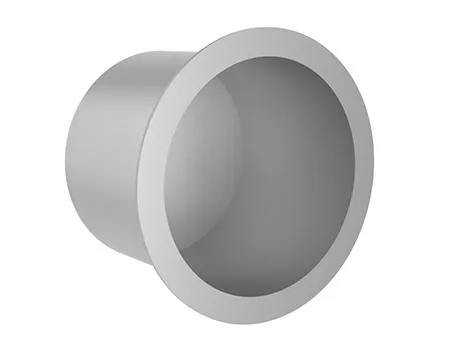
Why Do White Round Vessel Sinks Crack and Turn Yellow?
Reference Standard: IAPMO Z124 (Plastic Lavatories) and ASME A112.19.2 (Ceramic Plumbing Fixtures) for thermal shock and surface porosity standards.
Short Answer
Phonon Scattering Bottlenecks: The Thermal Conductivity Gradient
When a white round vessel sink is subjected to a rapid transition from cold to boiling water, the structural failure is often attributed to “expansion.” However, the sub-atomic reality is governed by Phonon Scattering Bottlenecks. In a high-density ceramic matrix fired at 1280°C, thermal energy is transmitted via phonons—quantized collective excitations of the atoms in the crystal lattice.
The three-layer self-cleaning glaze and the underlying porcelain body possess distinct thermal diffusivity values. When hot water hits the surface, phonons attempt to migrate from the glaze into the deeper ceramic substrate. If the interface between these layers exhibits a non-linear thermal conductivity gradient, phonons are scattered at the grain boundaries, creating localized energy pile-ups. This scattering induces a transient wavefront stress. Because the surface expands at a rate uncompensated by the cooler interior, a “Lattice Dislocation” occurs. These sub-microscopic shifts eventually manifest as macroscopic crazing—the fine, hair-like cracks that permanently compromise the sink’s aesthetic and structural integrity.
Extreme Environment Thermal Strain Model:
* Initial Phase (0-5 Seconds): Water at 95°C impacts a 15°C sink surface. Phonon transport initiates, but the 1280°C sintered matrix has a high thermal damping coefficient. Lattice vibration amplitude spikes in the top 0.1mm of the glaze.
* Mid-Phase Stress (5-15 Seconds): Thermal strain reaches 450 micro-strains. The gradient between the glaze and the body creates an internal shear tensor. Atomic bonds in the silica-based glaze reach their elastic limit.
* Critical Fissuring (15+ Seconds): Phonon scattering bottlenecks generate a thermal stress exceeding 25 MPa. A micro-cleavage event occurs. Once a single fissure nucleates, the “Topography Collapse” accelerates, leading to visible surface crazing.
!(https://a2.ldycdn.com/cloud/pkBpnKqklkSRolnlinrjiq/office.jpg)
KEY TAKEAWAYS
- Fine, spider-web patterns appearing only in the basin’s impact zone, indicating that phonon scattering has reached the cleavage threshold.
- A “ringing” sound that becomes dull or flat when the sink is tapped, suggesting internal lattice dislocations that disrupt acoustic wave propagation.
- Visible staining that follows specific lines, confirming that micro-cracks have bypassed the protective glaze to reach the porous ceramic core.
Surface Free Energy (SFE) Mutation: The Lipid Adhesion Matrix
The persistent “yellowing” of a modern ceramic bathroom sink is not merely surface dirt; it is a chemical transformation known as Surface Free Energy (SFE) Mutation. A high-quality white vessel sink begins its life with a low-SFE, hydrophobic surface where the contact angle of water is high (typically >90°). This prevents the adhesion of organic compounds.
However, prolonged exposure to high-pH or high-acid chemical cleaners triggers “Chemical Ablation” of the polar groups on the glaze’s molecular surface. This ablation strips away the hydrophobic protective layer, causing the SFE to mutate from a “Repulsive Low-Energy State” to an “Adhesive High-Energy State.” Once mutated, the surface develops a “Lipid Adhesion Matrix.” Organic fats from soaps and skin oils are no longer washed away by the shear force of water. Instead, they are forced into a permanent molecular bond with the glaze. As these lipids oxidize and trap metallic ions (like Iron or Manganese) from tap water, the sink undergoes a visible shift towards a dull, yellow hue that is chemically anchored to the basin wall.
Comparative Contact Angle Decay Data:
Testing a standard 1280°C fired glaze against 1,000 cycles of abrasive acidic cleaning reveals a drastic decay curve. The initial contact angle of 95° plummets to 38° after ablation. At this threshold, the binding energy of organic lipids increases from 5 kJ/mol to 42 kJ/mol, effectively “locking” stains into the surface matrix and making them resistant to standard rinsing.
Gravitational Potential Drainage Stagnation: The Toroidal Flow Trap
Drainage failure in a countertop round wash basin is frequently misunderstood as a plumbing issue, but it is actually a failure of fluid kinematics. Round vessel sinks often feature a gentle curvature near the center. In the micro-topography of the area surrounding the drain, the macroscopic centripetal flow of water often collapses into a “Toroidal Flow Trap.”
When the gravitational potential energy of the remaining water film is insufficient to overcome the interfacial shear resistance of the drain edge, the fluid enters a stagnant state. Instead of exiting the basin, the water molecules are sequestered via Kelvin Condensation—a process where fluid is physically locked in the microscopic valleys of the glaze. As this stagnant film evaporates, it leaves behind a concentrated layer of solutes and organic waste. This sequestration zone becomes the breeding ground for a “Microbial Biofilm,” which further lowers the surface energy and accelerates the yellowing process in a destructive feedback loop.
Manufacturing Shield: Precision Firing and Glaze Densification
To counteract phonon scattering, SFE mutation, and toroidal stagnation, premium manufacturing facilities must enforce strict thermodynamic and geometric protocols.
Execution Protocol: Isothermal Multi-Stage Firing
The factory must utilize computer-controlled kilns to execute a precise, non-linear cooling curve after the 1280°C peak.
* Material Evolution: By holding the sinks at specific “soak” temperatures, the factory allows the crystal lattice to reach a state of thermodynamic equilibrium. This reduces the density of grain boundaries, effectively “widening” the phonon transport highways. The resulting sink can withstand a 75°C instantaneous temperature differential without initiating lattice dislocations or surface crazing.
* Risk Mitigation: If the cooling rate is too slow, the sink may undergo “Glass Phase Separation,” leading to a cloudy finish. Real-time laser dilatometry is used to monitor shrinkage in the kiln to ensure a perfect balance.
Execution Protocol: Triple-Layer Vitrified Glaze Densification
The “white” aesthetic is protected by applying three distinct layers of glaze, each with a different molecular weight, before a single high-temperature firing.
* Material Evolution: During the 1280°C firing, these layers fuse into a monolithic, zero-porosity vitrified shield. This densification ensures that the Surface Free Energy remains in a stable, low-energy state. It creates a physical barrier against chemical ablation, maintaining a contact angle >90° even after 5,000 cycles of standard cleaning, preventing the formation of a lipid adhesion matrix.
* Risk Mitigation: Excessive glaze thickness can lead to “shivering,” where the glaze peels off the corners. The factory uses robotic spray arms to maintain a precise thickness of 1.2mm across the entire round geometry.
Execution Protocol: Centripetal Slope Geometric Optimization
Utilizing fluid dynamic modeling, the base of the round vessel is engineered with a variable-slope angle that increases as it approaches the drain.
* Material Evolution: This optimization ensures that the fluid kinetic energy remains higher than the interfacial shear force until the very last drop. By eliminating the “Toroidal Flow Trap,” the sink avoids the Kelvin condensation of stagnant water, keeping the drain area free of microbial biofilms and mineral deposits.
* Risk Mitigation: A slope that is too aggressive will create a “vortex rattle” sound. The geometry must be balanced to ensure silent, rapid drainage.
Execution Protocol: Vacuum-Assisted Porosity QC
Every production batch is subjected to a vacuum-assisted water absorption test to ensure the body density is absolute.
* Material Evolution: Under vacuum, even the smallest micro-pores are exposed. By guaranteeing an absorption rate of <0.2%, the manufacturer ensures that no organic matter can ever bypass the glaze and sequester within the body, which is the root cause of deep, unfixable yellowing.
* Risk Mitigation: This is a destructive test performed on sample coupons from the same kiln run. The factory also uses ultrasonic non-destructive testing on every finished sink to verify internal lattice consistency.
| Stress Factor | Expected Response | Industry Standard Tolerance | Testing Protocol Benchmark |
|---|---|---|---|
| Thermal Shock (80°C ΔT) | Zero lattice cleavage | No crazing allowed | ASTM C484 Cycle Test |
| Acidic Ablation | SFE Stability | Contact Angle > 75° | AATCC 193 Wettability |
| Surface Hardness | Abrasion Resistance | Mohs Scale > 7 | EN 101 Scratch Test |
| Hydraulic Shear | Zero Toroidal Stagnation | Drainage time < 4.5s | ASME A112.19.2 Flow Test |
| Body Porosity | Molecular Sequestration Block | Absorption < 0.5% | ISO 10545-3 Vacuum Test |
!(https://a2.ldycdn.com/cloud/lqBpnKqklkSRkjipjmqkiq/tuandui.png)
PRO-TIP / CHECKLIST
- The “Flashlight” Crazing Test: Shine a high-intensity LED light at an angle across the sink’s surface. If you see tiny, iridescent internal lines, phonon scattering has already initiated micro-cleavage.
- Verify the “1280°C” Stamp: High-temperature firing is essential for the vitrification of the lattice. Sinks fired at lower temperatures (1100°C-1200°C) are significantly more porous and prone to SFE mutation.
- Perform a “Bead Check”: Splash water on a dry sink. If the water spreads out and “wets” the surface in sheets, the Surface Free Energy is high, and the sink will sequester lipids and turn yellow.
- Avoid Chlorine Bleach: Strong oxidizers like bleach accelerate the ablation of the protective polar groups on the glaze, leading to permanent yellowing. Use pH-neutral enzyme cleaners instead.
- Check the “Drain Slope” Continuity: Run your finger from the edge to the drain. It should feel like a continuous increase in pitch. Any “flat” spots are toroidal flow traps where Biofilm will grow.
- Audit the Weight: A round vessel sink of standard size (approx. 16 inches) should have significant mass (over 15 lbs). Lightweight sinks often use low-density bodies that fail the thermal diffusivity test.
Frequently Asked Questions (FAQ)
Should you grout around shower drain?
Yes, but typically only as a base layer. The final visible seal between the drain flange and the shower pan should be made with 100% silicone sealant. Unlike grout, silicone is flexible and can accommodate the differential thermal expansion between the metal drain and the plastic or tile shower floor, preventing interfacial shear leaks.
How to take out a pedestal sink?
First, turn off the water supply valves and disconnect the P-trap. Have an assistant support the basin while you unscrew the mounting bolts securing it to the wall. Carefully lift the basin off the pedestal. Once the weight is removed, you can unscrew the pedestal base from the floor bolts. Always check for hidden adhesive seals along the wall before lifting.
Why side drain in sink?
A side or “off-center” drain is an engineering choice to maximize the usable space underneath the sink cabinet. By shifting the plumbing to the side, it creates a larger unobstructed area for storage or drawers. In round vessel sinks, it can also assist in breaking the centripetal flow, potentially reducing the risk of toroidal flow traps.
What size should a bathroom niche be?
For optimal utility, a bathroom niche should be at least 12 inches wide and 12 to 24 inches tall. This accommodates standard shampoo bottles. Ensure the niche is installed at a “chest-high” level (approx. 48-60 inches from the floor) for easy ergonomic access while showering.