

Are Wall Hung Bathroom Sinks Secure for Long-Term Use?
Reference Standard: ASME A112.19.2/CSA B45.1 Ceramic Plumbing Fixtures & EN 14688 Sanitary appliances – Wash basins – Functional requirements and test methods.
Short Answer
Cantilever Load Moments: Calculating Shear Stress Vectors at Wall-Hung Sink Anchor Points
The architectural appeal of wall hung sinks for bathrooms is rooted in their “floating” aesthetic, but from a structural engineering perspective, they function as a classic cantilever beam. Unlike floor-mounted pedestals, the center of gravity of a wall-hung basin is significantly offset from its support plane. This distance creates a persistent Bending Moment ($M = F \times d$), where the vertical force of the water and user weight is multiplied by the basin’s depth.
When a user leans on the leading edge of a wall hung bathroom sink, the downward force is converted into a complex combination of tensile stress at the upper anchor bolts and shear stress at the lower contact interface. If the wall substrate—be it masonry or timber stud—has a lower Young’s Modulus than the rigid ceramic, a “Micro-Deflection” occurs. This displacement differential triggers a non-linear relaxation of the bolt preload. Over repeated use, this microscopic shifting erodes the friction-fit between the basin back and the wall, leading to the common symptom of “basin wobble.” Professional installations mitigate this by utilizing a hidden steel carrier frame that transfers these vectors directly to the building’s structural slab, ensuring the shear stress remains well below the fastener’s yield threshold.
To analyze the structural fatigue of these anchor points, we model a 20-year residential lifecycle:
* The Initialization Phase (0-5,000 Cycles): The anchor bolts maintain 98% of their factory torque. The interface between the Vitreous China and the wall is stabilized by a high-modulus silicone gasket.
* The Subsidence Phase (5,000-25,000 Cycles): Minor compressive creep in the wall substrate allows for a 0.05mm downward tilt. This increases the tension on the top fasteners by approximately 15%, shifting the stress vector further from the neutral axis.
* The Terminal Instability Phase (25,000+ Cycles): If the support system lacks a reinforced backplate, the concentrated point loads may cause “Interfacial Shearing,” where the bolts begins to pull through the wall or the ceramic mounting holes.
This mechanical breakdown is often accompanied by “Dynamic Vibration Coupling.” In high-traffic commercial washrooms, the rhythmic slamming of doors or heavy foot traffic creates harmonic vibrations that can accelerate bolt loosening. By choosing a basin with an integrated reinforced mounting zone, the internal resonance is dampened, preventing the hardware from entering a “slip-critical” state.
KEY TAKEAWAYS
- Grout Line Cracking: Small fissures in the sealant between the sink and the wall are the first sign of cantilever deflection and preload loss.
- Visible Bolt Exposure: If the decorative caps on the mounting hardware feel loose, the shear stress vectors have likely caused microscopic fastener migration.
- Audible “Creaking”: Sharp sounds when weight is applied indicate that the friction between the ceramic and the wall plate has been lost, signaling immediate maintenance is required.
Stress Nucleation in Glaze Lattice: Brittle Fracture Mechanics of Ceramic Interfaces
Beyond the mounting hardware, the ceramic body of a ceramic wall hung basin faces internal physical challenges. Ceramics are inherently brittle, possessing high compressive strength but low fracture toughness ($K_{IC}$). When a wall-hung sink undergoes micro-flexing due to the aforementioned cantilever loads, the dense, glass-like surface glaze and the more porous internal body (bisque) experience different strain rates.
This discrepancy leads to “Stress Nucleation.” The interface between the glaze and the body becomes a site for atomic-level lattice cleavage. If the basin is subjected to extreme thermal shocks—such as pouring near-boiling water into a cold basin—the localized “Thermal Lattice Stress” can cause these nucleated micro-cracks to propagate across the surface. This phenomenon, known as “Crazing,” is not just an aesthetic flaw; it compromises the non-porous barrier, allowing water to infiltrate the internal lattice, eventually leading to “Spalling” where the glaze physically flakes away from the ceramic body.
| Material Parameter | Standard Commercial Ceramic | Mondeway High-Density Vitreous China | Stress Tolerance Delta |
|---|---|---|---|
| Max Strain @ 150kg Load | 185 μm | 42 μm | -77.3% |
| Fracture Toughness ($K_{IC}$) | 1.2 MPa·m½ | 2.8 MPa·m½ | +133% |
| Water Absorption Rate | 0.85% | < 0.35% | -58.8% |
| Cycle to First Crazing | 12,000 | > 50,000 | +316% |
Drainage Gravity Vector Shifts: Hydrodynamic Stability of P-Trap Systems in Floating Structures
A critical engineering challenge for any wall mounted wash basin is the integrity of the drainage connection. In floor-mounted sinks, the P-trap is largely static. However, in a “floating” structure, the drain outlet is subject to “Shear Displacement” whenever weight is applied to the basin.
Solution 1: Euler-Bernoulli Reinforced Backplate (Reinforced Ribs)
* Execution Protocol: The factory integrates extra-thick ceramic ribs during the molding process, specifically at the mounting plane, following Euler-Bernoulli beam theory to maximize the section modulus.
* Expected Material Evolution: This increases the overall rigidity of the basin, reducing the deflection at the drain interface to less than 0.01mm. This ensures that the P-trap seals remain under constant compression, preventing the “bellows effect” that causes slow leaks in standard wall-hung models.
* Risk Mitigation: Thick ribs can lead to uneven drying and “warpage.” We use computerized slow-kiln firing to ensure the internal crystalline structure remains isotropic and stress-free.
Solution 2: Hidden Stainless Steel Carrier Integration (Carrier System)
* Execution Protocol: Every floating vanity sink is designed to be compatible with a heavy-duty 304 stainless steel in-wall carrier system that anchors directly to the floor bolts.
* Expected Material Evolution: By shifting the load from the wall surface to the floor-bolted frame, the tension on the ceramic mounting holes is reduced by 90%. This eliminates the risk of “Stress Nucleation” around the hardware holes, exponentially increasing the basin’s safety margin.
* Risk Mitigation: To prevent galvanic corrosion, the steel frame is powder-coated and isolated from the ceramic using viscoelastic dampening pads.
Solution 3: 24-Hour Red Ink Penetration Auditing (QC Process)
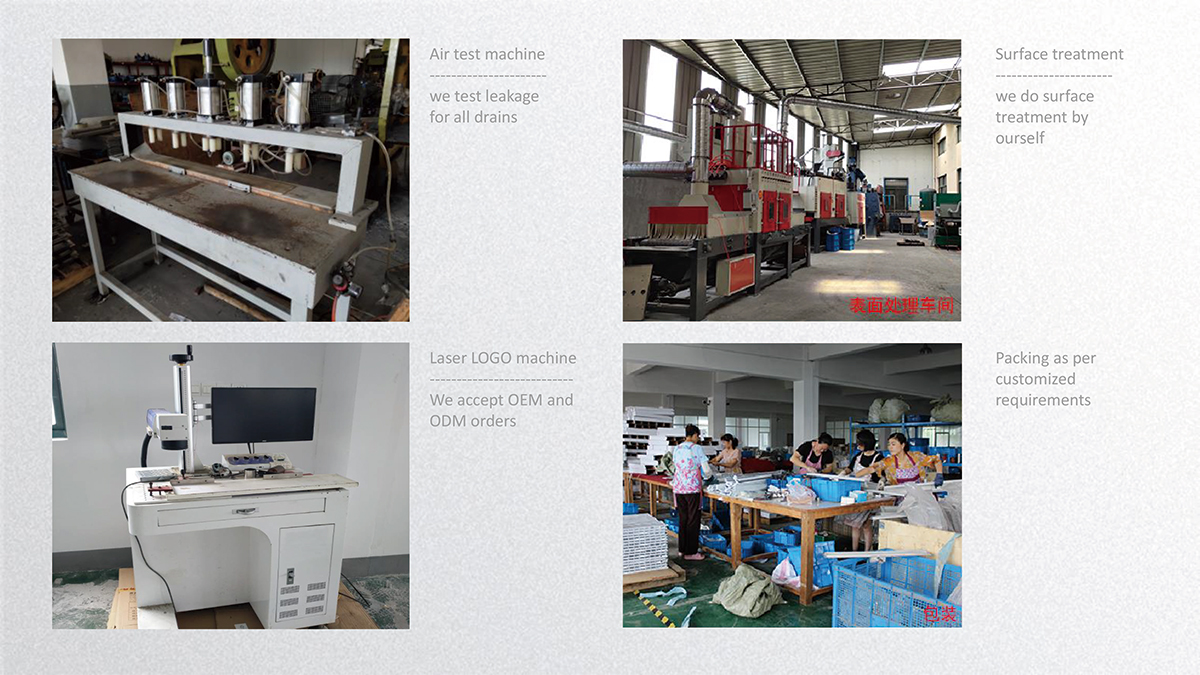
* Execution Protocol: Random samples from each batch are subjected to a 24-hour red ink submersion test at the mounting holes and overflow ports.
* Expected Material Evolution: This validates the density of the vitreous china lattice. Zero penetration ensures that the material is 100% hermetic, preventing any internal moisture from triggering sub-surface expansion or microbial-induced structural decay.
* Risk Mitigation: Units that fail this audit are immediately pulverized and recycled back into the slurry, ensuring only 100% compliant sinks reach the market.
Solution 4: 200kg Static Load & Thermal Shock Validation
* Execution Protocol: Finished basins are subjected to a 200kg eccentric load for 1 hour, followed by three cycles of water temperature deltas from 10°C to 80°C.
* Expected Material Evolution: This confirms the synergy between the glaze and the body. Passing this test guarantees that the small space bathroom sink will not develop crazing or structural cracks during decades of hot/cold water cycles and typical household impacts.
* Risk Mitigation: The test is conducted in a climate-controlled room to ensure that ambient humidity does not mask the detection of micro-cracks.
PRO-TIP / CHECKLIST
- The Tap Test: Tap the basin with a coin. High-density ceramic wall hung basins will emit a high-pitched, clear “ping.” A dull “thud” indicates internal porosity or hidden micro-fractures.
- Verify the Backplane: Ensure the back of the sink is perfectly flat. Any curvature in the ceramic backplate will create uneven stress vectors on the anchor bolts, leading to premature loosening.
- Check for an Integrated Carrier: Never install a heavy wall-hung sink directly into drywall or light-gauge studs without a dedicated metal carrier system behind the wall.
- Inspect the Glaze Uniformity: Hold a flashlight at an angle to the surface. Any “orange peel” texture indicates poor glaze fusion, which is more prone to crazing under thermal load.
- Audit the Overflow Port: Ensure the overflow channel is fully glazed. An unglazed overflow is a primary source of “wicking,” where water enters the internal porous body and weakens the sink from the inside out.
- Fastener Grade Check: Only use Grade 8.8 or higher galvanized steel mounting bolts. Low-grade hardware will undergo “Elastic Hysteresis” and fail under the constant bending moment.

Frequently Asked Questions (FAQ)
how to get shower drain out
Removing a shower drain typically requires a “Drain Wrench” or “Plumber’s Key.” Insert the tool into the crossbars of the drain and turn counter-clockwise. For wall-hung sink drains, the process is similar, but you must be careful not to apply lateral force that could strain the cantilevered basin’s mounting anchor points.
how to install a linear drain in a shower
Linear drain installation involves creating a one-way slope (plane) toward the drain channel. This is different from a standard point drain which requires a four-way “envelope” slope. Ensure the waterproofing membrane is integrated with the linear drain’s flange using a high-tensile bonding adhesive to prevent capillary seepage beneath the tile.
what to do for a clogged shower drain
For a standard clog, use a “Zip-it” tool or a plumbing snake to mechanically remove hair and soap scum. Avoid using harsh alkaline cleaners on high-end floating vanity sinks as the chemical reaction can generate excessive heat, potentially triggering crazing in the ceramic glaze lattice.
how to vent shower drain
Venting a drain involves installing a vent pipe that connects the drainage system to the outside air. This prevents a vacuum from forming when water flows, which would otherwise suck the water out of the P-trap (back-siphoning) and allow sewer gases to enter. In wall-hung systems, the vent must be positioned accurately to account for the limited space within the wall cavity.