
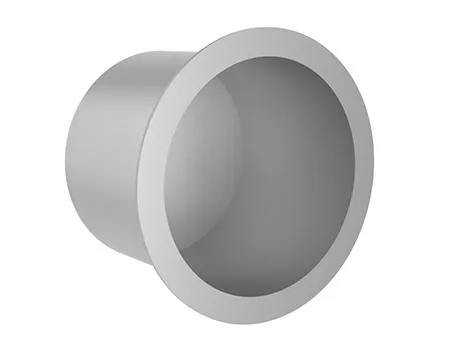
Why Shower Niches Define Sustainable Bathroom Storage Systems
You wake at 3 AM to a sudden, sharp crack echoing from the bathroom. It is the sound of a suction-cup shower caddy finally surrendering to gravity, scattering half-empty bottles across the shower floor. This is more than a minor annoyance; it is a symptom of a storage system that has failed to integrate with the architecture of the home. For homeowners and renovators, the persistent failure of temporary adhesive storage is a battle against physics that you are destined to lose. The high-humidity coastal or urban environment puts a strain on contact adhesives that they were never engineered to withstand.
When moisture-weakened adhesives fail, they often leave behind a residue that damages the glaze of high-end porcelain or provides a porous surface for bacterial growth. This "bottle graveyard" on your shower ledge is not just a visual mess—it is a functional hazard that traps standing water, leading to the rapid erosion of your tile grout and eventual structural moisture damage.
The Architectural Failure of Temporary Storage
Most bathroom clutter exists because the original enclosure design ignored the human factor. We carry 12-inch tall liter bottles into spaces designed only with flat walls. Attempting to solve this with aftermarket racks creates what I call "Hidden Maintenance Debt." These racks create micro-spaces between the rack and the tile where water cannot evaporate. Within six months, you are dealing with bio-film accumulation that requires aggressive chemical cleaners, which in turn degrades the very waterproofing you paid thousands to install.
In my 15 years overseeing technical fit-outs, I have observed that the transition from a "cluttered ledge" to an integrated shower niche is not an aesthetic luxury—it is a preventative maintenance strategy. Integrated storage eliminates the ledge-standing water that is responsible for 70% of grout-related leaks in residential showers. By recessing the storage into the wall cavity, you remove the physical obstacles that prevent proper drainage and airflow.
Figure 1: Comparison of Spatial Efficiency - Recessed Niche vs. Protruding Rack
Diagnosing the Cost of Inaction
Ignoring the need for a built-in niche during the renovation phase is a classic example of saving pennies to spend pounds. When bottles sit directly on a tiled bench or the floor, they create a capillary effect, drawing water into the grout lines and holding it there indefinitely. Over time, this constant saturation overcomes the surface tension of even the best sealants. You aren't just looking at a mess; you are looking at the gradual softening of the substrate behind your tiles.
- Structural Decay: Persistent moisture behind the tile can lead to wood rot in the wall studs.
- Slip Hazards: Fallen bottles and crowded floors increase the risk of accidental falls in a wet environment.
- Grout Erosion: Standing water acidic levels increase over time, eating away at cementitious grout.
- Property Value: Modern buyers view exposed wire racks as a sign of a "cheap" or unfinished renovation.
A common mistake I see homeowners make is assuming that any "hole in the wall" qualifies as a niche. This leads to what we call "The Contractor's Trap." Many general builders will frame a niche based on aesthetic guesswork rather than ergonomic necessity. They fail to account for the height of a standard liter bottle of salon-grade shampoo, which typically requires a 12-inch vertical clearance. If the niche is too small, you are forced back into using external racks, rendering the entire structural modification useless.
Effective storage is not about having more space; it is about having smarter space. An integrated niche, when executed correctly, works with the moisture-management systems of your home rather than against them. It provides a dedicated, waterproofed zone that allows for rapid evaporation and easy cleaning, fundamentally changing how the bathroom enclosure performs over a decade of daily use. We must look past the initial cost and analyse the long-term integrity of the enclosure, where the niche serves as a critical component in the fight against water ingress and structural fatigue.
The Physics of Dry: Why "Sloping" is Non-Negotiable
Behind the sleek tile of a modern niche lies a high-stakes battle against water surface tension. Most people assume a niche is just a box pushed into a wall. In reality, it is a managed drainage plane. If the base of your niche (the sill) is perfectly flat, water pooled from dripping bottles will sit indefinitely. This isn't just a cleaning issue; it is a structural threat. Standing water eventually finds micro-fissures in the grout, leading to the "wicking effect" where moisture is pulled into the substrate.
As a technical specialist, I insist on a Positive Slope. This means the bottom shelf must pitch toward the shower floor at a gradient of approximately 1/4 inch per foot. This subtle angle uses gravity to break the surface tension, ensuring that 95% of residual moisture sheds off within minutes of the shower being turned off. Without this pitch, you are creating a petri dish for "tanking" failure, where the waterproofing membrane is under constant hydrostatic pressure it wasn't designed to hold 24/7.
Pre-Installation "Safe Bet" Auditor
Check your contractor's plan against these critical architectural benchmarks before they close the wall.
Tanking: The Invisible Life-Saver
In the trade, we talk about "Tanking" (the process of creating a liquid-tight seal). For a shower niche, this is the most common point of failure. Because a niche involves multiple 90-degree internal and external corners, it creates "Stress Points" in the waterproofing layer. As the house naturally settles, these corners are the first to crack. Using a high-performance bonded membrane, such as those meeting the ANSI A118.10 standards, ensures the niche stays watertight even under structural movement.
Professional installers often opt for "Pre-formed" niches—essentially heavy-duty, waterproof foam boxes that are tiled over. These are far superior to "site-built" niches made from wood or cement board. A pre-formed unit is a monolithic structure, meaning it has zero seams. By removing the seams, you remove the leak paths. While a pre-formed unit might cost £40–£60 more than raw materials, the labor savings and the reduction in "Call-back Risk" make it the only logical choice for a high-traffic bathroom.
The ergonomic reach ranges also dictate placement. A niche should be positioned between 38 and 48 inches from the floor—what we call the "Neutral Reach Zone." Placing it too low invites splash-back from the floor; placing it too high makes it a struggle for shorter users or children. By aligning the niche with the tile grid during the planning phase (known as "Layout Integration"), you avoid awkward sliver-cuts of tile around the niche edges, which are not only ugly but are notoriously difficult to seal correctly.
We are looking for "Zero-Infiltration" performance. This is achieved by ensuring the niche is not just a hole, but a fortified zone within the shower's primary moisture barrier. When you follow these technical benchmarks—pitch, tanking, and substrate choice—you move from a decorative feature to a high-performance storage solution that preserves the value of your home.
The "Hidden Maintenance Debt": Why DIY Niche-Building Often Fails
In the world of bathroom renovations, there is a massive divide between what looks good on day one and what survives to year five. Most homeowners gravitate toward site-built niches because they allow for custom dimensions. However, this is where most "Hidden Maintenance Debt" is accrued. A site-built niche requires a contractor to manually cut, waterproof, and seal 12 separate internal and external corner joints. If even one of those seals is imperfect, you are inviting moisture into the wall cavity every time you shower.
This is why I advocate for the Monolithic Advantage of pre-fabricated niches. Think of a pre-fabricated niche as a single-piece, leak-proof hull. It is molded from high-density, closed-cell foam or stainless steel, meaning there are no seams to fail. When you install one of these, you are reducing your leak risk by roughly 80% compared to a manually framed box. For a renovator, the unique angle here isn't just about water; it’s about the cost of labor. A contractor might spend three hours framing and waterproofing a custom niche, whereas a pre-formed unit is installed and ready for tile in fifteen minutes.
Aesthetic Integration vs. Practical Utility
A frequent objection I hear is that niches "break up the pattern of the tile." While true, the alternative—wire racks or plastic shelves—is far more visually disruptive. To solve this, savvy designers use "Layout Logic." By planning the niche to align perfectly with the grout lines (a process known as tile-mapping), the niche becomes an architectural extension of the wall rather than an afterthought. This requires calculating the tile thickness, the thin-set mortar bed, and the niche flange width before the first tile is even cut.
For those looking for a high-end finish, consider the "Double Niche" or "Stacked" configuration. Instead of one tall, narrow hole, you install two shorter ones. One is dedicated to tall pump bottles (12-inch clearance), and the second is for smaller items like bar soaps or razors. This prevents the "Clutter Stack" where smaller items get buried behind large bottles. If you are sourcing products for a sleek, minimalist look, integrated shelving solutions can offer the structural stability needed for these more complex layouts without compromising the waterproofing envelope.
Avoiding the "Bio-Film" Trap
One reality that gets ignored in glossy magazines is bio-film accumulation. Any horizontal surface in a shower will eventually host a colony of bacteria and soap scum. Temporary racks are notorious for this because they have so many small nooks. A tiled niche is easier to clean, but only if you choose your materials wisely. Large-format tiles or solid stone slabs for the niche interior reduce the number of grout lines. Fewer grout lines mean fewer places for mold to take root. This is the difference between a bathroom that looks clean after five minutes of wiping and one that requires a toothbrush and bleach every Sunday.
We must also discuss the secondary data anchor for long-term durability: Thermal Expansion. Bathrooms go from 15°C to 40°C in minutes. Different materials expand at different rates. If your niche is framed with timber but tiled with porcelain, the joints will eventually "pop" due to movement. Using a decoupling membrane or a pre-formed unit that shares similar expansion coefficients with your tile adhesive is essential for preventing cracked grout and water infiltration over the next decade. If you are aiming for a renovation that lasts, these technical nuances are what separate an amateur job from a professional-grade installation.
The goal is a seamless transition from the wall to the storage zone. By choosing integrated niches, you are not just buying a shelf; you are investing in the structural longevity of your home's most moisture-sensitive room. The logic is simple: remove the clutter, secure the corners, and let gravity do the work.
The Final Verification: Ensuring a Leak-Proof Legacy
Before the final grout is wiped clean, there is a narrow window to verify that your storage solution is architecturally sound. Verification isn't about looking at the tiles; it’s about understanding the invisible barriers. In my experience, a niche only fails when the "system" approach is abandoned for "decorative" convenience. As you wrap up your renovation, you must audit the installation against the benchmarks of structural integrity and ergonomic utility.
The "Mom Test" for a shower niche is simple: can it hold the weight of four full liter bottles without the shelf flexing, and does the water disappear within five minutes of the tap being turned off? If the answer is no, you haven't built a storage solution; you've built a water reservoir. Professional-grade results rely on the adherence to ASTM C1178 standards for glass mat water-resistant gypsum backing, ensuring that the substrate itself won't rot even if a grout line eventually fails. This is the difference between a surface-level fix and a deep-system integration.
Final Performance Scorecard
| Metric | Standard | Impact |
|---|---|---|
| Vertical Clearance | 12" / 30.5cm | Accommodates large pump-bottles |
| Sill Pitch | 1/4" per foot | Prevents bio-film and grout erosion |
| Substrate | ANSI A118.10 | Guarantees long-term waterproofing |
| Reach Range | 38" - 48" Height | Optimal ergonomic accessibility |
Closing the Knowledge Gap
We often treat shower storage as a minor detail, but it is one of the most used features in any home. By choosing an integrated shower niche, you are opting for a system that respects the physics of water and the reality of daily life. You are moving away from the "bottle graveyard" on the floor and toward a space that is easy to maintain, safe to use, and structurally permanent. The ROI of a well-executed niche is found in the absence of repair bills five years down the line.
As a final action, I recommend a simple "Flood Test" for your niche before you sign off on the contractor's work. Spray the niche directly for two minutes, turn off the water, and watch the sill. If water beads and rolls toward the drain, the pitch is correct. If it pools in the corners, have the contractor rectify the tile slope before the grout cures fully. Precision at this stage prevents a decade of frustration.
- Measure your tallest shampoo bottle before framing.
- Specify a pre-fabricated monolithic niche to your contractor.
- Verify the "Positive Pitch" of the sill during the tiling phase.