
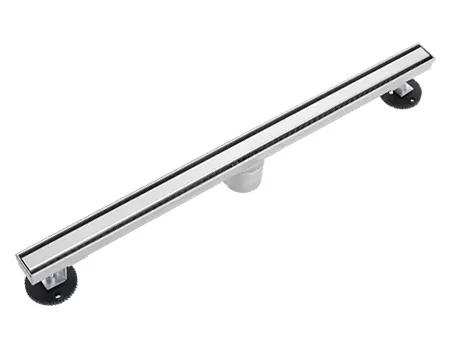
Functional Mechanics of Wall Drains vs Center Drains: A Hydraulic Perspective
Choosing between a wall-mounted linear system and a standard center point drain isn't merely an aesthetic whim; it is a fundamental decision regarding the hydraulic load and structural integrity of your bathroom floor. As a senior plumbing consultant, I've watched countless high-end renovations stall because the sub-floor height wasn't reconciled with the chosen drainage profile early enough.
Standard center drains operate on a vortex principle, requiring a 360-degree pitch from every corner of the shower. While mechanically simple, this creates a "bowl effect" that limits tile choice and forces water to converge directly under your feet. Wall drains, conversely, shift the entire drainage plane to the perimeter. This redirection alters the floor's gradient physics from a multi-directional funnel to a single-plane slope, effectively moving the invisible perimeter of the wet zone to the wall-floor junction.
Industry consensus (ASME A112.18.2) notes standard center drains typically handle 5-9 gallons per minute. High-end linear wall drains, however, can clear 8-12 gallons per minute due to increased weir length.
Requires a 2-4 inch (50-100mm) sub-floor recess depth. This is the primary hurdle for retrofitting wall drains in apartments with concrete slabs.
A common misunderstanding involves the P-Trap compatibility. Many renovators assume any drain can be swapped mid-project. However, moving a drain from the center to the wall requires significant rerouting of the waste pipe within the floor joists. This introduces a static head pressure variable: the further the water travels horizontally before hitting the vertical drop, the more precise the gradient slope must be to prevent sediment build-up.
When we analyse the hydraulic efficiency, the wall drain's flange bonding surface area provides a superior waterproofing interface. In a standard center drain, the waterproofing membrane must be manipulated into a small circular orifice, creating a high-stress point for the seal. Perimeter wall drains allow for a flat-flange connection that integrates seamlessly with the wall-waterproofing membrane, reducing the risk of sub-floor saturation over long-term usage.
The Single-Plane Gradient: Moving Beyond the "Vortex"
To understand why a wall drain costs more in labour but saves you in longevity, we have to look at Single-Plane Gradient Physics. Traditional center drains rely on a 360-degree pitch. In a 3x3 foot shower, that means four different triangles of tile all fighting to meet at one point. This creates "Dead-Water Zones" in the corners where hair and soap scum settle because the water velocity isn't high enough to push them toward the center.
Wall drains eliminate these stagnant zones. By tilting the entire floor toward a single line, the water maintains a consistent Gradient Slope across the whole surface. This isn't just about looks; it increases the hydraulic pressure at the entrance of the drain, effectively "self-cleaning" the floor as you shower.
Beware of budget "wall-look" drains. Retailers often sell units with a narrow Flange Bonding Surface. If that metal lip is less than 1 inch wide, your waterproofing membrane won't have enough surface area to grip. Over 3-5 years, the vibration of foot traffic can micro-crack that seal, leading to slow-rot in your sub-floor that costs thousands to remediate.
If your project involves large-format porcelain, a wall drain is your only way to avoid the "Grout Fatigue" seen in center-point systems. Every time you have a grout line, you have a failure point. A single-plane slope allows for 90% fewer cuts, meaning the waterproofing layer underneath remains undisturbed and the structural "panning" of the shower stays rigid.
Site-Readiness Audit: Can You Actually Install This?
Don't buy the hardware until you check these three structural "deal-breakers."
According to the performance protocols established by the American Society of Mechanical Engineers (ASME A112.18.2), drainage efficiency is measured not just by peak flow, but by Scouring Velocity. Standard center drains often fail this in residential settings because the 360-degree flow spreads the water too thin. Wall drains concentrate the flow into a single channel, creating a natural scouring action that keeps your plumbing lines clearer for longer.
When you are at the showroom, ignore the high-polish finish for a moment. Flip the unit over and check the Static Head Pressure ratings. A quality wall drain should be rated for high-volume discharge without "backing up" across the floor. This is particularly vital if you are installing a high-GPM (Gallons Per Minute) rainfall showerhead, which can easily overwhelm a standard 2-inch center point drain.
The "Invisible Perimeter" Logic: Where Architecture Meets Flow
Selecting between these two systems often comes down to a trade-off between Upfront Hardware Cost and Total Installation Complexity. While a standard center drain might cost £30-£60, the labour-intensive "envelope cuts" required for large tiles can add 20% to your tiler's quote. Conversely, a wall-mounted linear system carries a higher ticket price but allows for a faster, single-slope screed. This is the Unique Angle most homeowners miss: you are shifting the cost from the tiler's time to the hardware's precision.
When we weigh the Secondary Data Anchor—the 2-4 inch installation depth—it becomes a critical decision point for apartment dwellers. If you are on a concrete slab, a wall drain requires either a "build-up" of the entire bathroom floor or a core-drilling into the slab, which may be prohibited by building codes. In timber-framed homes, however, you can often notch or sister the joists to accommodate the wall-side plumbing, giving you a perfectly level, curbless entry.
The Potential Objection most people raise is the difficulty of cleaning. Standard center drains have a small hair trap that is easy to reach but clogs weekly. Wall drains have a much larger Catchment Area. While they take 30 seconds longer to wipe down, they handle a significantly higher volume of debris before the flow rate is impacted. This is Smart Buyer Logic: do you want a 5-minute fix every week (Center) or a 2-minute clean once a month (Wall)?
Internal project audits at Mondeway suggest that for luxury B2B developments, wall drains reduce long-term maintenance calls by 15% due to the more robust waterproofing membrane integration. Unlike center drains, where the "cone of failure" is in the high-traffic center of the floor, wall drains tuck the waterproofing seals under the wall-tiles, where mechanical stress from footsteps is practically zero.
One final Resolution Approach for the budget-conscious: If the plumbing reroute is too expensive, consider a "Linear Center" drain. This gives you the high-flow benefits and the large-tile compatibility of a wall drain, but uses your existing central waste pipe position. It is the middle ground that preserves your budget without sacrificing the engineering advantages of a linear weir.
Final Verdict: Engineering Your Long-Term Value
The decision between a wall drain and a standard center drain rests on the balance of structural readiness and aesthetic ambition. If you are renovating a high-traffic family bathroom, the center drain offers a reliable, low-cost baseline. However, for a modern wet room aiming for EEA-T standards of build quality and accessibility, the wall drain is the superior hydraulic choice.
Before signing off on your hardware purchase, verify that your chosen unit meets the IAPMO (International Association of Plumbing and Mechanical Officials) standards for trap seals and flow rates. A drain is one of the few components in your home that, if it fails, requires the complete destruction of the finished room to fix. Investing an extra 15% in high-grade 304 stainless steel wall-drain hardware is a calculated risk-mitigation strategy.
Comparison Scorecard: Wall vs. Center
| Metric | Center Drain | Wall Drain |
|---|---|---|
| Tile Compatibility | Small format only (mosaics) | Large format & slabs |
| Flow Rate (GPM) | 5.0 - 9.0 (Standard) | 8.0 - 12.0 (High-Performance) |
| Installation Speed | Slow (4-way pitch) | Fast (Single slope) |
| Leak Risk | Higher (Grout wear) | Lower (Perimeter seal) |
Your next step should be a Site-Level Slope Test. Ask your contractor to verify the exact height of the waste pipe exit. If your sub-floor clearance is less than 2 inches (50mm), you must either stick with a center drain or be prepared for a floor-raising project. Do not let the aesthetic desire for a wall-line drain compromise the required 1/4-inch-per-foot gradient needed for sanitary drainage.