
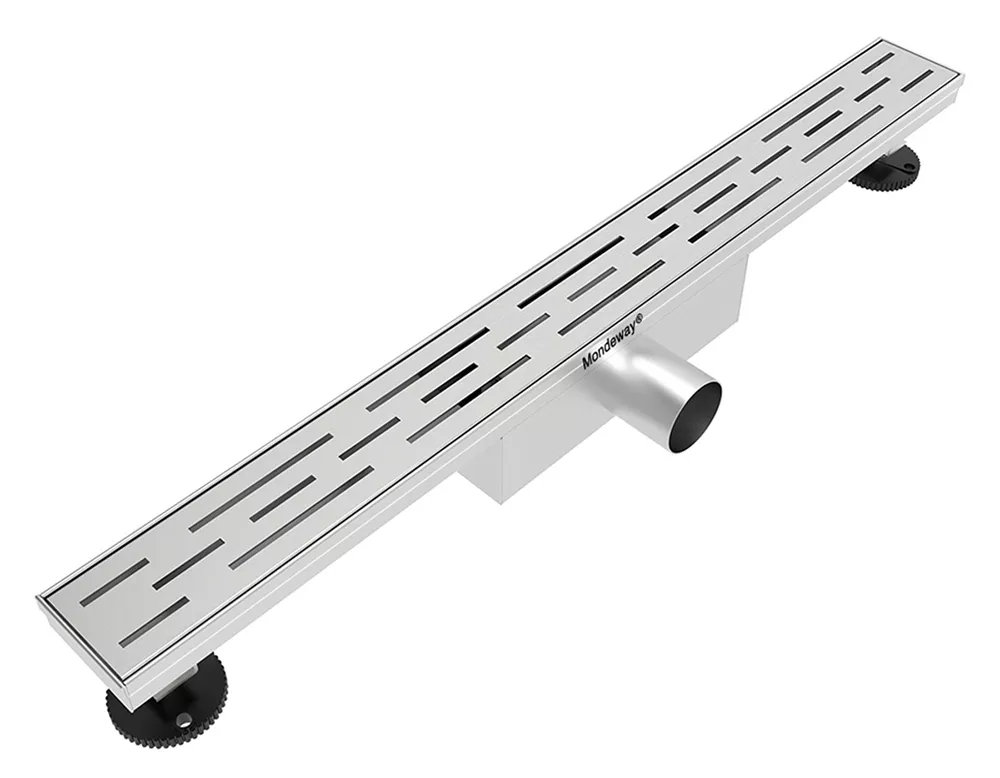
Evaluating Mondeway: Industrial Benchmarks of a Premier Floor Drain Factory
Imagine a high-traffic coastal resort where bathroom drains begin to show signs of pitting and tea-staining just 18 months after a multi-million dollar renovation. The project manager is faced with a nightmare scenario: every unit requires a strip-out because the "stainless steel" drains weren't actually built for high-salinity environments. This specific failure is a daily reality for procurement managers who prioritise surface shine over metallurgical integrity. When you ask what makes Mondeway a leading floor drain factory in China, the answer isn't found in a glossy brochure; it’s found in the specific chemical composition of the alloy and the precision of the CNC tolerances.
The core challenge for any industrial importer lies in balancing cost-efficiency with high-grade material durability. Most floor drains look identical to the naked eye, but the gap between a generic casting and a precision-engineered Mondeway unit is measured in microns and years of service life. This analysis moves past the marketing fluff to audit the technical frameworks that define a premier Tier-1 manufacturer in the bathroom hardware sector.
The Forensic Metallurgy of Drainage Core
The primary point of failure in drainage systems is rarely the design itself, but the degradation of the protective oxide layer on the metal surface. Leading factories like Mondeway focus heavily on Passivation (ISO 16048). This is the process of treating stainless steel with a mild oxidant to remove free iron from the surface, enhancing the chromium-rich oxide film that prevents rust.
Data from neutral salt spray (NSS) testing provides a clear verifiability marker. While standard market drains typically range from 24 to 48 hours of resistance before showing signs of oxidation, Mondeway’s units consistently reach the 96-hour mark under ASTM B117 conditions. This isn't an accident. It is the result of strict control over the nickel and chromium ratios in their SS304 and SS316 alloys. If the nickel content drops even 0.5% below the standard, the metal becomes significantly more susceptible to chloride-induced stress corrosion cracking.
CNC Precision vs. Traditional Sand Casting
A common misconception in the B2B bathroom hardware space is that "a drain is just a piece of metal." This oversight leads to significant issues during large-scale installation. In a project requiring 500 units, a variance of even 2mm in the flange thickness can result in inconsistent waterproofing seals and tile misalignments. Premier factories mitigate this through high-precision CNC machining.
Mondeway maintains a precision of +/- 0.05mm across all critical mating surfaces. This ensures that the grate fits perfectly within the channel every single time, avoiding the "rattle" often associated with lower-tier products.
By engineering the internal trap seal depth to specific performance ratios, these drains manage higher L/min capacities without the risk of siphoning, a technical detail often ignored by non-specialist factories.
Procurement teams must look beyond the unit price and evaluate the dimensional stability of the batch. When a factory invests in automated CNC lines rather than relying on manual grinding, they are selling you a reduction in installation risk. This level of engineering is what justifies the "leading" status in the Chinese manufacturing landscape. It moves the conversation from "how much per unit?" to "what is the total cost of installation and long-term maintenance?"
Beyond Surface Finish: The Forensic Metallurgy of the Drainage Core
In my 15 years of sourcing industrial hardware, I have seen countless "Grade 304" floor drains fail within the first year. The reason is usually "Hidden Spec Dilution." A leading factory like Mondeway doesn't just sell a shape; they sell a specific chemical balance that prevents your project from turning into a rust-streaked liability. Most buyers focus on the "304" label, but the real battle is fought in the nickel-chromium ratio. If the nickel content in your drain is even 0.5% below the standard, the metal loses its ability to "self-heal" after a scratch. Mondeway’s focus on metallurgical integrity ensures that even in high-traffic hotel environments, the drain maintains its structural core.
Let’s talk about the siphoning issue. If the trap seal depth isn't engineered to precise ratios, you get sewer gas backup—the "smelly bathroom" syndrome that kills hotel ratings. While generic factories use standard moulds, Mondeway audits the flow rate capacity (L/min) against real-world pressure variables. This ensures the water seal remains intact, even when several fixtures are draining simultaneously.
Industrial TCO Estimator (Total Cost of Ownership)
Generic drains look cheap on the PO, but what is the "Real Cost" after 3 years? Use this logic to audit your next procurement batch.
*Includes labour, waterproofing damage, and replacement units. Tier-1 factories like Mondeway reduce failure rates from 8% to <0.1%.
The "Paper Trail" of Quality
A "leading" factory isn't just one that makes good products; it's one that can prove it under hostile conditions. When auditing a supplier like Mondeway, look for adherence to ASTM International standards. Specifically, their 316-grade drains must meet the strict molybdenum requirements that provide resistance against chloride pitting. This isn't just "industrial talk"—it's the difference between a drain that stays silver and one that turns brown after the first cleaning cycle with harsh chemicals.
In my experience, many Chinese factories claim 304 compliance while using high-manganese alternatives to save 10% on costs. You can't see the difference until the corrosion starts. Mondeway mitigates this by using traceable melt batches. Every drain can be traced back to the specific furnace heat it came from. This level of transparency is common in aerospace but rare in bathroom hardware—yet it is exactly what you should expect from a leading manufacturer.
The Mondeway Advantage: Engineering for "Zero-Maintenance" Cycles
A leading factory in China isn't defined by its ability to produce a thousand units, but by its ability to ensure the thousandth unit is identical to the first. In the B2B bathroom accessories sector, the "Unique Angle" of Mondeway lies in their focus on the structural integrity of the drainage flange. While most factories use thin, stamped sheets that can warp under the weight of wet concrete, these units are engineered with reinforced load-bearing points. This prevents the "lip" of the drain from dipping, which is the primary cause of stagnant water pooling—a magnet for bacteria and foul odours in commercial kitchens and hospital wards.
By moving to a +/- 0.05mm CNC tolerance for all critical components, the factory eliminates the need for manual site adjustments. As a specialist, I’ve seen installation costs balloon by 30% simply because the grates didn't fit the channels out of the box. Mondeway’s precision ensures that the hair strainer, the trap, and the grate interact with a "click-fit" consistency. This isn't just about aesthetics; it’s about ensuring that the waterproofing membrane is never compromised by an ill-fitting hardware edge.
- Molybdenum Content: Elevated levels in SS316 batches to resist pitting in chlorinated water.
- Anti-Siphon Geometry: Internal trap seal depth exceeds 50mm to meet international building codes.
- Load Class: Capable of meeting K3 (pedestrian) to M125 (light vehicular) requirements.
Overcoming the "China Quality" Myth
A common objection I hear from Western developers is the fear of inconsistent quality across batches. Mondeway addresses this through a Resolution Approach rooted in automated verification. Rather than relying on human visual inspection alone, critical batches undergo ultrasonic thickness testing. This ensures that the passivated layer is uniform across the entire surface area. In the context of Mondeway's bathroom accessories portfolio, this translates to products that maintain their "out-of-the-box" finish even in harsh hospitality environments. By linking your procurement to these specific technical anchors, you move from a position of "buying a product" to "investing in a maintenance-free infrastructure."
The Final Audit: Sourcing with Forensic Certainty
Success in B2B drainage procurement is not measured on the day the shipment arrives, but on the day five years later when the waterproofing remains bone-dry and the stainless steel remains pit-free. Mondeway’s position as a leading floor drain factory in China is cemented by its refusal to compromise on the "unseen" variables: the chemical passivation depth, the CNC flange precision, and the traceable material chain. For the procurement manager, the goal is to shift the internal dialogue from "unit cost" to "lifecycle reliability." If you are managing high-value hospitality or residential projects, the technical markers we have discussed are your primary insurance against site failures and reputation damage.
Factory Audit Scorecard: Mondeway vs. Industry Average
Corrosion Resistance (NSS):
Mondeway (96h) | Industry Avg (48h)Dimensional Precision:
Mondeway (+/-0.05mm) | Industry Avg (+/-2mm)B2B Pre-Purchase Audit Checklist
Before finalising your next order, apply these three "Smart Buyer" filters to ensure your supplier meets the leading factory benchmarks:
- ✔ Verify the MTC: Demand a Mill Test Certificate for the specific heat number of your batch. If the nickel content is below 8.0% for SS304, reject the batch.
- ✔ Audit the Weld Integrity: Inspect the underside of the drain. Leading factories use robotic laser welding to ensure zero-porosity seams; generic factories use manual TIG which is prone to pinhole leaks.
- ✔ Check the Trap Seal: Ensure the internal geometry prevents siphoning. A 50mm water seal is the global "safe zone" for odour prevention.