
What slope keeps linear shower drains working reliably on residential and commercial floors?
Water pooling and slow drainage usually point to one detail that gets underestimated during shower floor construction: slope. In high-humidity bathrooms, a linear drain can capture surface water efficiently only when the floor gradient feeds it consistently, without flat spots or reversals that trap water at the interface.
Why slope matters more with linear shower drains than point drains
Unlike point drains that pull water toward a single low spot, linear drains rely on a continuous, shallow gradient along the shower floor. The geometry spreads intake along a line, which improves surface capture but also makes the system more sensitive to small installation errors. When the slope is too shallow, water slows down before it reaches the channel; when it is uneven, water finds pockets and seams where leakage can develop.
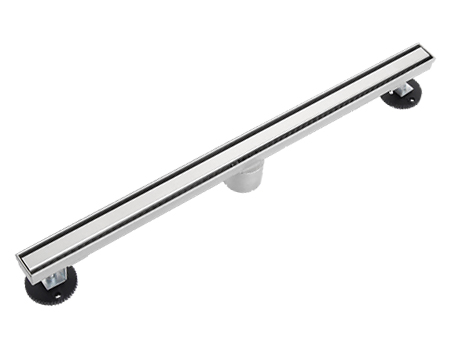
For installers and project managers, this means slope is not just a code checkbox. It directly determines hydraulic performance, surface drying time, and how well the waterproofing layer stays protected over years of use.
Typical slope ranges used for linear drain installations
Across residential and commercial shower projects, a common practice is maintaining a floor slope of about 1–2% toward the linear drain. This range balances comfort underfoot with reliable drainage. Steeper slopes can feel awkward to stand on, while flatter slopes increase the risk of standing water.
What matters as much as the percentage itself is consistency. A perfectly calculated slope that changes direction near the drain flange can still lead to pooling. Experienced installers often check slope along multiple axes to confirm that water naturally finds the channel without hesitation.
Wall-mounted versus floor-centered linear drains
When a linear drain is placed against the wall, the floor typically slopes in one direction, simplifying layout. Center-floor linear drains require a more complex plane, often with two opposing slopes. The latter demands tighter workmanship because any deviation becomes visible in daily use.
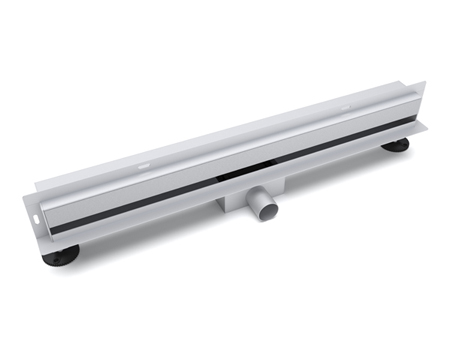
Choosing between these layouts is not only an aesthetic decision. It affects how forgiving the installation will be if tolerances vary slightly on site.
Common problems caused by incorrect slope
The most frequent symptom of insufficient slope is visible water pooling after the shower is turned off. Over time, this moisture stresses sealants and membranes at the drain interface. In commercial restrooms with heavy usage, slow drainage can also create slip hazards and increase cleaning demands.
Excessive slope introduces a different issue: water may rush past the intake openings instead of dropping into the channel evenly, reducing effective capture. This is why “steeper is safer” is a misleading assumption for linear drains.
How installers verify slope during construction
Professionals typically combine visual checks with straightedges and digital levels. The goal is to confirm both the average gradient and the absence of local dips. Dry-run water tests, where a measured volume is poured across the floor, provide immediate feedback on flow behavior before tiles are set.
In projects where performance risk is high, such as hotels or gyms, mock-up installations are sometimes tested to validate slope assumptions before full rollout.
Engineering tests and standards that relate to slope performance
Although slope itself is set by installation, its impact is evaluated through drainage performance testing. Flow rate tests assess how quickly surface water is evacuated, while water leakage tests confirm that the drain-to-floor interface remains sealed under continuous exposure. These approaches align with requirements outlined in standards such as EN 1253 floor drain performance criteria and broader plumbing guidance from ASME plumbing and drainage standards.
By relating on-site slope measurements to these test outcomes, project teams gain a practical way to judge whether an installation will hold up in daily use.
Residential versus commercial considerations
In residential bathrooms, user comfort and visual alignment often drive slope decisions, sometimes pushing designers toward the lower end of the acceptable range. In commercial settings, durability and fast surface drying take priority, making consistency and verification more critical than minimal gradients.
Both scenarios benefit from selecting linear drains designed to tolerate small installation variances while still meeting flow expectations.
Connecting slope decisions to overall linear drain selection
Slope cannot be separated from drain design. Channel depth, outlet orientation, and grate geometry all influence how forgiving a system will be. For teams comparing layouts or outlet types, reviewing the broader selection context helps avoid mismatches between floor construction and drain capability.
For a more comprehensive overview of design options and trade-offs, many professionals refer back to the Linear Shower Drain buyer guide when finalizing specifications.
Practical guidance for long-term reliability
Linear drains perform best when slope is treated as a controlled parameter rather than an afterthought. Clear installation drawings, on-site verification, and alignment with drainage performance tests together reduce the likelihood of water pooling or interface leakage over time.
This content is developed based on drainage performance analysis, standardized flow rate and water leakage testing practices, and real-world installation scenarios in high-humidity residential and commercial bathrooms. By anchoring slope decisions to measurable performance, teams can expect linear shower drains to deliver consistent results throughout their service life.