
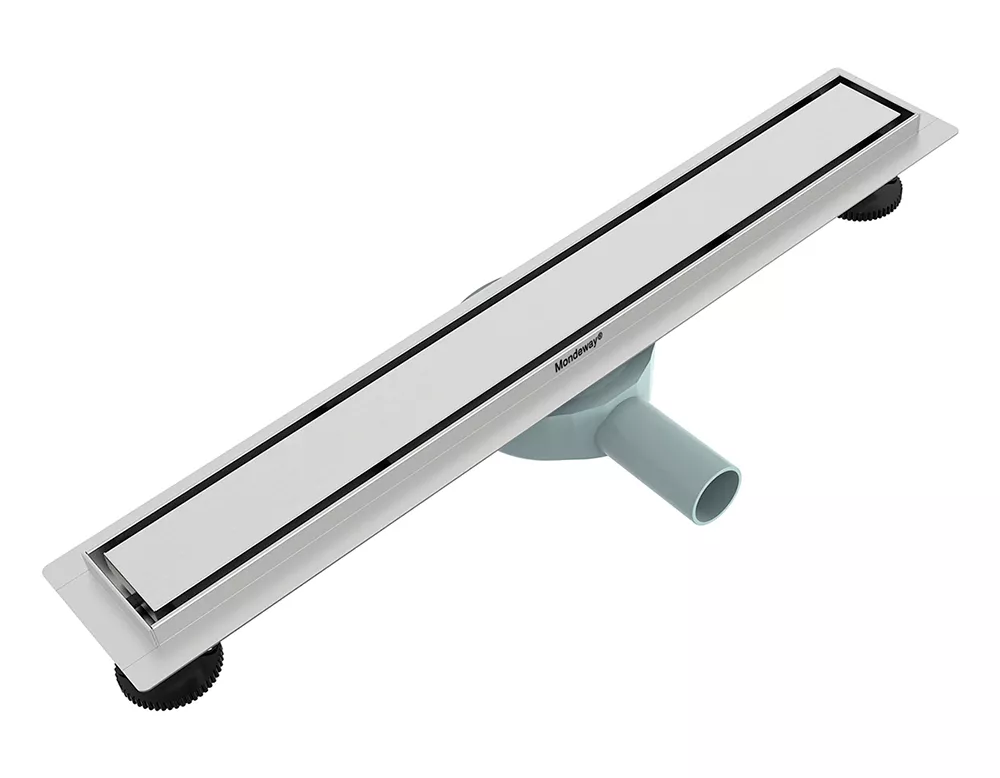
How wall-mounted and floor-mounted linear drain installation differ in wet-area showers
Wall-mounted vs floor-mounted linear drain installation differences often shape how reliably a shower handles water over years of daily use, especially where humidity stays high and tolerances are tight. In residential bathrooms and commercial restrooms, the decision is less about appearance and more about how waterproofing interfaces, slope control, and flow paths behave once tile and membranes are locked in.
Defining the two installation approaches
A floor-mounted linear drain is positioned within the shower floor plane, collecting water through a long grate aligned with the slope of the finished surface. A wall-mounted linear drain, by contrast, is installed at the wall–floor junction or slightly above the finished floor, intercepting water before it travels across the entire shower base.
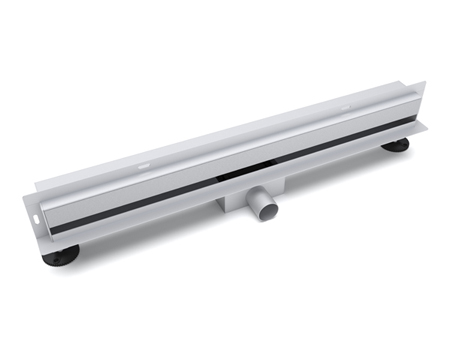
From an installation standpoint, this difference shifts where precision matters most. Floor-mounted systems concentrate risk in the floor slope and central membrane integration, while wall-mounted systems concentrate it at the vertical waterproofing transition.
Waterproofing interfaces and membrane continuity
Waterproofing is the most sensitive variable in both configurations. Floor-mounted linear drains rely on a continuous membrane that slopes uniformly toward the channel body. Any deviation in slope tolerance can leave shallow pooling, increasing the likelihood of moisture retention beneath tiles.
Wall-mounted drains simplify the floor plane by allowing a single-direction slope toward the wall. However, they demand precise detailing at the wall junction. If the membrane termination or sealing at this interface is rushed, waterproof membrane failure at the wall junction becomes a realistic long-term risk.
Installers comparing these options often overlook that wall-mounted systems trade floor complexity for wall precision. This is why many project engineers treat wall-mounted linear drains as an installation-quality amplifier: executed correctly, they reduce variables; executed poorly, they concentrate failure at one critical seam.
Slope control and drainage flow paths
Floor-mounted linear drains distribute flow across the shower floor, requiring consistent gradient from multiple directions. In compact residential showers this is manageable, but in larger commercial wet areas it increases the challenge of maintaining dimensional accuracy during screed and tile work.
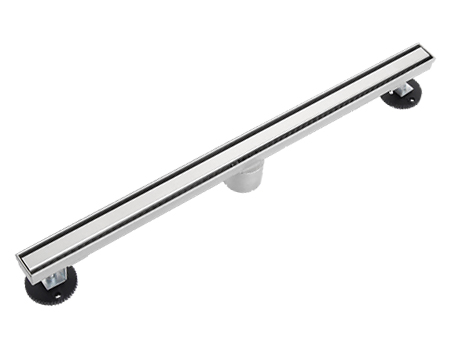
Wall-mounted drains shorten the water travel distance. This can improve surface drying and reduce soap residue migration, particularly in high-humidity shower environments where evaporation is slow. The trade-off is that outlet alignment and wall cavity clearance must be resolved earlier in the build sequence.
Installation tolerance and alignment risk
Both systems demand tight tolerances, but they fail differently when those tolerances are missed. Floor-mounted drains are more forgiving of minor lateral misalignment, yet sensitive to vertical slope errors. Wall-mounted drains are unforgiving of positional errors at the wall interface, where even small deviations can compromise sealing.
Improper alignment during installation is one of the most common reasons contractors revisit finished showers. In many cases, the issue is not the drain itself but the mismatch between the chosen installation type and the crew’s familiarity with its critical tolerances.
Maintenance access and long-term inspection
Maintenance considerations often surface only after commissioning. Floor-mounted linear drains typically allow straightforward grate removal and channel access for cleaning. Wall-mounted drains, depending on design, may require more deliberate access planning to ensure debris can be cleared without disturbing wall finishes.
In commercial restrooms with heavy usage, this difference affects operational planning. A system that drains well but is difficult to inspect can accumulate risk silently, particularly where hair and soap solids are common.
Which installation works better for your shower project?
The question most contractors ask is which option performs better. The answer depends less on the drain body and more on installation context. Wall-mounted linear drains offer an engineering advantage by reducing floor slope complexity, making them attractive where layout control is critical. Floor-mounted systems remain versatile and familiar, fitting projects where wall conditions limit integration options.
For teams weighing these choices as part of a broader specification exercise, reviewing a full linear drain buyer guide helps place installation differences within the wider framework of outlet type, flow capacity, and maintenance strategy.
Engineering tests and standards behind reliable installation
Regardless of configuration, reliable performance depends on validation against recognized test methods. Water leakage tests verify membrane integrity around the drain body, while flow rate tests confirm that the chosen outlet handles expected discharge without backing up. Dimensional accuracy inspection ensures that manufactured tolerances align with on-site installation realities.
In building projects across Europe and other regulated markets, guidance such as EN 1253 floor drain standards provides a common reference point for drainage performance and safety expectations. Broader material and plumbing evaluations often align with frameworks published by ASTM International, particularly when assessing corrosion resistance and long-term durability.
These testing perspectives matter because they connect installation choices to measurable outcomes. A wall-mounted drain that simplifies slope but fails leakage testing offers no real advantage, just as a floor-mounted drain with excellent flow characteristics cannot compensate for poor membrane detailing.
Connecting installation choice to long-term reliability
In high-humidity shower environments, both wall-mounted and floor-mounted linear drains can perform reliably when specified and installed with their constraints in mind. Treating waterproof membrane behavior, slope tolerance, and alignment as design inputs rather than afterthoughts keeps failure modes such as standing water or wall junction leaks under control.
Over time, projects that align installation method with validation through leakage and flow testing tend to age more predictably. The real difference between wall-mounted vs floor-mounted linear drain installation differences is not about which is universally better, but about which configuration best matches the project’s tolerance for precision, inspection, and long-term maintenance planning.